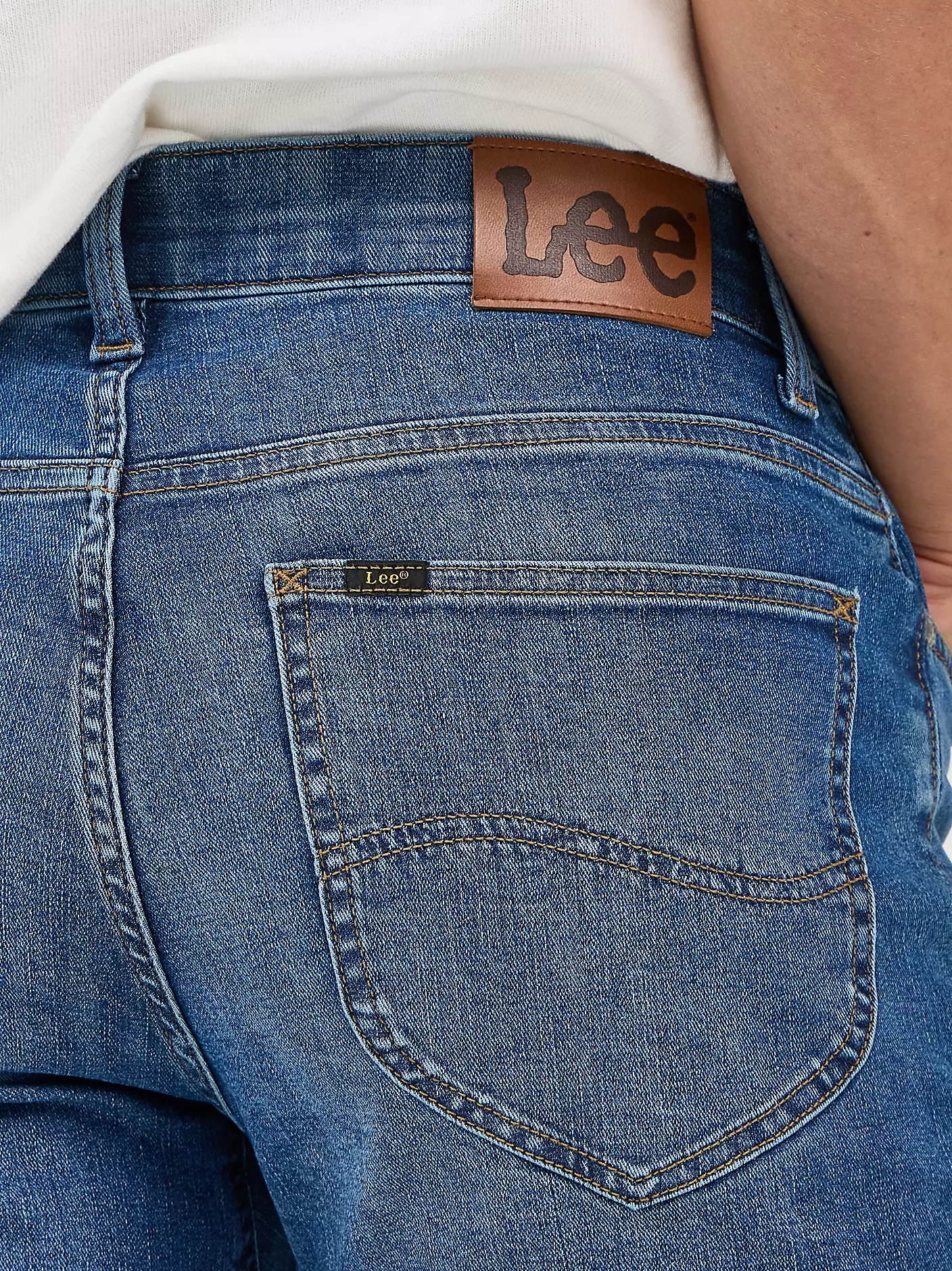
ABG just bought Lee for $1 billion. China is the punchline.
May 21, 2026, evening US time. Authentic Brands Group announced it bought the iconic denim brand Lee from Kontoor Brands for up to $1 billion ($750M cash, $250M earnouts). The acquisition adds Lee to a portfolio that now includes Guess, Reebok, Brooks Brothers, Forever 21, Nautica, Champion, Ted Baker, and 50+ other heritage names.
Two days earlier, on May 19, ABG also confirmed a new China licensee for Guess: Hangzhou Ruisi Haishang. Three weeks before that (April), ABG launched a new Reebok China growth strategy with Xinrui Sports as operator.
Three China-relevant moves in 3 weeks. ABG is building the most aggressive Western brand redistribution model in mainland China that nobody outside the industry is talking about.
If you're running a Western fashion brand and considering a China partner, this is the operating model you're now competing against.
What ABG actually is
ABG was founded in 2010. The company is structured as a "brand asset management platform," sometimes called "the Blackstone of apparel" by Chinese industry analysts. ABG does not operate factories, does not run wholesale, does not directly run retail.
The model is:
ABG buys distressed or under-managed heritage brand IP (logo, trademark, brand story)
ABG licenses that IP to operating partners by category and region
The partner pays a royalty and runs the actual business
ABG keeps the brand equity alive, controls strategy, and collects licensing fees globally
Global ABG retail sales already exceed $9.5 billion. With the Lee acquisition added on top, ABG owns the licensing rights to roughly 50+ brands across sportswear, fashion, lifestyle, and entertainment categories.
The model is hard for traditional brand executives to internalize. You're not buying a company. You're buying brand recognition, then matching it with the right local operator for each market.
The three China moves, decoded
1. Lee acquired May 21 for up to $1 billion. Lee was founded in 1889. It entered China in 1995. At its 2015 peak with the JingYu TouLiang series, Lee was the #1 denim brand in China by market share. Lee's last 5 years under Kontoor have been a slow drift. Under ABG's model, the brand will most likely be relicensed to a Chinese operating partner with specific China expansion KPIs. Watch the next 90 days for the China license announcement.
2. Hangzhou Ruisi Haishang as Guess China core licensee May 19. This is ABG's first major China move after taking control of Guess earlier this year. Ruisi Haishang is backed by two strong operators:
FullShang Technology (operates Duibai, One Moment), known for younger demographics and content-led marketing
YiNian HuaSheng (operates MLB China, Salomon, Mammut, Hunter), strong in premium mall networks and national distribution
The combination is rare: brand-modernizing capability plus tier-1 mall reach. Guess will reposition as a more fashion-forward Y2K-aesthetic brand for Chinese Gen Z consumers, riding the Y2K nostalgia wave that's been compounding on Xiaohongshu since 2024.
3. Reebok China handed to Xinrui Sports in March 2026. ABG ended its earlier partnership with Lianya Group and assigned Reebok China to Xinrui Sports, led by Wu Xinming's team (formerly running Under Armour kids and Under Armour outdoor in China). The 10-year plan is 1,000 stores. April 2026 brought the new China strategy, repositioning Reebok as a fitness-led active lifestyle brand with basketball, running, soccer crossovers.
Why Chinese partners suddenly matter more than US headquarters
The ABG model exposes something most Western brand boards don't see clearly: in 2026 China, the operator is the brand.
Lee, Guess, Reebok, Brooks Brothers, Forever 21 are all brands Chinese consumers still recognize but haven't bought in years. What turns recognition into revenue is the local operator who can retranslate the brand for Chinese aesthetics, Chinese platforms, Chinese retail formats, and Chinese price tiers.
The 3 partners ABG just chose say everything:
FullShang Technology for Guess: content-first, younger, Xiaohongshu-native, Y2K-styled
YiNian HuaSheng for Guess (joint with FullShang) and historically MLB / Salomon / Mammut: high-end mall, national distribution, premium positioning
Xinrui Sports / Wu Xinming team for Reebok: athletic performance category, basketball + fitness niche, Under Armour heritage
If you're a Western heritage brand entering or repositioning in China in 2026, you're competing for these same operator teams. Top-tier operators are scarce. The brand that signs the right one beats the brand that doesn't, regardless of which one has more famous heritage in the US.
Why this matters for Western brand owners
Three brutal takeaways:
1. Heritage brand consolidation is accelerating. Marc Jacobs (LVMH sold May 14 to G-III/WHP joint venture). Pierre Cardin (multiple licensees). Pringle of Scotland. Belstaff. Sergio Tacchini. Brooks Brothers (already ABG). The list of "former blue-chip brands now owned by brand-management groups" is growing every quarter. If your brand sits in the mid-premium tier without a strong creative refresh and a China growth story, you're a candidate.
2. Heritage equity travels separately from the original operating company. Brand management groups specifically thrive on this separation. Lee under Kontoor / VF was drifting. Lee under ABG with a new China partner has a real shot at being a billion-dollar Chinese denim story by 2030. The right operator carries more weight than the original parent.
3. China is now the consolidator's growth engine. ABG has opened a Shanghai office. The China brand-redistribution model is now the explicit playbook. Every ABG acquisition between now and 2028 will likely have a Chinese operator named within 90 days of the deal closing. If you're running a Chinese operating company, ABG is now actively looking for you. If you're running a Western brand with no China partner, you should be talking to ABG about why you're not yet in their portfolio.
What you should do this quarter
A 5-point checklist:
Map your direct competitors against the ABG portfolio. If 3+ of your competitor brands are now ABG-owned, your competitive position is fundamentally different than it was 24 months ago. You're competing against a portfolio with shared scale economics, not against single brands.
Identify which Chinese operator you'd partner with if you sold or licensed China. This is the question ABG asks before every acquisition. Have an answer. FullShang, YiNian HuaSheng, Xinrui, Topsports, ANTA-Kids' parent, Bosideng's distribution arm, Belle, Pou Sheng, Yagor (Helly Hansen operator), B&L are the obvious candidates.
Watch the next 90 days for the Lee China license announcement. Whichever Chinese partner gets Lee will become a key competitive name in the denim category. Levi's, Diesel, Mavi, G-Star, and even Charles & Keith should all map this carefully.
Decide whether you're a "brand-led" or "operator-led" 5-year plan. ABG's model is brand-led: the IP is the asset, the operator is the lever. Anta's model is operator-led: the operator absorbs and elevates the brand. Both work. Pick yours.
Don't underestimate Y2K nostalgia and "old money" simultaneously. Two opposing aesthetic movements driving China retail right now. ABG is targeting Y2K through Guess. Ralph Lauren just got +51% Q4 China riding old money. Your brand picks 1 lane or builds 2 separate product narratives.
The closing read
In the span of one week, ABG closed a $1 billion deal for Lee, anchored Guess's China relaunch with a strong operator, and shipped fresh Reebok strategy work. Meanwhile, LVMH sold Marc Jacobs (with China business explicitly carved out for separate resale). Kering is undergoing its own restructuring after the Demna era at Gucci kicks off in July. The Western luxury and fashion industry is in active disposal mode.
The brands being disposed of are not the worst brands. They're the brands without an operator that can translate them into 2026 China. Lee, Marc Jacobs, Guess, Reebok all have brand recognition. They lacked the China execution layer.
ABG's bet is that they can supply the execution layer better than the original parent ever did.
The Western brand owner reading this should ask one question: in 2030, is your brand the acquirer, the acquired, or the irrelevant third option? Pick fast. The window to choose is shrinking by the quarter.

