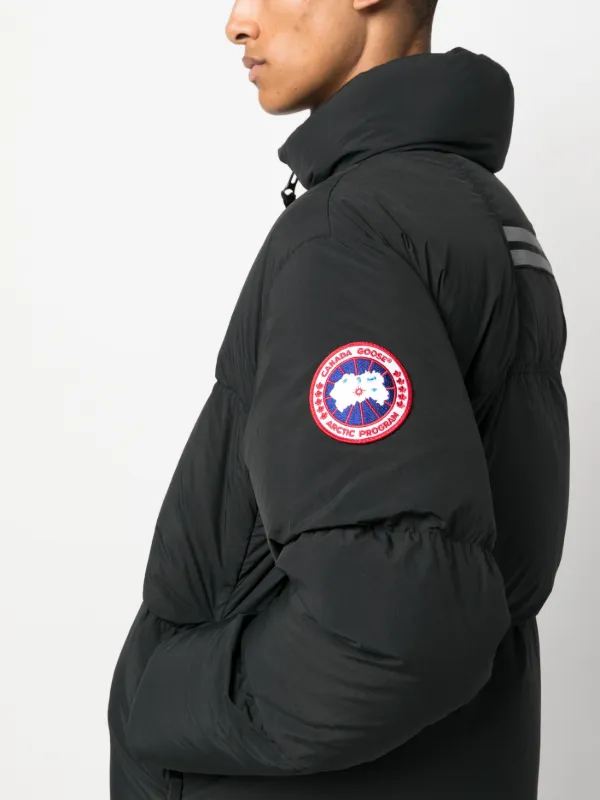
Canada Goose Greater China grew 44% in Q1. In summer.
A brand famous for a $1,000 winter parka just posted its best Chinese quarter in years. In June. When it was 35°C in Shanghai.
While Hermès had its worst single-day stock drop in 15 years the same week, a Toronto down-jacket brand quietly outperformed almost every luxury player in China. Here's what happened.
The numbers that matter
Total revenue: CAD $118.9 million, +10.3%. Gross margin: 62.4%, up 100 basis points. Greater China: +44.2%. North America: -6%. Wholesale revenue: +66.5% to CAD $29.8 million. DTC same-store sales: -3.2%. Spring-summer products: roughly 40% of Q1 revenue.
Put those two numbers next to each other. The spring-summer mix explains what sold. The wholesale surge explains where it sold.
How a parka brand cracked summer
Canada Goose spent 2020-2024 building its China presence around winter. Shanghai flagship, Beijing flagship, Chengdu, Hangzhou. It worked. Then winter demand normalized and analysts asked the obvious question: what's your summer story?
The answer: rain jackets, wind jackets, travel shells, knitwear. A different product category for a different use case. Urban rain, e-bike commute, mountain weekends, summer travel.
Spring-summer product went from roughly 5% of company revenue in FY2022 to 15% of full-year revenue by FY2026. In Q1 (the warmest quarter), those categories hit ~40% of the global mix. In Greater China, that warm-weather product drove the 44.2%.
Canada Goose built a parallel product calendar that runs 12 months. The parka stays. The revenue gap around it got filled.
Wholesale crushed DTC (and that changes the playbook)
Wholesale revenue: +66.5%. DTC same-store: -3.2%. People who walked into a Canada Goose store bought less than last year. People who found Canada Goose inside multi-brand outdoor retailers bought a lot more.
Chinese multi-brand outdoor retail is booming. Mountain sport specialists and Xiaohongshu-fluent curators stocked Canada Goose spring-summer SKUs aggressively for the 618 shopping festival and the summer travel window. Per Sporting Goods Intelligence, wholesale even swung to profit in Q1 for the first time.
This matters because it punches a hole in the "DTC-only" doctrine that luxury has preached since 2019. Chinese outdoor shoppers cross-shop by category. They browse Salomon, Arc'teryx, Snow Peak, and Canada Goose in the same store, comparing use cases side by side. Multi-brand stores give them that cross-shopping context, and the 66.5% wholesale growth proves it converts.
The 2020-2024 gospel of "own the customer, kill wholesale" was written for Western markets where wholesalers are commodity distributors. Chinese wholesalers include mountain sport specialists and multi-brand curators who give a Western brand adjacency to trusted local anchors. Different market, different channel math.
The cross-border number you're probably missing
Canada Goose's China growth includes Chinese passport-holders buying abroad. Chinese travelers heading to Canada, Japan, Korea, and Europe in the June quarter, buying rain jackets at retail and shipping them home. Wholesale in Japan and Korea is a quiet arbitrage channel for Chinese cross-border spend.
Prada's Q2 call flagged the same dynamic: China customer growth comes from local spend plus cross-border. If your Q1 China number sits under 10%, but you don't track Chinese passport-holder GMV globally as a separate line, you're probably undercounting your real China business by a third.
The 12-month calendar is the real insight
Every brand that enters China with a single-season product hits the same wall. Douyin, Xiaohongshu, Tmall, JD... the algorithm sells 12 months a year. If your brand has a 6-month selling window, you're paying a full year of rent, staff, platform fees, and marketing for half a year of revenue.
Canada Goose fixed this by building a counter-season SKU set from scratch. Rain jackets for June. Knitwear for shoulder seasons. Parkas for December. Travel layers for spring. The revenue calendar now covers the full year, and the Q1 numbers prove the warm-weather SKUs pull their weight.
CEO Dani Reiss put it plainly: "We are successfully evolving Canada Goose into a year-round luxury brand, with customers engaging across more seasons and categories." The 44.2% Greater China growth in a summer quarter is his receipt.
Apply this now
Build a counter-season product line before your next annual plan. If your brand is winter, you need a June SKU. If you're summer, you need a December SKU. Canada Goose went from 5% warm-weather revenue to ~40% of Q1 in four years. Your counter-season SKUs should be a different use case with different marketing content and different Xiaohongshu moments, built from scratch rather than thinned-out versions of your core product.
Reopen wholesale as a real China channel. Wholesale +66.5%, DTC same-store -3.2%. Chinese multi-brand outdoor retail is where cross-shopping happens. Your 2026-27 wholesale doors in China should get the same strategic attention as your flagship openings. Mountain specialists and premium curators give your brand category adjacency that a standalone store can't match.
Track Chinese passport-holder GMV globally, monthly. Chinese tourists buy in Canada, Japan, Korea, Europe. If you count only mainland retail, you undercount your China business. Build this as a separate dashboard line item before your next quarterly review.
Kill the "off-season" excuse in your China plan. A Toronto parka brand grew Greater China 44.2% in a summer quarter. If your brand's China plan has a dead season, that's a product decision you're choosing to live with.
Canada Goose grew Greater China 44.2% in Q1 while Hermès posted its worst stock day in 15 years. The parka brand did it by building a 12-month product calendar and letting wholesale carry the summer. Your off-season gap is a choice.

