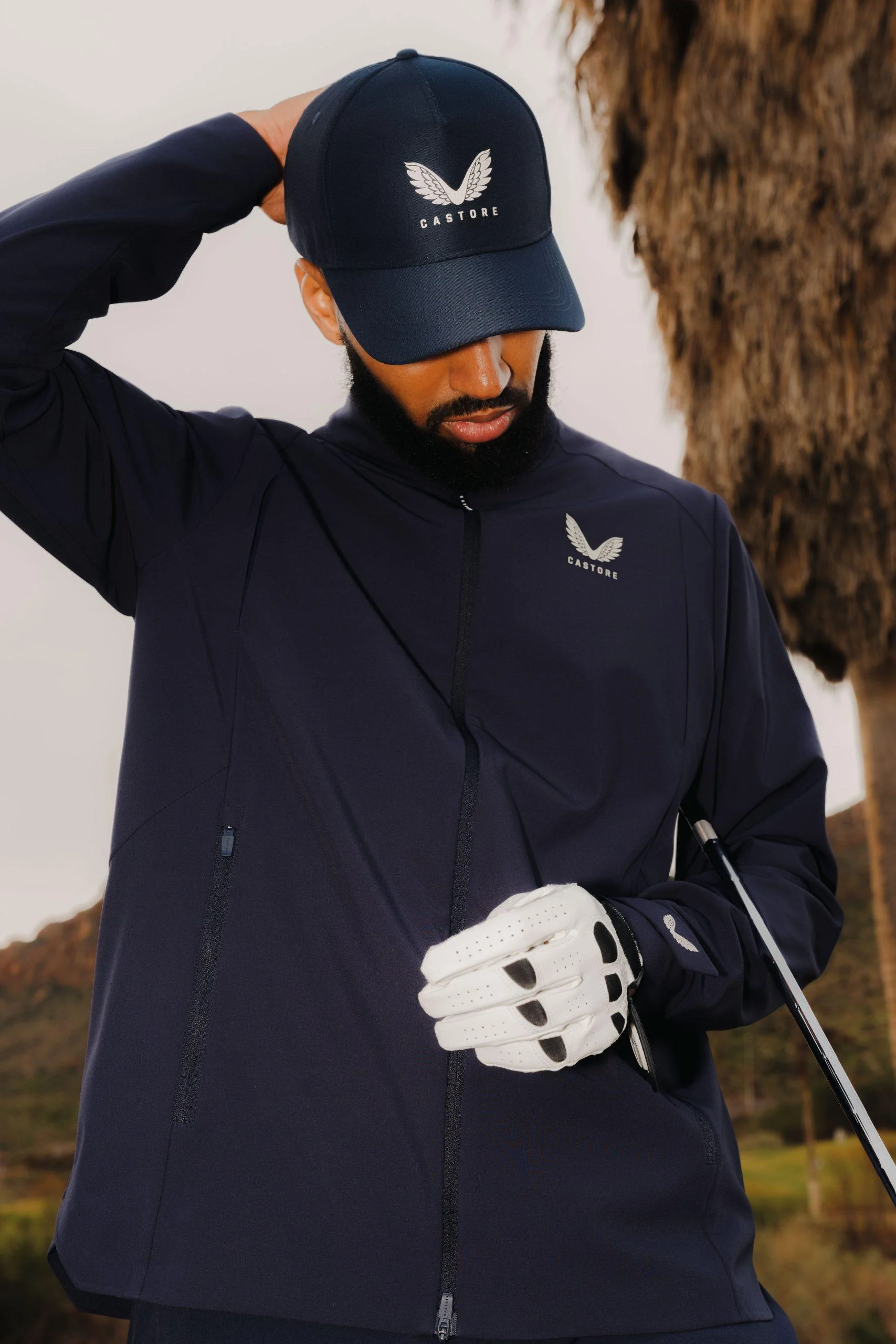
Who in China wants Castore?
If you wanted to design an acquisition target for one of China’s big sportswear groups, you could do a lot worse than Castore.
It is British, premium, male-skewed and sports-led. It has team relationships across football, cricket, rugby and Formula 1. Over the past year it has also bought Belstaff and taken control of Grenson, giving the group a chunk of British heritage outerwear and footwear alongside the core sports business.
And now JPMorgan is involved.
Sky News reported on September 5 that Castore had received multiple unsolicited approaches and appointed JPMorgan to review its options. Those options include a majority sale, minority investment, strategic partnership or no transaction. A formal auction has yet to begin, and Castore declined to comment. One sportswear industry source told Sky that interested parties included peers from China and other parts of the world.
That is as far as the public evidence goes. No Chinese bidder has been named.
But the China angle deserves attention because the list of credible strategic buyers is surprisingly short, and one company sits well ahead of the rest.
Castore today looks very different from the £950m company of 2023
Tom and Phil Beahon launched Castore in Liverpool in 2016 after early careers in football and cricket. Andy Murray became a shareholder in 2019, giving a very young company instant sporting credibility.
The company then spent the next several years raising capital and buying its way into professional sport.
Castore raised £3.2m in 2018 from investors including Net-a-Porter founder Arnaud Massenet and former Saatchi & Saatchi boss Robert Senior. In 2022 it secured a £50m revolving credit facility. Then, in late 2023, Raine Partners, Hanaco Ventures and Felix Capital invested £145m at a valuation reported around £950m.
That 2023 valuation is the source of the familiar “£1bn Castore” shorthand. It shouldn’t be confused with a current asking price. Sky says the valuation attached to any potential takeover remains unclear.
The financial picture has moved quite a bit since then.
For the year ending January 2023, Castore reported £115m of revenue and £14.6m of pre-tax profit. By the 18 months to August 2025, revenue had reached £334.6m. The company reported a £40.3m loss after tax over that extended period, while EBITDA came in at £61.3m. Earlier this year, Castore added another £90m of debt funding from BNP Paribas, HSBC and Lloyds.
So a buyer today is looking at a much larger company than the one investors valued in 2023, with a bigger revenue base, substantial recent losses, fresh debt and a much broader collection of brands.
The last point matters.
Belstaff and Grenson changed what Castore is
In August 2025, Castore bought 100% of Belstaff from INEOS. As part of the deal, INEOS made a significant strategic investment in Castore’s holding company.
Then in June this year, Castore took control of Grenson. UK filings show Castore parent J.Carter Sporting Club with ownership of at least 75%.
Suddenly this starts to look like a different asset.
Castore remains the sports engine. Around it sit Belstaff, with its British motorcycle and outerwear heritage, and Grenson, one of Britain’s oldest footwear names. Castore also has relationships spanning England cricket and rugby, Everton and Oracle Red Bull Racing.
A buyer can therefore look at Castore as the foundation of a broader British premium group rather than a single sportswear label.
For a Chinese company that already knows how to buy Western brands, preserve the global identity and build the China business underneath them, that is an interesting proposition.
Which is why Anta is the first name on my watchlist.
Anta is the cleanest strategic fit
There is no public evidence that Anta has submitted an offer for Castore. This is my read based on its portfolio, finances and acquisition history.
Start with the brands.
Anta already operates Anta, Fila, Descente, Kolon Sport, Jack Wolfskin and MAIA Active. It is also the largest shareholder in Amer Sports, with 41.7% beneficial ownership reported as of February 2026. Amer owns Arc’teryx, Salomon, Wilson, Peak Performance and Atomic.
Then look at what Anta did this year.
On January 27, it agreed to acquire 29.06% of Puma from Groupe Artémis for €1.5bn in cash. Anta said at the time that it had no current plan to make a full takeover offer.
That deal tells you quite a lot about appetite.
The balance sheet does too. Anta’s “all other brands” segment generated RMB10.69bn of revenue in the first half of 2026, up 44.2%. Free cash flow reached RMB11.63bn, while net cash stood at roughly RMB39.11bn.
Anta has spent years learning how to take foreign premium sports brands and build them inside China. Descente is probably the clearest example. Arc’teryx shows how much value a Chinese-backed ownership structure can create when the product, positioning and local execution all work.
Castore would bring Anta something different again: British teamwear, football, cricket, motorsport, premium men’s apparel and 2 heritage brands that could be developed separately or as part of a wider group.
And unlike Puma, Castore is small enough that Anta could conceivably take control without betting the company.
If I were building the banker’s strategic buyer list, Anta would be at the top.
Xtep belongs on the page too
Xtep is a more aggressive call, but there is logic behind it.
Its professional sports business now revolves around Saucony and Merrell in Greater China. That segment generated RMB875m in first-half 2026 revenue, up 11.4%. Saucony had 180 stores in China at the end of June and opened its first Hong Kong image store at K11 Art Mall that month.
There is one common mistake worth clearing up. Xtep sold the business containing K-Swiss and Palladium in 2024, so those brands no longer belong in a current Xtep portfolio analysis.
Castore would move Xtep into a very different part of the market. Saucony gives it premium running. Merrell gives it outdoor. Castore would bring international teamwear, football and a British premium men’s proposition.
The hurdle is financial scale. A Castore transaction at anything close to its historical valuation would be a much bigger swing for Xtep than for Anta.
Possible? Yes.
My first call? No.
The wider Li Ning orbit is more complicated
Li Ning comes up quickly whenever people start naming Chinese sportswear buyers, but the corporate structure matters.
Viva Goods is a separately listed company chaired by Li Ning. It controls Clarks and has built its own consumer-brand portfolio. The Greater China Haglöfs business also sits in a joint venture involving Viva Goods affiliate LionRock Capital.
So if you are looking for precedent around the wider Li Ning business orbit acquiring Western consumer brands, Viva Goods is the more useful place to look.
I would keep it on the longer list.
I’d put 361°, Bosideng and smaller Chinese operators backed by private capital further out again. There is nothing public tying any of them to Castore, and calling one a likely bidder would be pretending we know more than we do.
China-related brand deals are coming in several shapes
There is a wider pattern here, although it gets mangled when every transaction involving Chinese money is dumped into the same M&A bucket.
Anta’s Puma deal is a minority strategic investment by a Chinese sportswear group.
HSG’s Golden Goose transaction is different. The Chinese-founded private equity firm completed its acquisition of a majority stake in the Italian luxury sneaker company in June.
Then there is Snow Peak.
In June, BIEM signed a long-term agreement covering major parts of the Japanese outdoor brand’s China business, including marketing, sales, distribution and apparel production rights. BIEM’s chairman has set a target of RMB5bn in China sales over 10 years. The value of the agreement itself was undisclosed.
Itochu’s August investment in Suzhou Dawei shows another model entirely. Japanese capital went into the Chinese operator of US brand Outdoor Products. Dawei generated ¥17bn of China retail sales in 2025, and Itochu says the target is ¥40bn within 5 years.
And one deal that keeps getting incorrectly dragged into the 2026 pile is Marshall Group. HSG’s €1.1bn acquisition was announced in January 2025.
Put those transactions together and you get a more useful picture. Global consumer brands are being bought, funded, licensed and operated through several different China-linked structures. Full ownership is only one option.
That matters for Castore because JPMorgan is reportedly examining several structures too.
What a Chinese owner could do with Castore
The obvious opportunity is China.
Castore has built considerable awareness through Western sport, but its Chinese presence remains small compared with the brands sitting at the top of China’s premium sportswear market.
A buyer such as Anta already has the infrastructure Castore would otherwise spend years building: retail teams, mall relationships, Tmall and Douyin operations, local merchandising, celebrity relationships and a pretty good understanding of what Chinese consumers will pay for.
Of course, owning those pipes doesn’t guarantee demand.
China has become brutal at the premium end of sportswear. Arc’teryx, Descente, Lululemon, Salomon, On, Fila and domestic players are all competing for the same affluent urban customer. British heritage gets you into the conversation. The product still has to earn the sale.
Castore at least arrives with material to work with. Its men’s positioning is clear. Football and Formula 1 travel. Belstaff carries genuine motorcycle heritage. Grenson gives the group a footwear story that goes back more than a century.
Under the right owner, those brands could be developed individually while sharing the expensive machinery behind them.
Anta’s investment in Puma also gives us a clue about how that could look. When it announced the transaction, Anta explicitly said it supported Puma’s existing management, strategy, brand autonomy and identity. Amer Sports gives another example of Chinese capital sitting behind global brands that continue to look, feel and operate as global brands.
Ownership nationality matters far less to consumers than what the owner does after closing.
Western brand owners should pay attention to the buyer map
This is the part I think Western management teams should care about.
If you own a premium sportswear, outdoor or lifestyle brand and an eventual sale is even vaguely on the horizon, you should know which Chinese groups fit your category before the process begins.
And “Chinese buyer” is too broad to be useful.
Anta brings deep sports-brand operating experience and serious capital. HSG brings a private equity ownership model. BIEM can take China operating rights without buying the parent company. A local operator backed by outside capital creates another route.
Each structure changes who controls the brand, who owns China, how much management stays in place and what happens at exit.
That is why I’d get the China piece of the business in order early.
A serious buyer will want to know who your Chinese customer is, what she or he buys, what price the brand can hold, where the first stores should go and which product gives the brand a reason to exist beside the incumbents.
Those are hard questions to answer halfway through a sale process.
Keep an eye on INEOS
There is one more piece of this that interests me.
INEOS sold Belstaff to Castore and then invested in Castore’s holding company. Any meaningful transaction now creates a decision around that stake.
INEOS could sell. It could retain part of the investment. It could roll its stake into a new structure. We don’t know yet.
The founders are another piece of the puzzle. Sky reports that Tom and Phil Beahon are expected to remain at the helm if a transaction takes place. Andy Murray remains a shareholder too, although his treatment in any deal is undisclosed.
So I’d watch the shareholder outcome almost as closely as the buyer.
Because the interesting question here goes beyond who buys Castore.
It is whether one of China’s sportswear groups decides that a British sports brand, Belstaff, Grenson and a stack of Western sports relationships are worth buying as a platform for the next stage of its global expansion.
If Anta decides the answer is yes, it has the money to make that decision matter.

