
AI Slop Just Got a Chinese Consumer Boycott
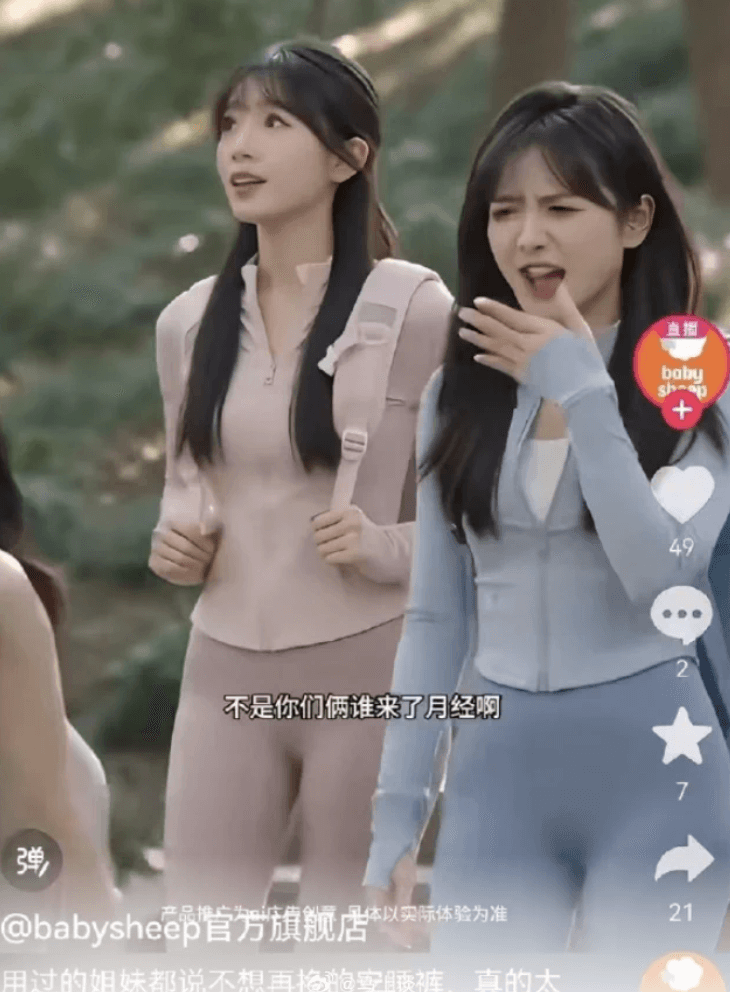
Picture the shoot. Three women walking along in athleisure, chatting, the way people do in every activewear ad ever made.
One of them pinches her nose, fans the air, and says: "Who's on their period? I can smell it from back here."
The other woman apologises.
That is an advertisement for period underwear, made by a period underwear brand, aimed squarely at the women who buy period underwear.
The brand is babysheep, out of Fujian. The video went up on Douyin on August 1, posted by its operations team, and the internet found it roughly immediately.
Now here's where it gets educational.
The excuse that turned a bad ad into a bad month
When reporters called customer service to ask who on earth signed this off, the answer they got was that the video had been AI-assisted.
Read that as what it is. A brand publishes something insulting about its own customers, gets caught, and the first instinct is to point at the software.
A lawyer quoted in Beijing News took that apart on the record, and the argument deserves framing above a desk somewhere. AI does not dislike menstruation, because AI is algorithms and data with no self-awareness and no opinions about anything. It generates what it is told to generate, from a prompt somebody wrote, and it gets published by somebody who approved it. Blaming the AI is an evasion of brand responsibility.
Chinese advertising law agreed. "AI generated it" is not a defence. The brand carries the liability either way.
By August 4 the Quanzhou market regulator confirmed it was looking into the matter. By August 6 babysheep had published a proper apology, pulled the video permanently across every channel, committed to reviewing all its marketing material including the AI-made stuff, and put its whole staff through training. The apology conceded what everyone could already see, that the creative oversight had gaps and the review process had failed.
Which is the right response, five days too late, after the version everyone remembers had already gone round the country.
Meanwhile, Supor was having its own week
Around the same time, someone noticed that a Supor store account had been quietly publishing AI-generated short videos at volume.
Supor is not a small operation. Thirty years old, one of the biggest cookware names in China, the kind of brand that sits in a hundred million kitchens.
The videos were something else. A woman in the shower, and an uncle wanders in to scrub her back. A woman on the toilet, and the cleaning uncle wanders in to get on with the cleaning. Two men in a bathroom when a woman pushes the door open and starts demonstrating a Supor steam cleaner.
The tagline running across them: 叔啥没见过. What hasn't uncle seen.
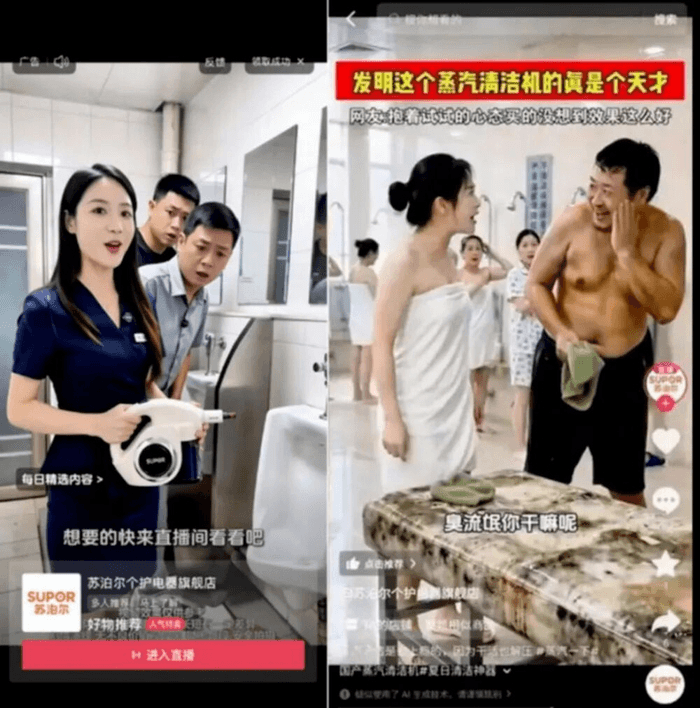
Nobody sat in a room and pitched that as a campaign. That's the point. This is what happens when you hand a content pipeline a quota and no judgment.
Supor pulled the lot the same day it surfaced and gave a statement to Beijing News. Worth quoting the substance, because it's the most useful sentence in this whole story: the incident revealed gaps in how the company manages and reviews content published by its authorised stores.
That means an authorised store, officially certified to carry the Supor name, was publishing whatever it fancied under the brand's flag while head office got on with something else.
Sit with that one for a second, because if you sell into China through a TP, a distributor or an authorised store, that sentence is about you.
The bit that makes it a pattern
Chinese press pulled up the obvious precedent within a day. Last August, snack brand Bestore got caught using an AI-generated product image showing peanuts growing on trees. Peanuts grow underground. The explanation offered at the time was that an AI-generated image had been used by mistake.
It runs the same way every time, right down to the shrug. A brand publishes machine-made content nobody checked, gets caught, and points at the machine. Chinese consumers have now watched that sequence three times in about a year.
And what they hear when a brand says "the AI made it" is not a technical explanation. It's an admission that nobody was in the room.
Now look at what they rewarded instead
The same month all this was happening, a film called 《牛来》 was doing the opposite.
Two people made it. Xin Yumeng, 34, first film, and his mother Sun Lifang, who wrote it, produced it, voiced it and did the music. Five years, second-hand equipment, a production budget in the low thousands of dollars, and not one frame of AI in it.
The animation is genuinely rough. The cattle are low-poly, the voices arrive late at the mouths, the cow walks through the scenery rather than past it.
It sold 236 tickets in its first nine days. Then somebody posted that number on Weibo because it was funny, and the country went to look. On August 15 it generated 72 trending topics in a single day, out-trending Christopher Nolan. By August 22 it had passed 36 million yuan.
Cinemas that had no official posters to work with drew their own by hand. Audiences turned up in cow masks.
The Chinese word that attached itself to the film is 手搓. Hand-rubbed. Made by a person, visibly, imperfectly.
Two stories, one month, pointing the same way. A machine-made ad with nobody behind it gets a brand summoned. A hand-made film with two people behind it gets a nation buying tickets.
Xiaohongshu put 反精致, anti-polish, and 活人感, the quality of seeming like a live human, in its buzzwords for the year. Unfiltered lipstick swatch content has racked up billions of views on the strength of showing the texture nobody retouched out.
What to do about it
Go and watch what your Chinese partners are publishing under your name. This is the actionable one and almost nobody does it. Pull every account licensed to carry your brand in China, your TP, your distributors, your authorised stores, and review the last 90 days of video. Not the campaign assets your agency shows you in the quarterly deck. The daily filler nobody reads. Supor's problem came out of an authorised store, and if it can happen to a brand that size in its home market, your distributor three time zones away is not being more careful.
Delete "the AI generated it" from every script you own. Customer service, PR holding statements, all of it. The replacement is a sentence with people in it: this was made by our marketing team, approved by our brand director, and we take responsibility. That swap is the difference between a bad day and a bad fortnight, and it costs nothing to write today. Writing it during a crisis never works, because during a crisis everyone is arguing.
Put the customer in the approval chain, literally. The babysheep ad would have died in ten seconds if one woman who buys the product had been asked. Whatever your category, find the person who is your actual buyer, give them a veto, and make the veto real rather than advisory. This is cheaper than any crisis retainer you will ever sign.
Fund some things that are visibly made by hand. For every AI-assisted asset going into China this quarter, produce one where the human is obvious. Real photography with real texture, uneven lettering, the phone-shot behind the scenes you'd normally bury. Then give one of those a primary placement instead of your polished lookbook and watch what the saves do.

