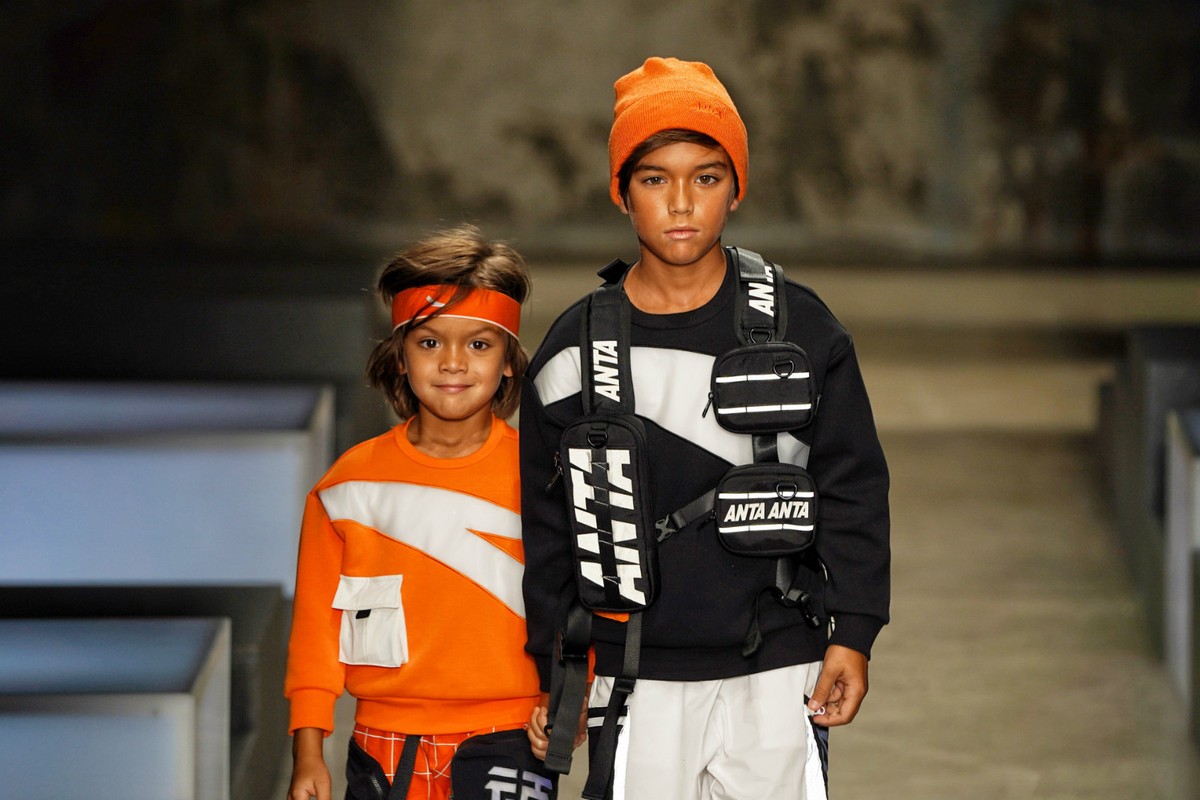
China just gave kidswear its own fashion week. Anta Kids opened it.
For 29 years, China International Fashion Week ran two seasons: March and September, both for adults. Kidswear got a slot between adult shows. A side act.
On July 22, 2026, China Fashion Week opened its first-ever standalone kidswear season at Beijing 798 Art District. Seven days and 20+ brands, with its own July calendar slot separate from the adult seasons. The organizers (China Fashion Designers Association, 中国服装设计师协会) called it "Bubble Party" (童话小镇·泡泡派对).
The brand that opened the runway: Anta Kids.
A sportswear brand opening a kidswear fashion week tells you everything about where Chinese children's apparel is heading.
Sportswear brands are defining Chinese kidswear now
Anta Kids didn't show up on a whim. They've been building this position for years.
2019: Anta Kids joined New York Fashion Week "China Day," becoming the first Chinese children's sportswear brand at NYFW. Beijing Fashion Week SS2026: Anta Kids showed. Shanghai Fashion Week AW2026: Anta Kids showed again. And the day before the kidswear fashion week opened, Anta Group ran a Super Brand Day campaign on Vipshop pushing kids' quick-dry shorts and FILA cat-claw sandals.
The opening show was called "竞界新生" (Jingjie Xinsheng, loosely "new life in competition"). It ran in two tracks: running and ball sports, plus outdoor skiing. This is a kids' runway that looks like an athletic performance brief.
The closing show on July 28 went in a completely different direction: Heaven Gaia (盖娅传说) designer Xiong Ying (熊英) brought Chinese couture heritage into children's fashion, embedding Dongxiang embroidery (东乡刺绣) and Miao ethnic wax dye (苗族蜡染) into kidswear.
Performance sportswear opening the week. Heritage couture closing it. That's the range Chinese kidswear occupies now.
The numbers behind the runway
Chinese children's apparel hit RMB 317 billion (~$44B) in 2025, growing at 8.5% annually. The broader Chinese sportswear apparel category (including kids) reached RMB 542.5 billion in 2024 and is forecast to hit RMB 896.3 billion by 2030.
But the spending psychology is the interesting part.
Per the China Kidswear Industry 2026 Trend Insights report: 49.3% of Chinese consumers now buy kidswear by specific scenario (school sports, outdoor hiking, skiing trips, everyday wear). 39.4% pay a premium for functional "black-tech" (黑科技) fabrics. Only 22.8% buy purely on price.
Chinese Gen Z parents: 46% are willing to spend extra specifically on their kids' fashion image.
This is a generation of parents who grew up on Xiaohongshu, who care about their own style, and who refuse to dress their kids in whatever's cheapest at the neighborhood store. They want technical fabric specs for the kids' hiking jacket and they want the outfit to look good in a Xiaohongshu post.
Why your adult brand should care
The pattern in China is clear: sportswear brands with strong adult positioning are the ones winning kids' fashion. Anta Kids, FILA Kids, Hush Puppies Kids, DC Kids. The brands at this fashion week are extensions of adult performance and lifestyle brands, not legacy kidswear companies.
If you're selling adult sportswear or performance apparel in China and you don't have a kids' line, you're watching Anta fill a gap that could be yours. Chinese Gen Z parents already trust your adult brand. They're looking for the kids' version. If it doesn't exist, they'll buy from whoever built one first.
Your kidswear brief for 2027
Lead with function, not cute. 39.4% of Chinese kidswear consumers pay premium for functional fabrics. Your product page needs fabric-technology specs (quick-dry coefficient and UV protection rating) alongside the lifestyle photos. Chinese Gen Z parents evaluate kids' clothes the way they evaluate their own outdoor gear.
Build by scenario, not by age. 49.3% buy kidswear by specific use case. Your product categories should be "school sports," "weekend hiking," "ski trip," and "everyday," not "3-5 years" and "6-8 years." Scenario-based merchandising matches how Chinese parents shop.
If you run adult apparel in China, plan a kids' extension for 2027. China Fashion Week just gave kidswear its own standalone season. Every premium apparel brand's competitors will build kids' lines within 12-18 months. The RMB 300B+ market has a July fashion week now. That's an institutional signal.
Don't ignore heritage. Heaven Gaia closed the kidswear fashion week with Dongxiang embroidery and Miao wax dye built into children's garments. Chinese parents want kids' clothes that connect to Chinese cultural identity. If your brand can weave heritage craft techniques into functional kidswear, you're hitting two of the strongest consumer desires at once.
China Fashion Week ran for 29 years without a standalone kids' season. Now it has one. Anta Kids opened the first runway. If your brand sells adult apparel in China with no kids' line, the RMB 300B+ market just got its own fashion week and you're not in it.

