Clarks plans 50 new China stores in 2026. The Li Ning fund's bet is cashing in.
The 200-year-old British shoe brand Clarks just told the market it will open 150 new stores globally in 2026, with 50 of them in mainland China. 29 of the 150 stores have already opened to date.
The detail nobody outside the industry tracks: Clarks has been Chinese-owned since 2021. Specifically, Lyra Capital, an investment fund tied to the Li Ning family (yes, the Chinese sportswear empire), led a £100M+ rescue financing in November 2020 and took 51% control of the brand in 2021. Founding family Clarks retained a minority stake.
For Western brand owners reading this, the Clarks China store expansion is the cleanest case study yet of how Chinese capital plus Western heritage brand can compound over 5 years. It's also the most under-discussed example of what happens when a UK brand goes from "almost bankrupt" to "150 new stores globally" with patient Chinese capital backing.
The Clarks 5-year arc, decoded
The chronology matters:
2020 (November): Clarks files for restructure. £30M+ losses in the year. UK heritage brand on the brink.
2020 (November): Lyra Capital, an investment fund associated with the Li Ning family office, announces £100M+ rescue agreement. Takes 51% control. Clarks family retains minority.
2021 (early): Shareholders approve the deal. Lyra closes acquisition.
2022-2024: Operational restructuring. Cost discipline. China retail expansion preparation. UK retail footprint optimization.
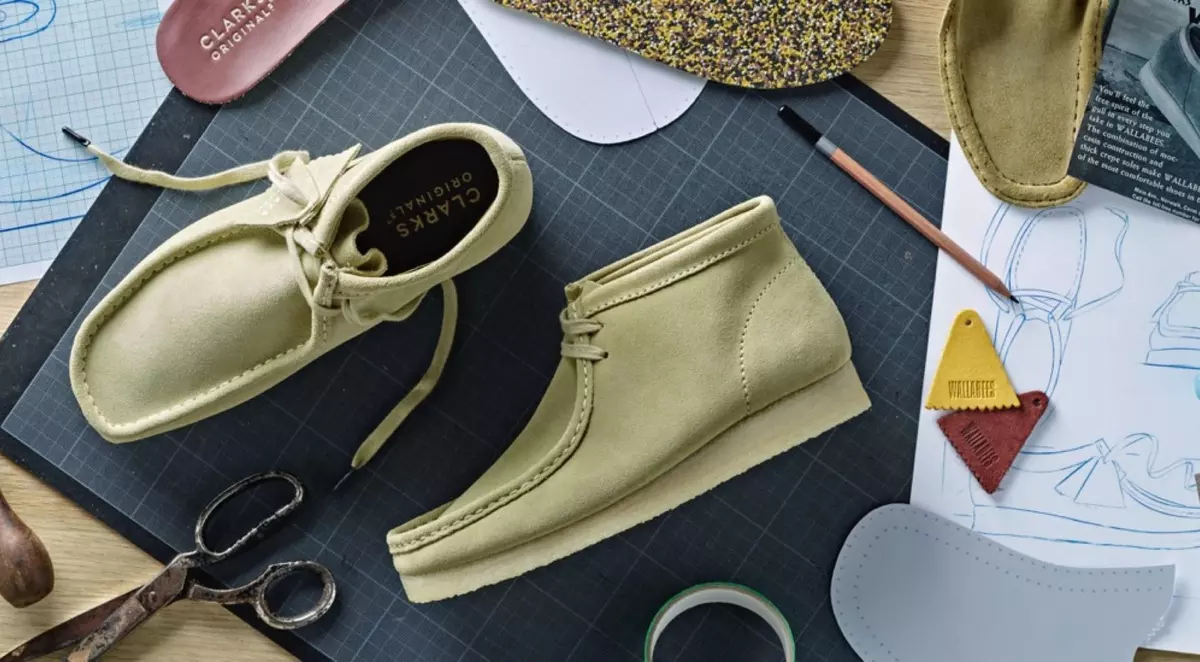
2025: Clarks China continued mall and Outlet expansion. Restructured product mix. Wallabee desert boot becomes hero product on Xiaohongshu and Douyin.
2026 (April): BASF and The Directive Collective collaboration on polyurethane concept shoe, signaling premium product positioning ambitions.
2026 (May): Plans 150 new global stores in 2026, 50 in mainland China, 29 already opened.
The 50-store China expansion in a single year is large. As of late 2024, Clarks operated approximately 200-250 mainland China stores spanning mall, outlet, and department store concessions. Adding 50 new stores in 2026 represents roughly 20-25% net growth in China footprint in 12 months.
For comparison:
Lululemon: 170+ mainland China stores, slowing China growth in 2026
Salomon (Anta-Amer): 302 China stores, +45 net new planned for 2026
Crocs China: 200+ stores, mall-focused expansion
Brooks Running: 4 stores in China currently, +30 by 2027 plan
Clarks's planned 50 net new stores in 12 months puts it in the same expansion-pace category as Salomon. Both brands are aggressive China retail growth plays in 2026 footwear.
What Clarks actually sells in China now
The product mix has shifted sharply under Lyra Capital ownership. The brand's China priorities in 2026:
1. Desert boot heritage. The Wallabee, Wallabee Boot, and Desert Trek silhouettes are positioned as the heritage anchors. Xiaohongshu content around Clarks Wallabees has compounded since 2024, riding the "old money" aesthetic wave alongside Ralph Lauren and Brunello Cucinelli. The Wallabee at RMB 800-1,500 sits in the affordable-heritage price band.
2. Soft sole comfort tech. The Clarks "Cushion Soft" and "Air Cushion" technologies underpin a comfort-led story that competes with Skechers and FitFlop in the mass-comfort segment.
3. Premium collaborations. The BASF + Directive Collective polyurethane concept shoe shows the brand is moving to higher price tiers, leaning into materials innovation and concept retail. Whether the high-end story lands with Chinese consumers in 2026 is the watch-this question.
4. Trade up via mall placement. The 50 new China stores in 2026 will be heavily skewed to Tier-1 and strong Tier-2 city malls, not the Tier-3 outlets that drove the brand's 2010s China growth. The repositioning matches the broader China retail truth: only the top luxury and premium mall placements work.
Why this matters for Western brand owners
Three takeaways:
1. The Chinese-owned Western heritage brand model works. Clarks is the cleanest case study of Chinese capital rescuing a Western heritage brand and using it as a Greater China growth platform. The pattern has been replicated (less famously) by Anta's Fila license, Anta's Amer Sports acquisition, Fosun's Lanvin Group (less successfully), and now ABG/Marquee/G-III-WHP brand platforms. The Western heritage brand IP + Chinese operating discipline is a working combination.
If you're a Western heritage brand owner staring at a difficult balance sheet, Chinese strategic capital is now a credible exit path. Lyra Capital, Anta, Fosun, JNBY, Songmont's parent, Trendy Group, Lining-related funds, plus several mainland family offices are all actively looking. The only useful question to ask now is which Chinese capital partner aligns with your brand vision.
2. Western brand operators should benchmark against the Clarks playbook. If Clarks can grow China stores from financial restructuring in 2021 to +50 in 2026, your Western brand with a healthier starting point should be matching or beating that pace. The brands that are not matching are losing share to brands like Clarks that are willing to invest in Tier-1 mall placements at scale.
3. The footwear category in China is wide open at the affordable-heritage tier. Clarks at RMB 800-1,500. Birkenstock at RMB 700-1,500. Doc Martens at RMB 1,200-2,000. Hush Puppies (also Lyra Capital-owned, currently being restructured). Florsheim (Weyco Group). New Balance MADE (premium tier). The affordable-heritage footwear category in China is structurally underpenetrated, fragmented, and ripe for a brand-house consolidation play.
What you should do this quarter
A 5-point Western footwear / heritage brand checklist:
Audit your China store expansion pace against Clarks. If you're a heritage brand with 50-300 China stores and you're not adding 20-30 stores per year in Tier-1 / strong Tier-2 locations, you're behind the Clarks curve.
Identify your "Wallabee equivalent" hero product. Clarks has the Wallabee. Doc Martens has the 1460 boot. Birkenstock has the Arizona. What single iconic shoe carries your brand's Xiaohongshu content and Chinese affluent consumer recognition? If you can't answer in 1 silhouette, your product mix is too diffuse.
Engage 2-3 Chinese strategic capital partners proactively. Even if you're not selling. Just learning their thesis, their valuation comp set, their preferred operating model. Lyra, Anta, Fosun, JNBY, Trendy Group, family offices. The conversation calibrates your strategic options.
Build a 5-year China store plan with annual store-by-store mall-tier mapping. Year 1: 10 stores in Plaza 66, Sanlitun Taikoo Li, Chengdu Taikoo Li, Shanghai IFC, Beijing SKP. Year 2: 20 more in strong Tier-1.5. Year 3-5: scale to 100-150. The Clarks 50-stores-in-1-year pace assumes 3 years of prior groundwork.
Watch the Lyra Capital portfolio for cross-pollination signals. Lyra also owns Hush Puppies (Wolverine portfolio). If Hush Puppies starts an aggressive China expansion in 2027, the playbook is the Clarks playbook. Cross-brand learning across the Lyra portfolio is real.
The closing read
The 200-year-old British shoe brand that almost went bankrupt in 2020 is opening 50 new stores in mainland China in 2026. The investment fund tied to the Li Ning family that rescued Clarks is now harvesting the most important Chinese consumer retail expansion any single Western heritage shoe brand has executed this decade.
The model is the model. Western brand IP, Chinese strategic capital, multi-year operational restructuring, Tier-1 mall expansion at scale. When the four pieces align, the brand prints 150 new global stores in a year.
For Western brand owners still trying to navigate China expansion with a single Western parent group structure, the Clarks-Lyra Capital story is now the proof point that a different model works. The question is whether your brand has the time and the patient capital backing to follow.
Clarks just spent 5 years quietly rebuilding. The next 5 years are about harvest. Your move.

