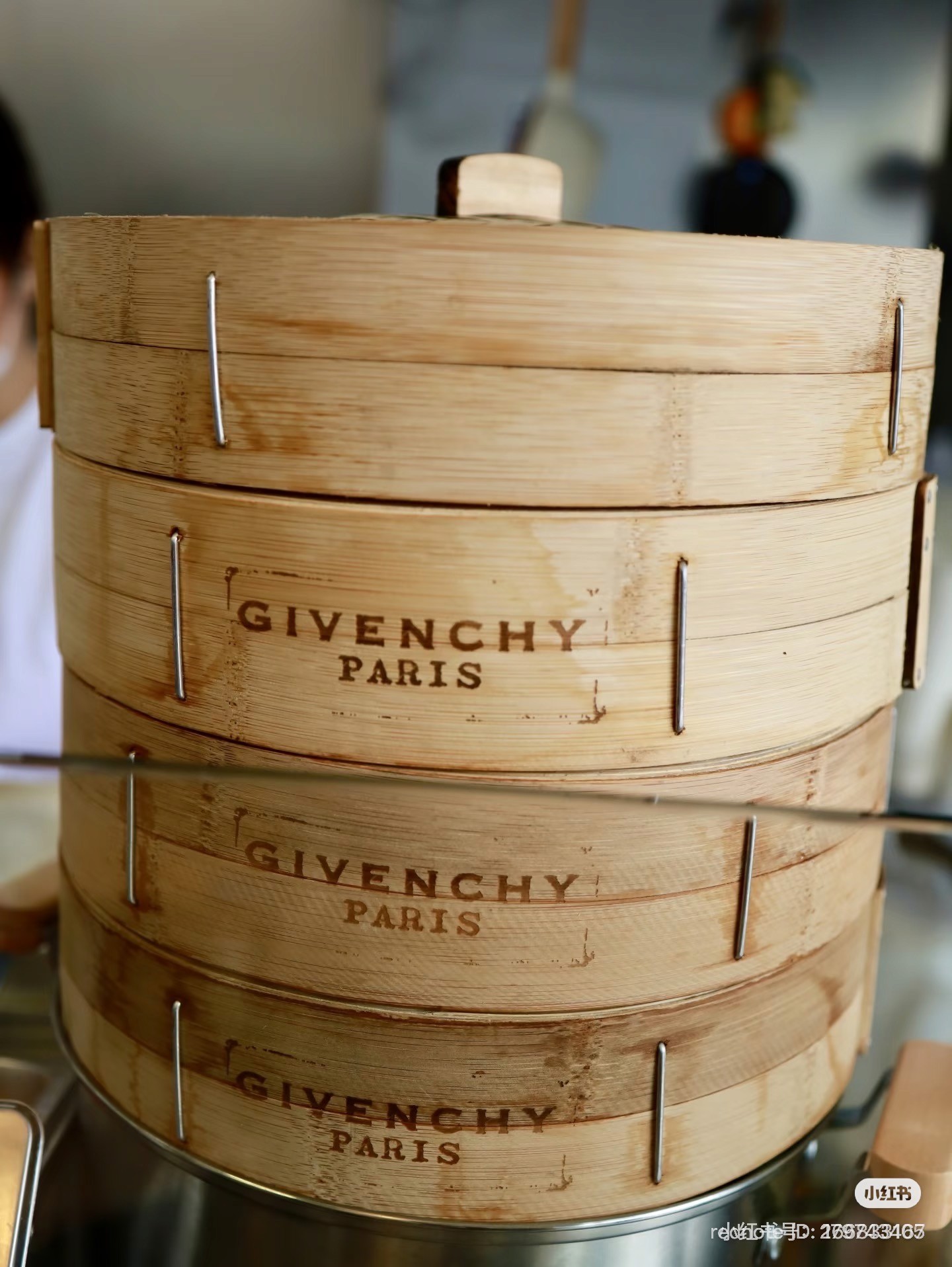
Givenchy sold 3 RMB youtiao in Shanghai. The internet is divided.
From May 22 to May 24, 2026, French luxury maison Givenchy ran a 3-day breakfast pop-up across 4 independently-operated cafes in Shanghai. The cheapest item on the menu: a youtiao (fried dough stick) at 3 RMB. The most expensive: the "Si Da Jin Gang 四大金刚 ('Four Heavenly Kings'), a classic Shanghai breakfast combo of da bing, youtiao, ci fan gao, and ci fan tuan, priced at 38 RMB.
Locations were spread across Huangpu, Jing'an, and Xuhui districts, three of Shanghai's most concentrated young-affluent neighborhoods. One pop-up site, the nightclub Aby'ss on Huaihai Road, sold "Givenchy breakfast" from 10pm to 5am only.
By the end of the weekend, "Givenchy breakfast" was the single most-discussed brand activation on Xiaohongshu and the most controversial Western luxury experiment of 2026 so far.
The split reads as: Generation Z loves it. Brand purists hate it. Both camps have a point.
What Givenchy actually did
The breakdown:
Aby'ss (Huaihai Road nightclub, 22:00-05:00): Four Heavenly Kings combo, 38 RMB. Late-night-into-dawn timing. A nightclub selling breakfast for clubgoers leaving at sunrise.
DOU Coffee (Chiang Mai-themed cafe in Xuhui): da bing pancake, 15 RMB.
Shan Xi Xian (Xuzhou rice noodle shop): xiaolongbao soup dumplings, 13 RMB.
A second Shan Xi Xian location (also Xuhui): same menu.
Pricing across all 4 sites:
Youtiao: 3 RMB
Soy milk (doujiang): 8 RMB
Egg pancake (dan bing): 15 RMB
Xiaolongbao: 13 RMB
Four Heavenly Kings combo: 38 RMB
The brand activation borrowed the visual style of classic Shanghai street breakfast carts. White Givenchy Paris posters were taped to the glass doors of each shop. The slogan: "qie hao jin chao xiang ming chao 切好今朝想明朝" ("slice up today, dream of tomorrow"). Brand ambassador Fan Chengcheng (former pop-idol turned actor) shot the campaign visuals.
No physical store. No actual Givenchy product on sale. No retail funnel.
Why the internet split
Three camps emerged within 48 hours of the pop-up opening:
1. The Gen Z "first luxury item" camp loved it. Young Shanghai consumers framed the 3 RMB youtiao as their "first Givenchy purchase." The price point made the brand accessible. The Instagram and Xiaohongshu photos with Givenchy poster + 3 RMB receipt became the trending shareable visual. The brand earned more Xiaohongshu organic posts in 4 days than its previous 6 months of paid campaigns.
2. The brand purists hated it. Older luxury consumers and industry critics argued the activation diluted Givenchy's heritage positioning. A maison founded in 1952, dressed Audrey Hepburn, defined haute couture for two generations... now selling 3 RMB fried dough on a Shanghai sidewalk. The semiotic distance between Hubert de Givenchy's gowns and a 22:00-05:00 nightclub doujiang felt too far. Critics called the activation "yi pin yi fan 一品一夜" ("a brand worth less than a one-night stand") on Weibo.
3. The cultural critics had questions. The 4 partner shops had no obvious connection to breakfast. A Chiang Mai coffee shop, a Xuzhou rice noodle joint, and a nightclub were not exactly Shanghai's heritage breakfast scene. Local Shanghai breakfast establishments (Da Hu Chun, Hu Bin Lou) were not involved. The activation read more as "luxury brand cosplaying local culture" than as authentic neighborhood embedding. Cultural appropriation arguments started circulating by Monday morning.
What Givenchy was actually trying to do
The brand-strategy read is interesting once you strip away the youtiao-as-statement-piece spectacle.
Givenchy has been quietly repositioning under designer Sarah Burton since 2024. The LVMH-owned house had a 5-year transition phase under Matthew Williams that didn't drive China growth the way LVMH wanted. Burton's role is to reset the brand for the post-2025 luxury cycle: more couture rigor, less streetwear noise, sharper female silhouette focus.
The Shanghai breakfast pop-up is part of the reset. The 3-day, 4-location, 22:00-05:00 nightclub framing tells you the brand is targeting:
Chinese Gen Z and young millennial consumers (not the existing affluent customer base)
Discovery, not transaction (no product sold)
Xiaohongshu virality, not Tmall conversion
Daytime-to-night occasion overlap (the breakfast-as-late-night-snack flip)
The slogan "切好今朝想明朝" ("slice up today, dream of tomorrow") translates the breakfast ritual into a quasi-philosophical Givenchy moment. The campaign visual featured Fan Chengcheng casually wearing the brand's spring collection in a Shanghai breakfast environment.
In LVMH's broader playbook context, the activation is the China equivalent of the Louis Vuitton "Louis Boat" exhibition at HKRI Taikoo Hui that delivered +81.5% Q1 mall sales. Both are exhibition-format brand events designed to drive Xiaohongshu impressions and brand discovery, not direct retail revenue.
Why this matters for every Western brand reading
Three takeaways:
1. The "luxury x local" pop-up is now a major China activation format. LVMH has Louis Boat. Hermes has the Cool Crafts annual exhibition tour. Bottega Veneta has Veneta Italian breakfast pop-up. Dior has the art-gallery format. Now Givenchy has the street breakfast format. The pop-up exhibition is the China luxury marketing format that crushes traditional store openings on Xiaohongshu impression terms.
2. The mathematical price-point gap is the engagement engine. A 3 RMB youtiao in front of a Givenchy poster generates 10x the social engagement of a 30,000 RMB Antigona handbag in a polished glass case. Chinese Gen Z loves the brand-status-with-low-cost-entry combination. The brand's challenge is funneling those engagement moments back to actual product purchase 2-3 years later when the same consumer can afford the 30,000 RMB Antigona.
3. Cultural appropriation risk is now binary. Givenchy avoided the disaster outcome (no Cultural Revolution-era imagery, no clumsy chopstick-as-prop moment, no Year of the Horse calligraphy fail). They worked with independent shops, not big brands. They priced authentically. They avoided overproducing the Chinese-ness. But they didn't fully nail it either. The "why are Chiang Mai coffee shop and Xuzhou rice noodle joint selling Shanghai breakfast" question is the brand's biggest unforced error.
If your brand is planning a 2027 Chinese New Year pop-up, study this Givenchy weekend in detail. The line between "discovery moment that lands" and "cringe Western brand reaches" is now thinner than it has ever been.
What you should do this quarter
A 5-point checklist:
Audit your 2026 China activation calendar against pop-up exhibition formats. If you're still planning a "store opening with celebrity ambassador" as your big Q4 China activation, you're 18 months behind. The format has moved.
Identify your "3 RMB youtiao equivalent." What's a low-cost, locally-meaningful, Xiaohongshu-shareable artifact your brand can put a logo on? Coach has the empty-shopping-bag-as-collectible. Burberry has the personalization scarf bar at 190-200 RMB price tier. Pick yours.
Pick locally-credible operating partners, not big brands. Givenchy paired with 4 indie operators. The story landed harder for that choice. The 2027 entrants who go for Starbucks-as-partner will get rejected by Xiaohongshu.
Build a 22:00-05:00 occasion if your category fits. Shanghai nightlife, Beijing 798 art district, Chengdu jiu ba street are all overlapping Chinese affluent consumer night windows. Most brands' activations end at 8pm. The brand that programs to 5am wins night discovery.
Have a cultural-appropriation review board ready for every activation idea. Internal red-team of 5 China-native staff who can review every concept before launch. Givenchy mostly passed. Many Western brands won't. The cost of getting it wrong is a 4-week brand crisis on Xiaohongshu.
The closing read
Givenchy ran a 3-day, 4-location, 38-RMB-max breakfast pop-up in Shanghai. The campaign generated more Xiaohongshu organic content in 4 days than the brand's entire 2025 marketing budget. It also generated more public criticism than any other LVMH China activation this year.
Both things can be true. The brand earned youth discovery while losing some legacy purist trust. The Gen Z consumer who shared a 3 RMB youtiao photo on Xiaohongshu is the 2030 affluent luxury buyer who will or won't remember Givenchy when they're ready to upgrade.
The Western brand calculation in 2026 China is: are you optimizing for revenue this year, or brand equity 5 years out? Givenchy just chose the latter, loudly, knowing the noise would be polarizing.
If your brand isn't running activations that split Xiaohongshu opinion at all, you're probably already invisible. If your brand is running activations that split Xiaohongshu opinion in the wrong direction, you have a different problem.
Givenchy played the right side of that bet this weekend. Now we get to see if the 2027 sales line confirms it.

