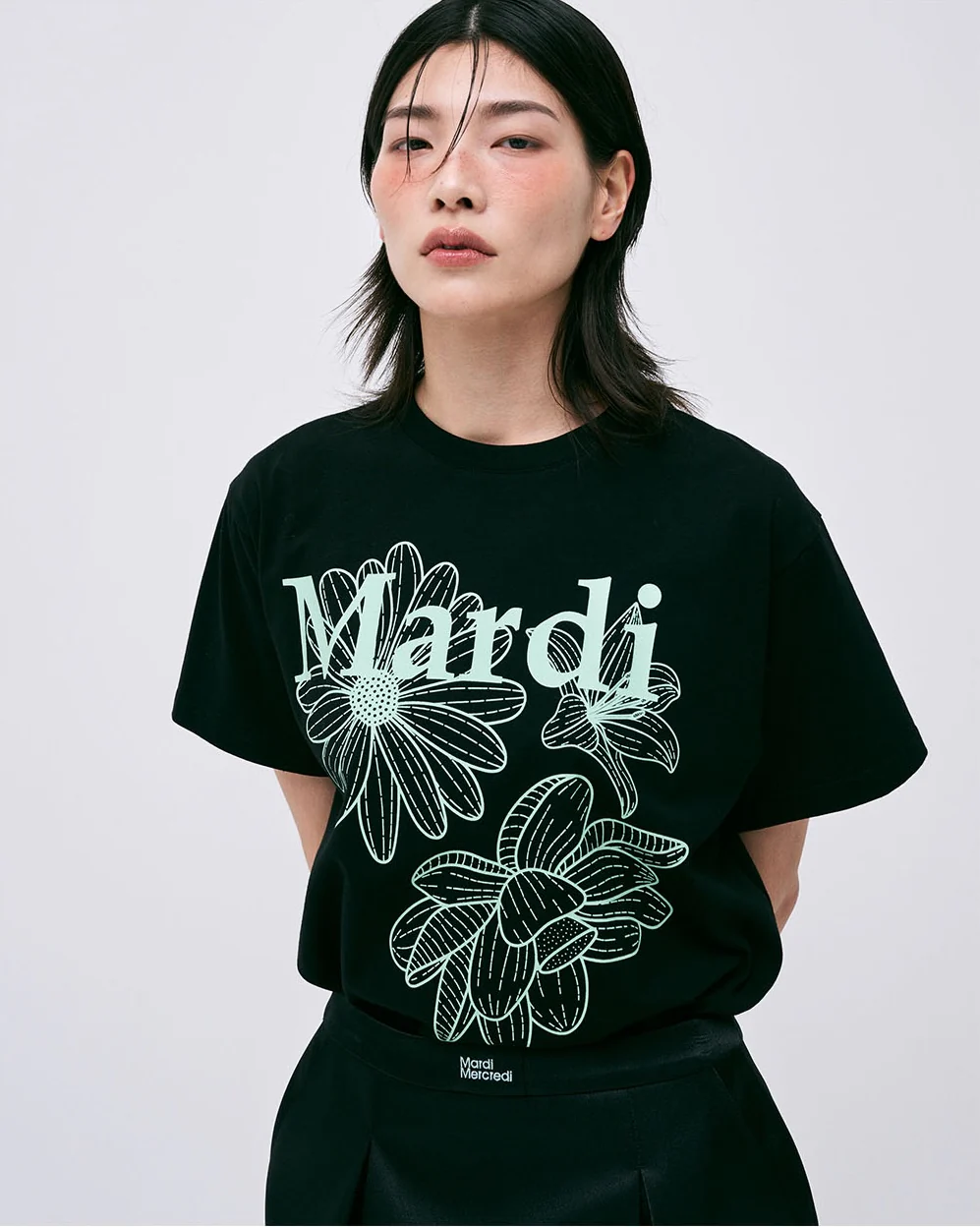
Korean brands are sneaking back into China through livestreams. Mardi Mercredi just sold hundreds of millions of won in 1 hour.
Five years ago, Korean fashion brands fled China.
The K-fashion wave that built brands like Bean Pole, Beanpole Outdoor, and 8 Seconds into Chinese mall fixtures cratered after the 2017 THAAD missile dispute. By 2019, most Korean fashion labels had quietly shut their China retail. By 2022, "Korean fashion in China" was effectively a memory in the industry. The Chinese consumer's allegiance had shifted to local brands.
Then the wave turned.
Korean indie fashion labels are now rushing back into mainland China, but the route is completely different. No mall stores. No tier-1 retail leases. No multi-year wholesale negotiations. Instead, brands are testing Chinese consumer demand through 1-hour livestream commerce broadcasts on Xiaohongshu (also known internationally as RedNote) and TikTok Shop.
The result Mardi Mercredi just posted: hundreds of millions of won in clothing sold during a single 1-hour livestream broadcast in China. The fastest K-fashion test result in 8 years. And the proof that Korean brands have figured out the lightest, fastest Chinese market entry model in the global fashion industry today.
If you're a Western brand owner watching Korean brands run circles around you in China entry, this is the playbook to study.
What Mardi Mercredi proved
Mardi Mercredi (the Seoul-based label founded by designer Park Hwa-mok in 2018, best known for its retro-prep silhouettes and signature flower logo) ran a 1-hour livestream commerce broadcast in mainland China and sold "several hundred million won" worth of clothing. Several hundred million won converts to roughly $250,000-500,000 USD in revenue, depending on the exact figure within the range.
That's not the headline. The headline is what didn't happen:
Mardi Mercredi did not open a single physical store in China to achieve this result
Mardi Mercredi did not sign a Chinese wholesale distributor
Mardi Mercredi did not run a Tmall flagship pre-launch
Mardi Mercredi did not commit to a multi-year marketing budget
Mardi Mercredi did not move staff to China
What Mardi Mercredi did: appear on a Chinese livestream commerce broadcast, present product, and let Chinese consumers buy. 1 hour. Hundreds of millions of won. Zero capex.
For a brand the size of Mardi Mercredi (a Seoul indie label, not a chaebol-backed mass brand), this is the most efficient China market test that has existed in 10 years.
The list of Korean brands following
Several additional Korean indie fashion labels active or active-soon on the same model:
Mardi Mercredi (Seoul, retro-prep, flower logo)
Matin Kim (Seoul, premium minimalist)
Emis (Seoul, accessories and bags)
Depound (Seoul, women's accessories)
Hawen (Korean womenswear)
Plus an adjacent move from Korean travel: Asiana Airlines is running a 3-hour 30-minute live-commerce broadcast from Asiana's Seoul headquarters in partnership with Ctrip (Trip.com, China's largest online travel agency), starting at 3:00 pm. Topic: South Korea tourism packages aimed at Chinese consumers.
What's emerging is a structured K-brand China re-entry route that has 3 distinct lanes:
Indie fashion lane: Mardi Mercredi, Matin Kim, Emis, Depound, Hawen on Xiaohongshu and TikTok Shop livestream broadcasts
K-beauty and K-food lane: separate playbooks tested on the same platforms
K-tourism lane: Asiana, Korean Air, Korean tourism boards running Chinese-platform broadcasts to drive inbound traffic to South Korea
Each lane uses the same core mechanic: pay for 1 livestream slot, test the response, scale only if the result justifies expansion.
Why this works now (and didn't 5 years ago)
5 years ago, Korean fashion brands trying to test China had 2 options: build a Tmall flagship (12-month commitment, 6-figure setup costs, requires China-resident staff) or sign a wholesale distributor (multi-year lock-in, opaque sell-through reporting, brand-control loss). Both were heavy structures with multi-year exit costs.
Today, 5 things have changed:
Xiaohongshu commerce is now a real e-commerce platform, not just a content platform. Xiaohongshu's transactional GMV grew 240% in 2025. Foreign brands can sell directly without a Tmall flagship.
TikTok Shop (Douyin Shop's overseas variant) has built cross-border infrastructure that lets a Korean brand sell into Chinese shoppers via cross-border e-commerce on Douyin without a mainland Chinese business entity
Chinese livestream agencies have moved to performance-based pricing. The top hosts (Li Jiaqi, Crazy Little Brother Yang, Dong Yuhui) operate revenue-share rather than fixed-fee deals. A Korean brand can negotiate a livestream slot for a percentage of sales rather than a 6-figure upfront fee.
Chinese consumer sentiment toward K-fashion has warmed sharply since the political chill thawed in 2024-2025. The Korean cultural wave (BLACKPINK, NewJeans, Squid Game) has re-established K-fashion as a legitimate aspirational reference for Chinese 20-something women.
The yuan has stabilized vs the won, making Korean-imported product pricing more attractive for Chinese consumers than it was in 2018-2020.
Add it up: 5 structural changes simultaneously make 2026 the best Chinese-market-entry window for indie K-fashion since 2016.
What this means for YOU as a Western brand
If you're a Western fashion, lifestyle, or accessories brand looking at China entry, the Korean indie playbook is the most relevant case study for you right now. Six things to take:
Livestream commerce is a real test before you commit to retail. Run 1-3 Chinese livestream broadcasts before signing any Tmall flagship, wholesale distributor, or physical store lease. The data from 3 broadcasts will tell you more about your brand's China demand than 12 months of agency PowerPoint will.
Indie brands have a structural advantage here. Korean indie brands move faster than chaebol-backed mass brands because they can sign livestream deals without 6 months of HQ legal review. Western indie and challenger brands have the same speed advantage. Use it.
Xiaohongshu is now a transaction platform, not just a content platform. Update your team's mental model. Build a Xiaohongshu shop and member CRM in parallel with your TikTok Shop cross-border presence.
Pay attention to revenue-share livestream deals. The top-tier Chinese hosts now offer performance pricing. If your brand is small and the host is large, this is a more efficient structure than fixed-fee commitments.
The K-cultural-tailwind window matters for Asian-aesthetic brands but doesn't help Western brands directly. Don't try to fake-Koreanize your brand for China entry. Find your own cultural-tailwind moment instead. Italian craftsmanship, Scandinavian minimalism, British heritage tailoring all have working cultural-tailwind narratives in China right now.
Scale only on verified data. The Mardi Mercredi playbook is to run the livestream first and ONLY commit to wholesale or retail if the data justifies it. Most Western brands burn the capex first and check the data later. Flip that order.
The closing thought
Mardi Mercredi just earned more in 1 hour of Chinese livestream commerce than most Korean fashion brands earned in their entire 2019 China year.
The China market hasn't changed. The structural cost of testing China has dropped 80-90% in 5 years. Korean indie brands are running the new playbook now. Western indie brands could be running it next week.
If your brand is still hesitating on China entry because "we don't have a Chinese partner yet" or "we can't justify the Tmall setup cost," you're operating on a 2019 cost-of-entry model. Reset the math. The barrier to test China is 1 livestream broadcast and a cross-border e-commerce setup. The barrier to scale is the data.
Test cheap. Scale only on signal. Or watch Korean indie brands eat the Chinese 20-something fashion wallet before you finish your annual planning cycle.

