Mbappé China Backlash: 3 Brands Quit in 3 Hours
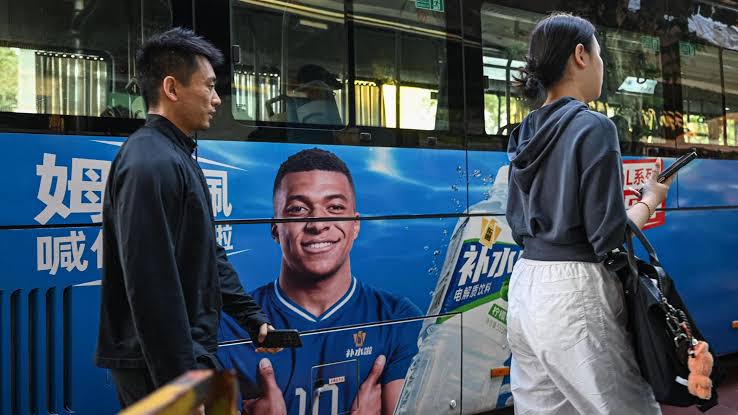
Chinese brands moved on Kylian Mbappé in a single morning. Dongpeng Beverage went first, then Mengniu, then Milkground, all inside about three hours on October 27, each one terminating "all cooperation."
CCTV stopped broadcasting La Liga matches involving him and pulled his ads. The Chinese Football Association lodged a protest with Real Madrid. By evening he had apologised in three languages.
None of that is the interesting part for a Western brand owner.
The interesting part is On, the Swiss running brand, which had signed him 39 days earlier and could not simply walk away.
What he said
A clip from a French show circulated in China on October 26. Asked about his favourite meme of himself, Mbappé talked about an image that put his face on Mao Zedong's body, and referred to the figure as a dictator.
Sports app Dongqiudi (懂球帝) posted a statement late that night saying it and several other outlets would not translate or relay his remarks, because they caused harm to China and the Chinese people. That statement is what lit the fuse.
The clip has since been taken down. Chinese and Western coverage both describe it as coming from a French podcast or online show rather than a post-match interview, though the filming date is not settled: RFI Chinese reported it was shot in March, and at least one Chinese account tied the remarks to the Clásico weekend. Treat the date as unconfirmed.
The three hours
Per NetEase's timeline:
Time | What happened |
|---|---|
Oct 26, 11:11 p.m. | Dongqiudi says it will not translate his words |
Oct 27, 9:43 a.m. | Dongpeng Beverage (东鹏饮料) terminates all cooperation. Its deal had begun April 20, six months earlier |
Oct 27, 11:13 a.m. | Mengniu (蒙牛) terminates |
Oct 27, around noon | Milkground (妙可蓝多) follows |
Chinese reporting also lists Bushuila (补水啦) and Uni-President (统一) among the brands cutting ties, and Dior pulled Mbappé content from its channels. So the real count is higher than three, and two of the brands that moved were Western.
Foreign ministry spokesperson Guo Jiakun (郭嘉昆) said that "any words or deeds that hurt the feelings of the Chinese people will naturally be opposed by all sectors of Chinese society." After the apology, the ministry said it took it seriously.
Xiaohongshu noted its own deal with him had ended back in 2024 and said it was removing old materials anyway, which tells you something about how little anyone wanted to be adjacent to this.
The apology, and the verdict
La Liga's president apologised publicly. Real Madrid issued its own apology to China. At 7:39 p.m. on October 27, a statement went out from Mbappé's company Interconnected Ventures in French, Chinese and English:
"In a recent interview, I responded to an image featuring me. My comments were ill-judged, and I now understand that these words hurt many people in China and Chinese communities around the world. I apologize to everyone who was hurt... I have deep respect for the Chinese people and their history, and I am truly sorry."
Tencent News made the sharpest observation on it: the apology answered whether he said anything, not whether he said enough. CCTV's line was that the apology would be judged by what he does next. The contracts were already gone and the broadcasts were already off, and an apology does not reopen either.
One thing he got right, for what it is worth. He posted in three languages on his own channels. NetEase contrasted this with a Real Madrid player earlier this year who apologised only on the club's Chinese Weibo account, which Chinese fans read as double standards.
Why On could not just drop him
Here is where it gets instructive, and where the draft version of this story that circulated last week got it wrong.
On did not stay silent. It scrubbed first and spoke second.
On September 18, Mbappé left Nike after nearly twenty years and signed with On. Read the shape of that deal carefully, because it is the whole problem:
Ten years, not a season or a campaign
Compensation in cash and On equity
He is a co-creation partner (共创伙伴), directly involved in developing and testing On's football boots and apparel
First football product due 2027
On has hired Thierry Henry as its football director
This is the same playbook On ran with Roger Federer to get into tennis: bind a star athlete to product development, then launch the category on his credibility. Which makes Mbappé the foundation of a product line that does not exist yet, rather than the face of a shoe already in the warehouse.
Now the other side of the ledger. Greater China is On's second-largest single market globally and its growth engine. From the first-half 2026 results: Asia-Pacific net sales of CHF 344.5 million, up 43.7% year on year and 58.1% at constant currency, the group's fastest-growing region, lifting APAC from 16.2% to 20.5% of global sales. Second-quarter APAC was CHF 170.5 million, up 54.7% at constant currency, with Greater China beating the company's own expectations across every channel. Meanwhile global growth slowed and North America decelerated sharply.
On runs China mostly direct, with over 80 stores across more than 30 cities, a target of 100 by the end of 2026, roughly half of its 20 to 25 new global stores each year going to China, and an 802 square metre flagship at Shenzhen MixC World opened in March.
So: a ten-year equity-linked product partnership with one man, and a fastest-growing market that just decided it hates him.
What On actually did, on October 27, was remove all Mbappé content from Weibo, WeChat and Channels, while customer service said to wait for official channels. Then, after the apology, it welcomed the apology, reiterated respect for China, and said that athletes' statements represent their personal views.
Jiemian notes that On has no public precedent for terminating an athlete over misconduct. The precedent that does exist elsewhere: Nike paused Kyrie Irving's signature shoe in 2022 and then ended the relationship outright over antisemitic content, writing off a mature and commercially substantial product line.
What a brand owner should take from this
1. Audit for political commentary, not for controversy.
Mbappé had been controversial before. He refused to take part in some French national team sponsor shoots in 2022 over a values disagreement, and he commented on the French election as captain in 2024. Neither cost him a deal, because both stayed inside football and inside France.
So the screening question is not "has this person been in trouble." It is narrower and more useful: has this person ever commented publicly on a country, a leader, a political system, a border, or a historical figure.
Have someone fluent go through every long-form interview, podcast and livestream your ambassador has done, in their own language, not just the clipped quotes. That is where this lived for months before anybody in China saw it.
2. Never reach for the "personal views" defence.
On's line was that athletes' statements represent their personal views. This is the instinctive legal-safe position, and in China it reliably makes things worse, because it reads as declining to take a position at all.
Decide now what your brand's own sentence is, and make it a position on the substance rather than a disclaimer about whose opinion it was. Write it before you need it, get it approved, and keep it where your China team can reach it at eleven at night.
3. Keep the person separable from the product roadmap.
This is the expensive lesson and it is a contracting decision, not a crisis decision.
An endorsement is reversible in an afternoon. A ten-year co-creation deal with equity, where the athlete's input is baked into a product line launching in two years, is not. On can delete the Weibo posts. It cannot delete him from the 2027 boot.
If you are signing a deep athlete partnership, ask your legal and product teams one question: if this person became unusable in our largest growth market, what would still ship with their fingerprints on it. Then decide whether you are comfortable with that answer.
4. Set the clock and name the person who starts it.
Dongpeng moved roughly ten and a half hours after the Dongqiudi statement. Three brands cleared out inside three hours of each other. Three to five days of reporting up to headquarters is no longer a process, it is an absence.
Name one person in China who can pull content and publish a holding statement within two hours without a headquarters sign-off, and name their deputy. Write down which three assets come down first. "We are verifying" is not a position, and it costs you the news cycle.
5. Have a local face already working, not on a shelf.
A China-specific ambassador is a real hedge, and only if they are already active. A name sitting in a contract drawer does not give you anything to post on the morning your global ambassador becomes the hot search.
If your entire China visibility runs through one global signing, you have a single point of failure wearing football boots.