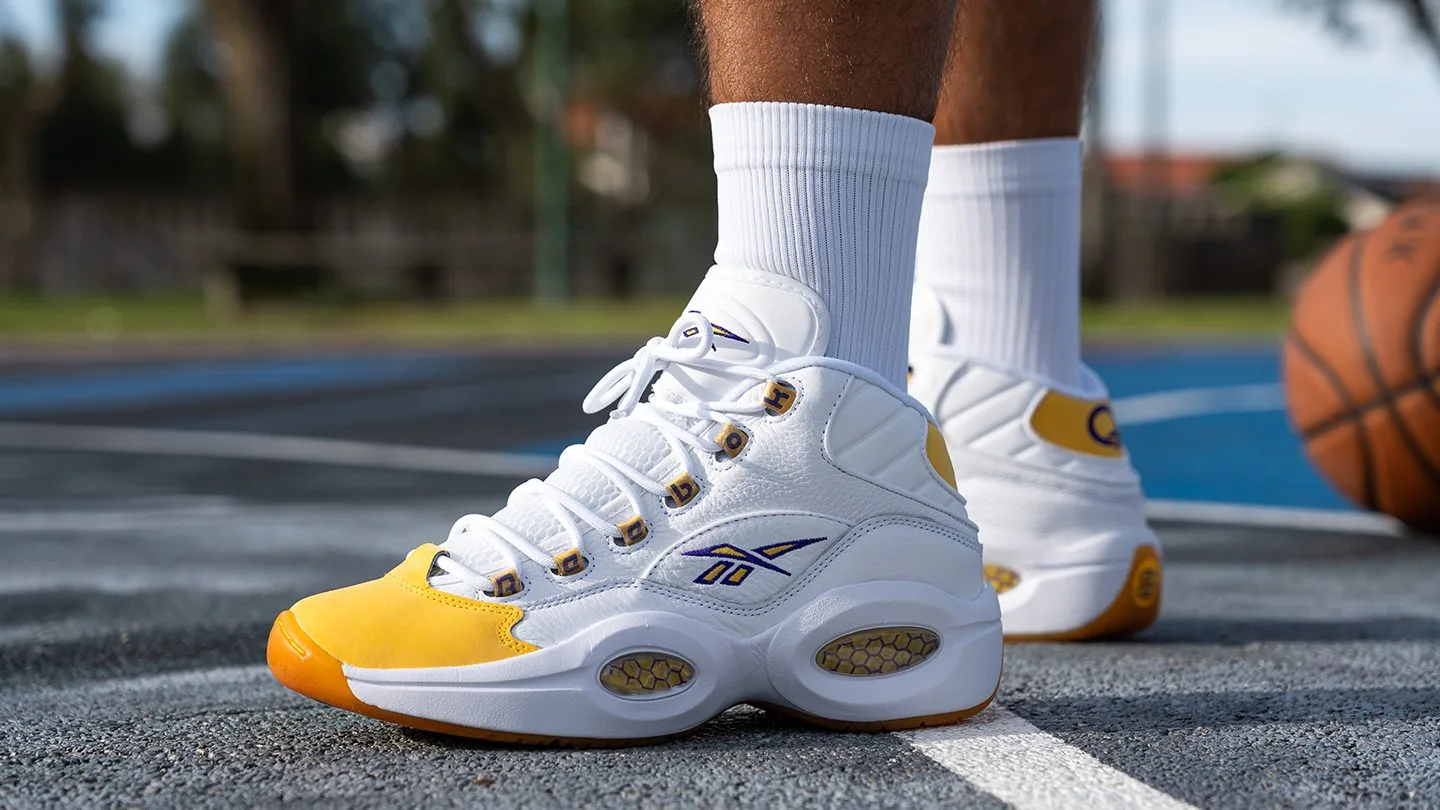
Reebok just announced its Tmall flagship will close June 30. The Authentic Brands Group China retreat begins.
Reebok was one of the first Western sportswear brands to plant a Chinese flag.
It is now one of the latest to admit it can't make the flag fly.
On June 5, Xinhua's weekly fashion compilation confirmed that Reebok had published a business-suspension notice and would close its Tmall official flagship store on June 30, 2026. After the shutdown, Reebok's only remaining Tmall presence will be a handful of luggage, fitness, and skincare-related licensee stores. The core shoe and apparel categories that built the brand globally... will no longer have an official Reebok storefront on China's largest online retail platform.
This is not a small event. Reebok was the 4th-largest Western sportswear brand by Chinese consumer recognition for two straight decades. The fact that the Tmall flagship is closing in 2026, while every other Western performance brand is doubling down on Tmall and Douyin, tells you the Authentic Brands Group strategy for Reebok China has officially flipped from "operator" to "licensor."
And it tells Western brand owners a much bigger story about what happens when a global brand owner outsources too much.
The timeline that got Reebok here
To understand why Reebok is closing its core Tmall channel in 2026, you have to look at the 5 inflection points that made it inevitable:
1981: Reebok formally founded out of a UK shoemaker history dating to 1895
1990s-2000s: Reebok rides aerobics and basketball (Iverson) into the global top tier of athletic brands
2005: Adidas acquires Reebok for $3.8 billion. Synergies promised. Synergies never delivered
2005-2021: Adidas struggles to position Reebok separately from the Adidas brand. Reebok loses its independent identity. China business never reaches its potential under Adidas ownership
2021: Adidas sells Reebok to Authentic Brands Group (ABG) for $2.5 billion. A net $1.3 billion loss vs the 2005 purchase price
2022-2025: ABG runs Reebok as a brand-management business, not an operating business. Licensing deals across product categories, regions, and channels. The core sports footwear and apparel category gets licensed to operating partners
2026: Anta Sports holds the China license for Reebok via an earlier joint venture / license arrangement. Operating performance in China underwhelms. Tmall flagship is no longer commercially viable as an Anta-operated channel and gets closed
This is the trajectory. Once a brand goes from "owned by a strategic operator" to "licensed by a brand-management firm" to "regional license to a local operator," the on-the-ground brand momentum tends to compound downward unless every operator runs the brand exactly the way the global plan dictates. That rarely happens.
What "Tmall flagship closes" actually means
When a Western brand's official Tmall flagship closes in China, three things happen mechanically:
Search and discovery collapse. The flagship store was the brand's anchor in Tmall search results, "guess you like" recommendations, and category leaderboards. The minute it's closed, organic Chinese consumer discovery of the brand on Tmall drops by 70-90%.
Member CRM disappears. Years of Tmall member accumulation (typically 1-5 million members for a mid-tier Western brand) loses its primary engagement point. Re-acquiring those members on Douyin, Xiaohongshu, or WeChat costs 3-5x what it cost to acquire them originally on Tmall.
Distributor mind-share shifts. Chinese physical retail distributors look at Tmall flagship presence as a signal of brand investment commitment. The flagship closure typically triggers renegotiation conversations across the offline retail network.
For Reebok, the official remaining Tmall presence will be only luggage, fitness equipment, and skincare licensee stores. Those are all secondary or tertiary categories for the brand. The category that defines Reebok globally (athletic footwear and apparel) will not have an official Tmall presence after June 30, 2026.
Why this is the ABG playbook
ABG owns more than 50 brands globally, including Reebok, Brooks Brothers, Nautica, Sports Illustrated, Eddie Bauer, Quiksilver, Roxy, Aéropostale, Forever 21, Volcom, Juicy Couture, Jones New York, Vince Camuto, and many more. The ABG operating model is licensing. The company does not operate stores directly. It collects royalties from operating partners.
In China, this model has structural friction:
Operating partners in China rarely invest at parent-brand intensity. A Chinese license-holder has dozens of brands in its portfolio. Reebok is one of them. The marketing budget allocation, the store-opening rate, and the e-commerce investment are calibrated to the operating partner's margin economics, not to the global brand's ambition
Brand standards drift. Without a Western parent-brand China general manager pushing daily on design consistency, marketing language, and product mix, the brand starts to look different in China than it does globally. Consumers notice. Brand equity erodes.
The exit path is built in. When the licensing economics stop working, the operating partner simply scales back. There's no parent-brand commitment to defend the China presence at all costs. The brand becomes a real-estate portfolio with a logo on it, similar to what just happened with Häagen-Dazs.
Reebok's China Tmall closure is the predictable end-state of this model when the operator decides the platform economics don't justify the operating cost.
What other Western brands should be reading from this
If you run a Western sportswear, fashion, or lifestyle brand and you're considering a licensing structure for China entry or expansion, the Reebok June 30 announcement should be on your CEO's desk this week.
Six things to think about:
Licensing China is not "low-risk China entry." It's "low-control China entry." Lower upfront cost, lower upfront risk, lower long-term brand equity. Decide which trade-off you actually want before signing.
The Tmall flagship is the most important single asset of any Western brand in China. If your operating partner won't commit to flagship investment at the parent-brand level, that's a flashing yellow light. If they close the flagship, it's red.
CRM data ownership matters more than any other contract term. When the flagship closes, whoever owns the member data owns the brand's ability to rebuild on a different platform. Make sure that's you, not your licensee.
Anta is increasingly choosing portfolio winners. Anta has the Reebok China license but also owns Arc'teryx, Salomon, DESCENTE, Kolon, Wilson, and FILA. When portfolio constraints force prioritization, Reebok gets less attention than Arc'teryx or DESCENTE. That's exactly what just happened.
Authentic Brands Group's China portfolio bears watching. Brooks Brothers, Nautica, Quiksilver, Eddie Bauer, Volcom, Juicy Couture, Aéropostale all sit in ABG's portfolio with various China license arrangements. The Reebok Tmall closure may not be the last ABG-portfolio China retreat in 2026.
A Tmall closure is a controllable exit. A consumer abandonment is not. Reebok's Tmall move is being framed as a "business suspension" not a "brand exit." That's a deliberate corporate-communications choice. The brand is still alive globally and will be relaunched in China through whatever the next operating partner or channel structure looks like. If you're closing a China channel, do it cleanly and on a stated timeline. Don't let it die slowly in silence.
The closing thought
For 4 decades Reebok was the Western sportswear brand that almost made it in China. Iverson basketball shoes. CrossFit. The Easytone wave. Three different China relaunches. None of them stuck enough to make Tmall a profitable channel by 2026.
When the licensor model meets a Chinese sportswear market where Anta, Li-Ning, On Holding, Hoka, and Salomon are running circles around the foreign mid-tier... the operating partner runs the math, looks at the next 12 months, and signs the Tmall closure notice.
If you're a Western brand owner reading this and your China strategy is "find a great Chinese licensee and let them figure it out," ask yourself which side of the Reebok story you want to be on in 5 years.
The license route looks cheap. Until the day it costs you the brand.

