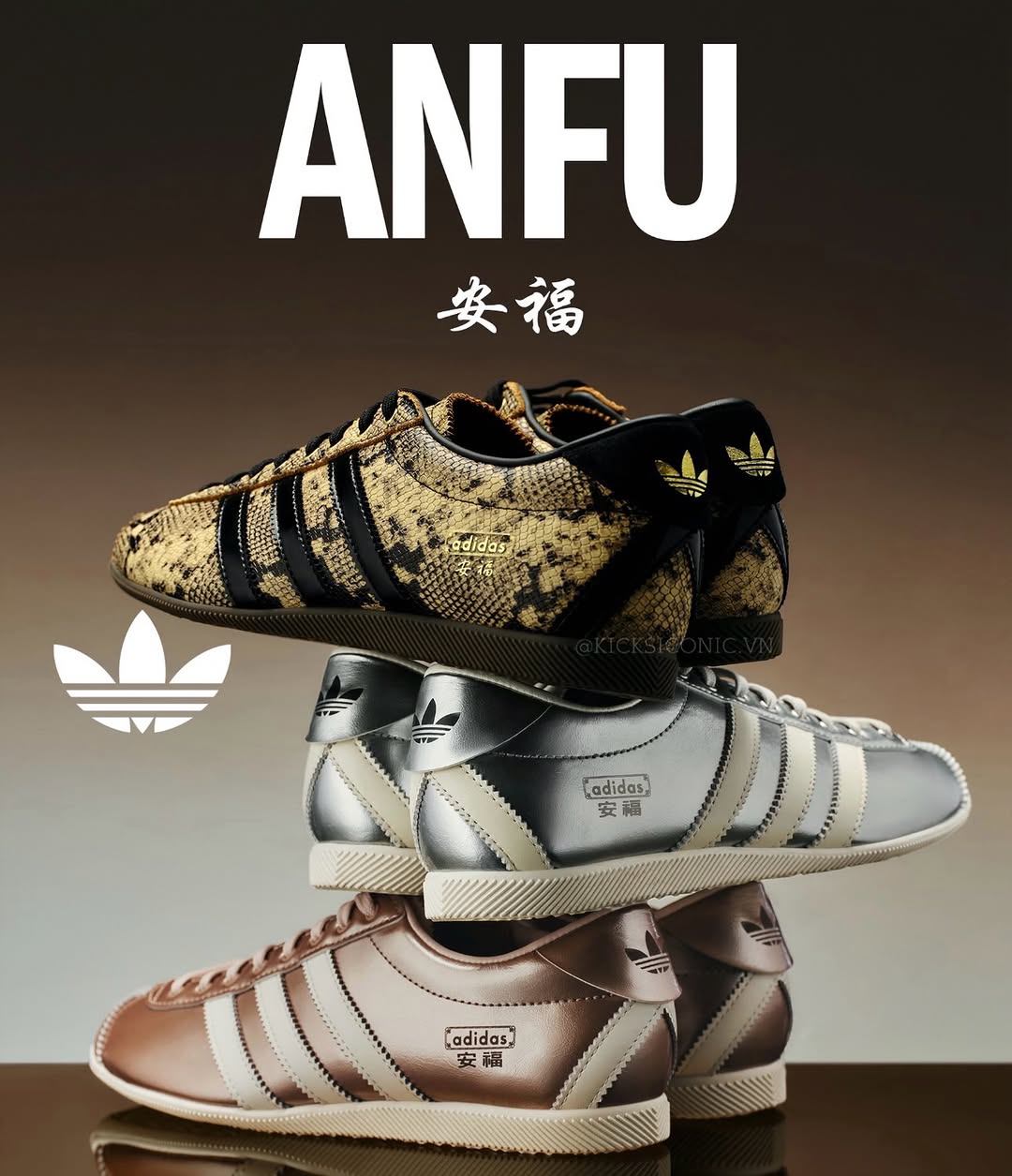
Adidas Named Two Sneakers After Shanghai Streets. And It Might Be the Smartest China Move of 2026.
Pop quiz. What do "Anfu" (安福) and "Changle" (长乐) mean?
If you're a brand executive reading this from London or New York... probably nothing. But if you live in Shanghai, those two words light up your brain like a neon sign.
Anfu Road and Changle Road are two of Shanghai's most iconic fashion streets, tree-lined corridors in the former French Concession where independent boutiques, coffee shops, and streetwear stores cluster together. They're where Shanghai's style-conscious crowd goes to see and be seen. They're fashion pilgrimage sites.
And Adidas just named sneakers after them.
What Adidas Actually Built
In January 2026, Adidas Originals released two China-exclusive sneakers designed entirely by the brand's Shanghai Creative Center, a local design team that operates independently from global HQ.
The "Anfu" (安福) is a leather flat-sole sneaker. One version features a snakeskin texture. The brand name "安福" is embossed directly on the side of the shoe, in Chinese characters. Not hidden. Not tiny. Centered and visible.
The "Changle" (长乐) is wilder. It's a bright yellow flat-sole shoe with a koi fish scale texture across the upper. The name "CHANGLE" sits on the lateral side. The koi pattern isn't random... it references jinli (锦鲤), the lucky carp symbol that's become a viral internet meme in China. When someone wins a prize draw or gets impossibly lucky, they're called a "锦鲤." Adidas embedded that cultural shorthand directly into the shoe's DNA.
Both shoes were built on a new last, a shoe mold, specifically optimized for Asian foot shapes. Wider toe box. Different arch support. A 2-centimeter midsole designed for comfort during long urban walks, not athletics. These shoes aren't for running. They're for Anfu Road.
The initial release on January 23 went through designated offline channels only. Limited. No global drop. China-first.
And Now, Shanghai Fashion Week
Here's where it gets really interesting. The "Anfu" and "Changle" shoes are now the centerpiece of Adidas's activation during the 2026 Fall/Winter Shanghai Fashion Week, which kicks off March 25.
The brand is hosting an "Originals Salon" (Originals会客厅) on Yongfu Road, literally one block from the real Anfu Road, from March 26 to 29. The space will showcase the shoes alongside Adidas's design archives and upcoming products. The Shanghai Creative Center's senior VP of product will deliver a keynote at the M SPACE forum alongside the CEO of EP YAYING, one of China's most respected domestic fashion groups.
This isn't a pop-up. It's a statement. Adidas is saying: our Shanghai team doesn't just tweak global products for local tastes. They create originals that start here.
Why This Is a Localization Masterclass
Most Western brands do "localization" by slapping a Year of the Dragon print on their existing products and calling it Chinese New Year marketing. Consumers see through it immediately. Xiaohongshu is full of posts mocking lazy CNY capsule collections, year after year.
What Adidas did is fundamentally different. And the differences are instructive:
1. The product was conceived locally, not adapted globally. The Shanghai Creative Center didn't receive a brief from Germany asking for "an Asian version of the Samba." They started from zero, with a local team designing for a local consumer with a local cultural reference. That's the difference between localization and creation.
2. The cultural references are specific, not generic. Anfu Road and Changle Road aren't "Chinese culture." They're Shanghai culture. They're a signal to Shanghai's fashion community that says: "We see you. We know your streets. We designed for your world." A Beijing consumer recognizes the reference. A Chengdu consumer is intrigued. A Shanghai consumer feels ownership.
3. The functional design matches the cultural positioning. The shoes are optimized for Asian feet and built for walking, not sport. This isn't performance footwear pretending to be lifestyle. It's lifestyle footwear built from the ground up for how Chinese urban consumers actually move through their city. That honesty matters.
4. The shoe literally speaks Chinese. "安福" in Chinese characters on the side of a shoe from a German brand. That's not a detail. That's a declaration. It tells the consumer that the Chinese version isn't a translation. It's the original.
The Bigger Picture: Adidas's Local Design Bet
The Shanghai Creative Center isn't new. Adidas has been operating it for years, quietly building a team of local designers, product managers, and creatives who understand China from the inside. But "Anfu" and "Changle" are the most visible output yet, products where the local identity isn't hidden behind a global campaign but IS the campaign.
This comes at a critical moment. Shanghai Fashion Week FW2026 features 1,000+ brands and 100+ runway shows, and the government is reporting 11% growth in Shanghai's fashion consumption during January-February. The city is aggressively positioning itself as Asia's fashion capital, and brands that show up with authentic local stories, not imported global ones, get disproportionate attention.
Adidas is also recovering in China after a difficult 2023-2024 period. The "Anfu" and "Changle" shoes signal a shift from trying to win China with global hype to trying to win with local relevance. It's a different playbook. And based on early consumer response on Xiaohongshu, where the shoes generated significant buzz during the CNY period, it's working.
What This Means for YOUR Brand
Here's the part where it gets uncomfortable. Because most Western brands looking at China are still doing localization wrong.
Ask yourself: does your China team create, or adapt? If your local team's job is to translate global campaigns and pick which global products to emphasize for Chinese holidays, you're not localizing. You're distributing. The brands that win are the ones where the local team has a blank canvas.
Naming matters more than you think. "Anfu" and "Changle" aren't just shoe names. They're emotional shortcuts to an entire urban identity. What's the equivalent for your brand? If you can't name a street, a neighborhood, or a cultural moment that your product connects to... you don't have a China product. You have a global product being sold in China.
Build for the body, not just the brand. A shoe last designed for Asian feet sounds like a small detail. It's not. It's the difference between a consumer who tries on your product and thinks "this fits" versus "this is designed for someone else's foot." Physical fit creates emotional fit.
Show up where it matters. Adidas hosting its salon ON Yongfu Road, next to the real Anfu Road, during Shanghai Fashion Week, isn't a coincidence. It's geography as strategy. Your presence in a market needs to feel rooted, not parachuted in.
The gap between brands that "enter China" and brands that "exist in China" is getting wider every quarter. Adidas just showed what existing looks like... designing shoes on Shanghai streets, for Shanghai streets, named after Shanghai streets.
The question for every other Western brand: where are your streets?

