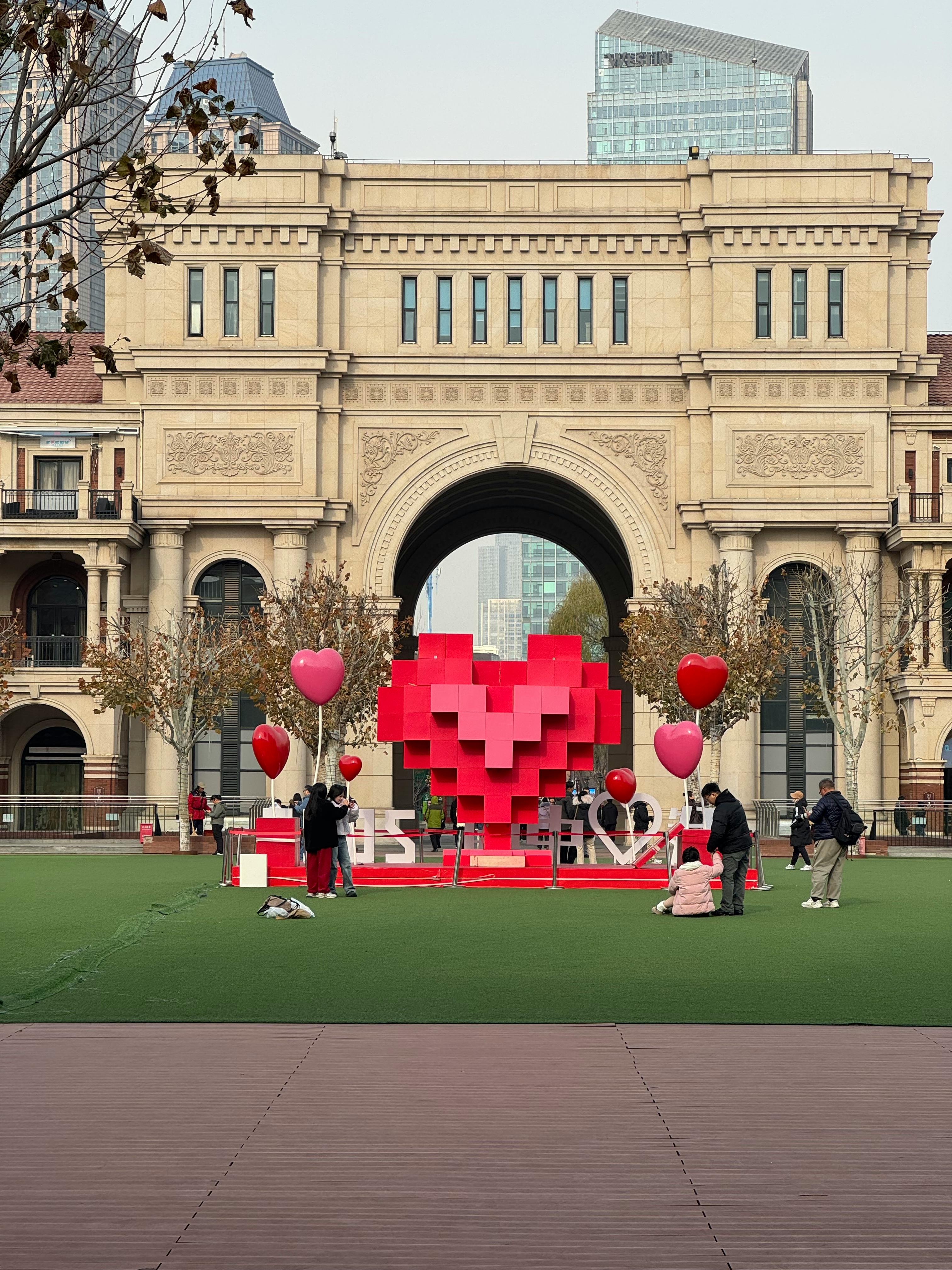
China's 520 Just Flipped on Brands. Self-Gifting Won.
China's 520 day (May 20, because "5-2-0" in Mandarin sounds like wo ai ni 我爱你, "I love you") used to be the second-biggest gifting holiday on the calendar. For 8 years, brands ran the same playbook: limited-edition red-and-pink SKU, male KOL gifting livestream, female Xiaohongshu unboxing. Aspiration loop closed. Money in.
This year that whole formula went silent.
Almost no major Chinese content platform built a 520 campaign in 2026. Mango TV did essentially nothing. Tencent Video and iQiyi just dropped normal new dramas with no campaign wrapper. Douyin ran a thin "520 Gift Season: Meeting Hearts" activity with only 6 official partner brands (JEAN D'ESTREES, Catman, Liby, PMPM, OLAY, Whisper). Kuaishou used 520 as a warmup teaser for 618 Shopping Festival instead of treating it as a standalone event. Compare that to 2024, when Youku, CCTV, Hunan TV, iQiyi, Tencent Video, Mango TV, WeChat Video, Tencent Music, Douyin, and Kuaishou all orchestrated full 520 plays.
One year. From every major platform fighting for the same Saturday to most of them treating it as just another weekend (except wedding registration offices stayed open later).
The simple read: brands and platforms that ran the 2018-2024 male-buys-female-receives 520 playbook in 2026 got punished. The Chinese consumer rewrote the holiday underneath them. If you ran a 520 campaign this year and the numbers underperformed, this is why.
What replaced the old formula
Tmall stopped running 520 as a couples campaign and reframed it as 爱的日常定律 ("Daily Laws of Love"), a year-round emotional consumption framework where love is one of many ordinary inputs to a purchase, not a one-day event.
Douyin's Ocean Engine ad platform ran an IP called 爱是亿种美学 ("Love is a Hundred Million Aesthetics"), splitting the holiday into four directions: family love, romantic love, friendship love, and self-love (yue ji 悦己). The main topic hit 1.52 billion plays. Sub-hashtags included "Surprises for parents," "Ten thousand ways to express love," "What friendship looks like at its best," and the breakout "悦人不如悦己" ("Rather than please others, please yourself"). User-generated submissions crossed 89,000. Landing page exposure crossed 5.7 million.
The category mix under "Love is a Hundred Million Aesthetics" broke the traditional 520 boundaries. Home cleaning, oral care, paper tissue, wellness products, gold jewelry, fresh milk shops, even AI assistants showed up alongside beauty, jewelry, and fashion. 520 became a "national course in sharing love," with the brand acting as backdrop and the consumer story acting as protagonist.
The consumer kept spending. The spend just changed shape. Douyin commerce data for the 520 window (May 12-18) showed beauty and personal care, jewelry, and apparel team-purchase orders rising more than 2x year-over-year. The jewelry brand CRD on Douyin hit +198% during the activity period.
The five rules that changed in 2026
The structural shift, broken into five pieces:
1. Self-love replaced male-gifts-female. "Rather than please others, please yourself" broke out as the standout sub-hashtag inside "Love is a Hundred Million Aesthetics." Chinese female 25-35 consumers are spending on themselves at 520, not waiting for a partner gift. The male-led formula is now openly called 甜蜜套路失灵 ("the sweet routine has failed").
2. Practical beat limited-edition. The clearest read from inside the China livestream industry in 2026: the consumer's mind is mature enough to buy the product directly without needing extra atmosphere. Most brand clients now feel they may as well just go straight to 618 Shopping Festival. Practical 520 SKUs at standard pricing outsold limited-edition versions at premium markups.
3. Diversified love beat couple romance. Ocean Engine's four-direction split exists for a reason: family, romantic, friendship, self. Brands that ran 520 campaigns only on the couple-romance axis missed the other three spend buckets. Fresh flowers, gold jewelry, wellness products, even AI assistants ran 520 plays under the broader "love" banner.
4. Genuine emotion beat romantic mood. To move young Chinese consumers, brands have to be specific. Trust the power of the specifically-felt. Glossy red-and-pink hero film without product specificity landed as inauthentic. Specific emotional storytelling, with the product as a character detail, converted.
5. Event burst to daily permeation. The smartest brands stopped tracking 520 success on next-day GMV. They started tracking it on 60-day brand-relationship deepening with the consumer who saved the SKU to her wishlist before buying. Coach's Iris & Elliot 520 capsule and Bottega Veneta's Veneta bag revival both ran on this longer arc.
Why the shift happened in 2026 specifically
Four forces converged.
The fan jingzhi 反精致 ("anti-perfectionism") cultural trend. The same huo ren gan 活人感 ("alive person feeling") shift we covered five weeks ago flowed into 520. Polished scripted brand campaigns landed as inauthentic. The female consumer wanted brands to match her actual self-awareness, including the awareness that she doesn't need to wait for a man to buy her the thing.
Female economic independence at scale. The Chinese female 25-35 consumer has higher disposable income, more autonomy, and more cultural permission to spend on herself than at any prior point. The "wait for the boyfriend" gift script that was real in 2018 is no longer the norm. She's the buyer.
The Pop Mart effect. Kidult-economy spending (covered 3 weeks ago) trained the Chinese consumer to buy emotional products for herself. Labubu and the tong bao 痛包 ("pain bag") economy are female-self-purchase behaviors at scale. That muscle memory carried into 520.
The "deferred desire" pattern. Chinese consumers in 2026 save items to wishlists for weeks or months, edit the lists as their identity evolves, and buy with intention. A 520 limited edition that drops on May 17 with a May 20 expiry doesn't fit that pattern. The 520 holiday's content is also thin and vague. The three characters wo ai ni 我爱你 alone don't generate clear purchase intent without a sharper story underneath them.
What worked and what didn't
What worked:
Self-purchase framing campaigns built around the female buyer for herself.
Multi-direction love hashtags (family, friendship, self) sitting alongside the couples axis.
Practical-luxury SKUs priced on the standard ladder. CRD jewelry at +198% on Douyin is the proof point.
Long-arc brand relationship work (Tmall's "Daily Laws of Love," 60-day brand asset accumulation framing).
Real-emotion specific storytelling rather than abstract romantic mood film.
Event-burst-into-daily-permeation framing (not next-day GMV chasing).
Extended civil affairs bureau hours in Beijing, Wuhan, and Hangzhou for 520-521 wedding registrations as a tangible reason-to-celebrate hook.
What didn't:
Male-buys-female Tmall livestream formats with male KOLs gifting on screen.
520-only limited editions at 30%+ markups over standard pricing.
Red-and-pink hero film with no product story.
Couple-only romantic positioning without family/friendship/self extensions.
Platforms treating 520 as a separate marketing peak rather than a warmup for 618.
What you should take from this
If you ran a 520 campaign in 2026 and want to course-correct for Qixi (七夕, Chinese Valentine's Day) on August 29:
Reframe your gifting calendar planning around the female self-purchaser. Build the SKU, the price ladder, the creative narrative, and the platform-activation plan around her buying for herself. The male-purchase flow is a secondary path, not the primary.
Split your love-axis creative into four buckets. Romantic, family, friendship, self. Pick at least two for any China gifting peak. The 1.52 billion-play data on Ocean Engine's four-direction approach is the proof.
Build practical-luxury SKUs at standard ladder prices. Useful product at normal pricing wins over limited-edition-only product at premium markups. The premium markup is a 2018 monetization tactic that 2026 consumers see through.
Tell a real-emotion specific story first. Sell second. Your 520 (or Qixi, or Mother's Day) hero asset should be a 90-second specific narrative with the product as a detail, not a 30-second product shot with emotional voiceover bolted on. Test on Xiaohongshu first.
Plan creator activations 6-8 weeks ahead. Top-tier Xiaohongshu KOLs are booked by Tier-1 luxury brands 90 days out. If you book 2 weeks before the moment, you get B-tier creators who can't move purchase intent.
Treat the brand as backdrop. Let the consumer be the story. "Alive person feeling" original content resonates at the same frequency as the user's daily life. Your brand can do the same if you stop pushing the brand to the front.
Plan for the Qixi reset now. Concept lock by mid-July. Build the narrative around female self-celebration plus pair-gifting flexibility. Run the same hero asset for both segments. Don't gender-flag the campaign.
The Chinese consumer in 2026 has graduated from the 2018 gifting playbook. She knows what a 520 limited edition costs. She knows what the markup pretends to be. She knows what a male-celebrity Tmall livestream is selling her. And she has decided to spend her money on herself, on practical product, with a brand that respects her autonomy.
The brands that figured that out before May 17 won 520. The brands that ran the 2018 campaign for the seventh year in a row will see Q2 China numbers come in flat. Qixi in August is the next correction window.

