China’s New Middle Class Isn’t Buying Less. They’re Buying Smarter, Slower, and With Meaning
For years, China’s consumer story was simple. More income, more spending, bigger logos.
That era is over.
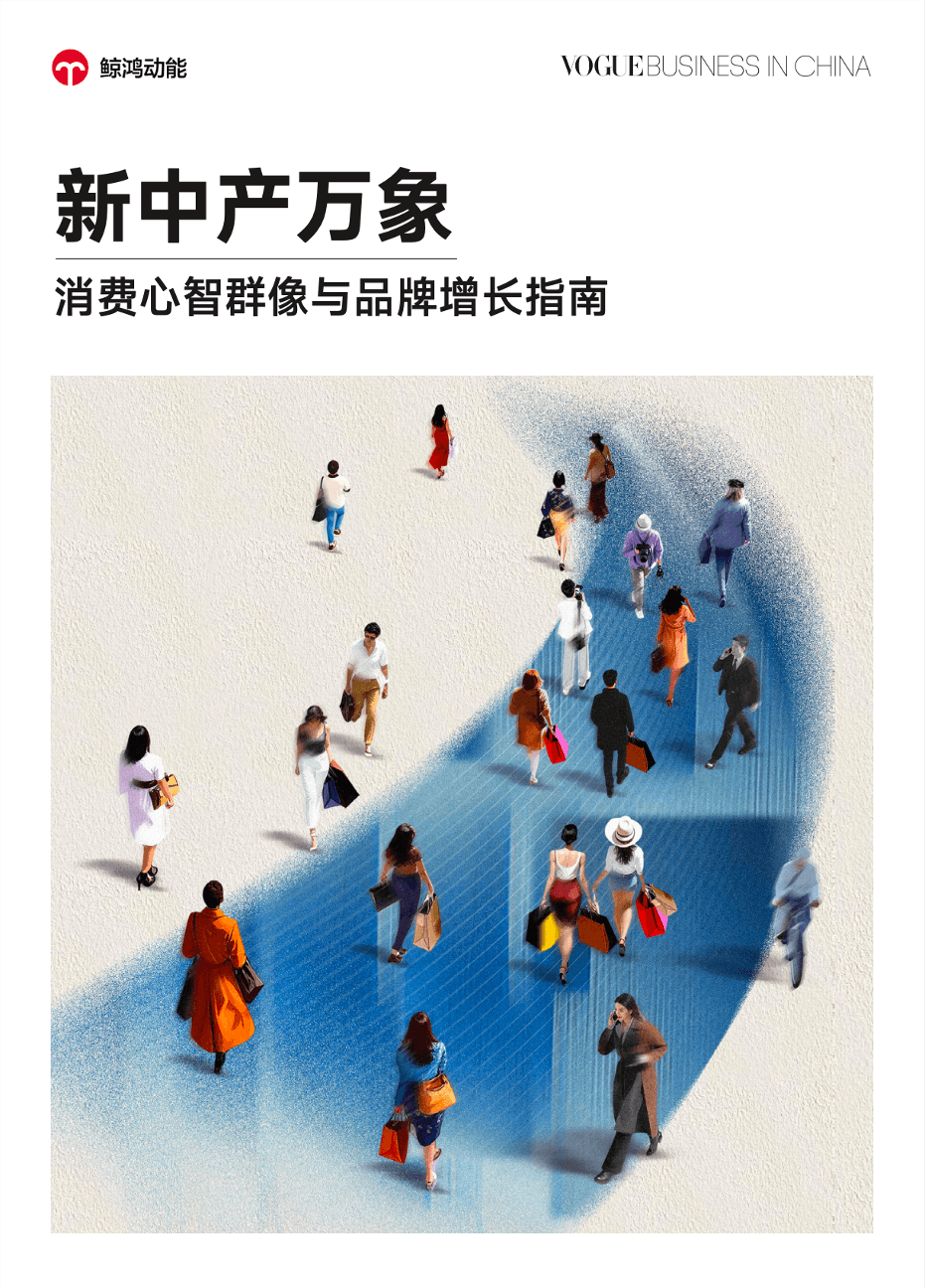
According to New Middle-Class Multiverse. A Guide to Consumer Mindsets and Brand Growth, a joint report by VOGUE Business China and Whale Power (鲸鸿动能), China’s new middle class hasn’t disappeared. It has evolved. And if brands still think this group is driven by status alone, they’re already behind.
What’s emerging instead is a consumer who treats spending less like impulse and more like strategy.
First, Who Are China’s “New Middle Class”?
They’re not defined by one city, one income bracket, or one aesthetic.
By 2030, middle-class households are expected to make up roughly 12% of China’s population, driven by education, industrial upgrading, and rising professional incomes . These consumers are typically:
Earning ¥500,000+ annually or holding ¥3–6 million in net assets
Concentrated in Tier 1 and emerging Tier 2 cities, but rapidly expanding inland
Highly educated, digitally native, and deeply pragmatic
Rational in daily spending, but willing to splurge in areas that “matter”
And what matters has changed.
The Core Shift. From Owning Things to Building a Life
The report makes one point clear. Consumption is no longer about possession. It’s about long-term value.
When surveyed on life priorities, China’s new middle class ranked:
Physical and mental health (35%)
Family harmony (33%)
Continuous learning and self-improvement (32%)
Career success and wealth accumulation now come after those fundamentals .
In other words, spending has become a form of life management.
Rational. But Not Cold
Here’s the nuance brands often miss.
This group is both highly rational and deeply emotional.
On one hand, they invest in efficiency. Tools that save time, improve productivity, or support health are seen as smart “future investments.” Think wearables, smart devices, fitness systems, and education platforms.
On the other hand, they openly spend on emotional value. Joy, relief, self-expression, and cultural resonance matter just as much. The data shows a near-even split between efficiency-driven consumption and emotion-driven spending, each influencing about 35% of purchase decisions .
The takeaway. This isn’t frugality. It’s selective generosity.
Experience Is the New Status Symbol
Luxury logos once spoke for you. Experiences speak about you.
The report highlights a major pivot toward experience-led consumption:
Travel intentions are highest in tourism (61%), education (59%), and health & wellness (54%)
Consumers are moving away from “checklist travel” toward deep, curated experiences
High-end resorts, wellness retreats, cultural immersion trips, and even Antarctic travel are growing fast
Spending money now buys stories, not just souvenirs.
Health Isn’t a Phase. It’s a System
Health spending has matured from “damage control” to long-term self-management.
China is now the world’s largest wearable-device market, with shipments up over 20% year-on-year. Fitness, outdoor sports, and health data tracking are no longer niche interests. They’re lifestyle markers.
Platforms like HarmonyOS allow brands to integrate hardware, software, and services into daily life. For consumers, this means health becomes measurable, trackable, and continuous.
And once health becomes data-driven, it becomes sticky.
Culture Matters. But Only If It’s Real
One of the strongest emotional drivers in the report is cultural resonance.
Consumers increasingly favor brands that reflect local identity, craftsmanship, and modern Chinese aesthetics. But this isn’t blind nationalism. It’s selective pride.
Products succeed when they combine:
Functional excellence
Contemporary design
A cultural story that feels earned, not pasted on
When that alignment happens, purchase becomes identity affirmation.
Six Consumer Archetypes. Not One Mass Market
Rather than one “middle class,” the report identifies six distinct consumer mindsets, ranging from:
Global experience seekers
Career-driven builders
Refined lifestyle curators
Engineering-minded pragmatists
Mature female tastemakers
Heritage-focused family stewards
Each group has different motivations, channels, and spending logic. The era of one-size-fits-all branding is officially over .
The Bigger Message for Brands
China’s new middle class isn’t tightening its wallet. It’s tightening its standards.
They want brands that:
Respect their intelligence
Fit into real life
Deliver long-term value
And understand them across contexts, not campaigns
As the report puts it, users are no longer traffic. They are assets built from time, trust, and emotional connection .
In today’s China, growth doesn’t come from shouting louder. It comes from listening better.
And the brands that understand that shift won’t just survive the next cycle. They’ll define it.

