China Just Canceled Its Trip to Japan. And 1.2 Billion Dollars in Luxury Spending Is Now Up for Grabs.
More than 400,000 Chinese travelers were supposed to land in Japan for year-end shopping trips filled with Chanel bags, duty-free whisky, and Michelin-grade omakase. Then geopolitics happened. Overnight, 30 percent of those trips were cancelled. Airlines scrambled to issue refunds. Several routes were suspended. And a billion dollars in spending suddenly became homeless.
This is not just a tourism story. It is a consumption migration. And it is rewriting Asia’s retail power map in real time.
According to China Trading Desk, the cancellations could wipe out at least 500 million dollars in Japan’s tourist revenue. Some analysts warn it could reach 1.2 billion dollars. Dai-ichi Life economist Yoshio Kumano says that if tensions hold, China could pull over two trillion yen in annual spending out of Japan’s economy.
The internet summed it up with one viral question:
"If not Japan, where is China spending next?"
South Korea and Singapore: Luxury’s new weekend homes
The redirected spending did not scatter randomly. It is landing purposefully in markets designed for retail capture.
Flight booking data from Qunar shows South Korea has now overtaken Japan as the most booked international destination for Chinese travelers. Singapore, Thailand, Malaysia, and Vietnam are right behind, all showing double-digit booking growth.
South Korea has the style culture. Singapore has the luxury infrastructure. Both have something Japan just lost for now. Psychological neutrality.
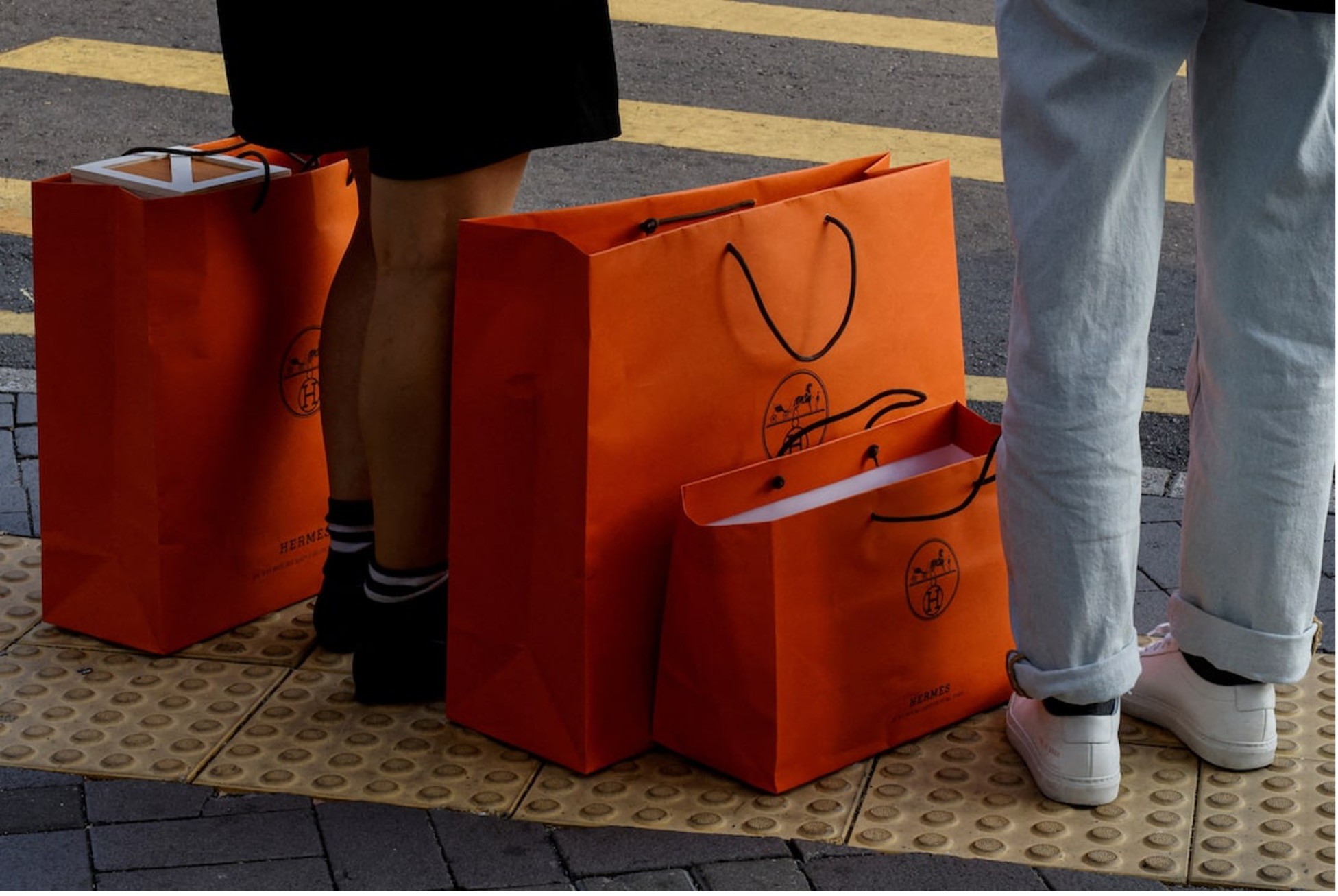
Chinese travelers are flocking to Seoul’s Hannam-dong and Seongsu-dong for their mix of lifestyle fashion, beauty hauls, and curated pop-up retail. Lotte Duty Free confirms that traffic has surged but spending is shifting. Instead of Hermès and Patek Philippe, travelers are buying affordable cosmetics and high-frequency lifestyle brands.
In Singapore, luxury is not just sold. It is staged. Retail spending reached 3.9 billion Singapore dollars between January and September 2024, largely driven by travelers from China, the United States, Indonesia, and India. Singapore has become a global showroom for prestige consumption.
Back to Hong Kong. And forward to Hainan. The domestic reroute begins.
Richemont recently confirmed what many brands have sensed. Mainland Chinese luxury spending is quietly pivoting back from Japan to Hong Kong.
CBRE reports Hong Kong welcomed over 20 million international visitors from January to May. Retail sales rose 4.8 percent year-on-year in September. The tri-region National Games fueled even stronger domestic flows. Hong Kong is not just recovering. It is reclaiming its role as China’s “legal luxury loophole.”
Then there is Hainan. Think of it as China’s version of resort luxury plus duty-free Dubai. During the 2025 Mid-Autumn and National Day holidays, offshore duty-free sales in Hainan hit 944 million yuan. After new duty-free policy updates in November, sales spiked 34.86 percent in one week. And with full customs closure expected by year-end, Hainan is set to become a sealed-off duty-free luxury island.
Japan loses tourists. China gains something more powerful: Brand loyalty.
Geopolitical friction has triggered something deeper than cancelled flights. It has accelerated cultural confidence.
Chinese shoppers are not just redirecting spending. They are questioning where they want to spend. In Japan? In Seoul? In Singapore? Or at home, with brands like Lao Pu Gold and Mossan, which offer cultural identity and craftsmanship without needing to cross a border.
That is why international luxury houses are suddenly paying attention. Mossan was recently courted by European conglomerates. Lao Pu Gold is already indexed as a cultural-luxury stock. When patriotism meets product credibility, the narrative changes.
The big lesson for global brands? Asia is no longer one market. It is four markets in motion.
Move fast if you want share of redirected spending.
Move wisely if you want loyalty.
Because next time, it will not be Japan.
It might be your brand.

