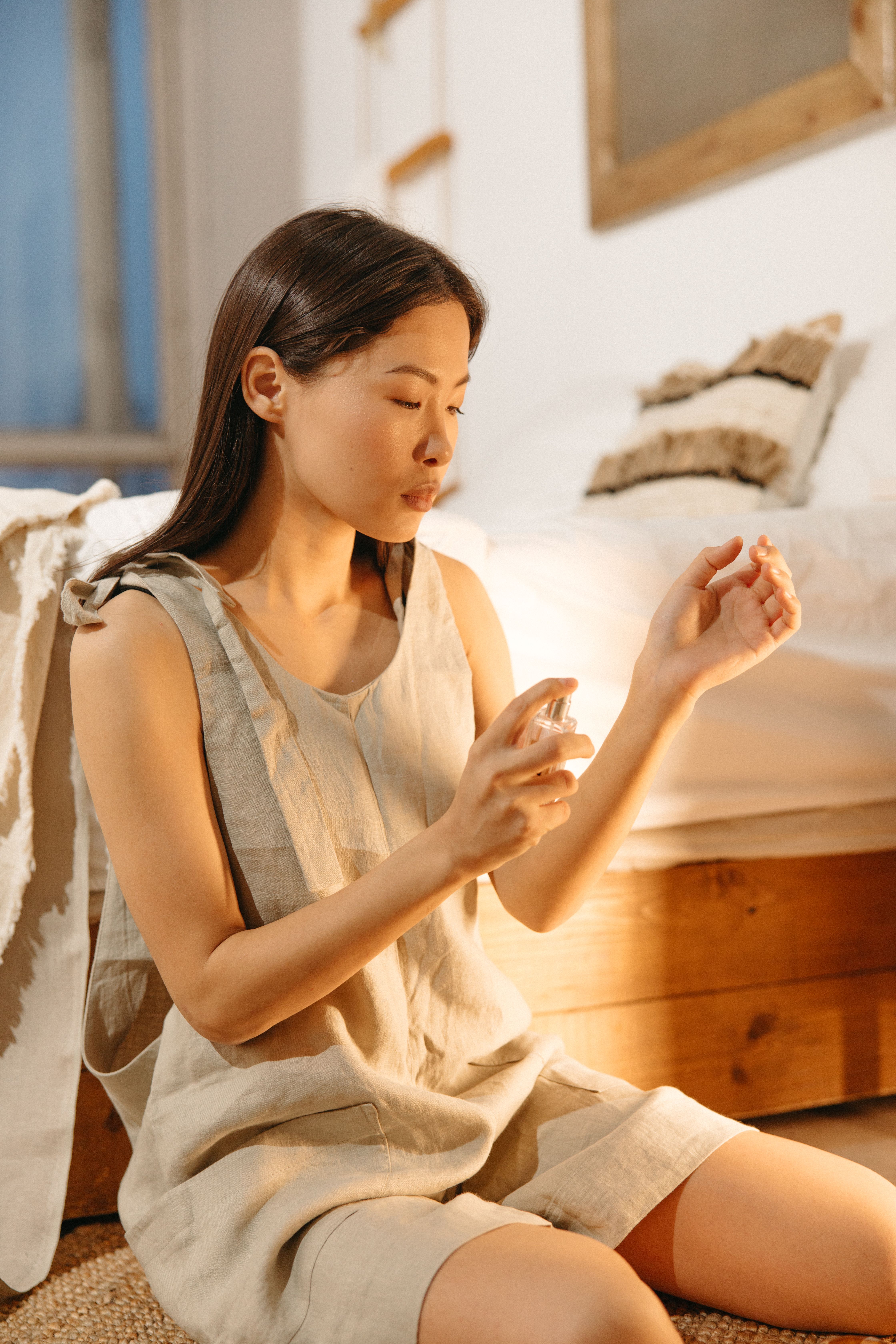
Chinese consumers now spend $4 billion a year on perfume for themselves, not their partners.
Le Labo's 100ml bottle sits at RMB 2,550 on the Chinese mainland. That's above Chanel N°5. Above Dior Sauvage. A Brooklyn niche brand with hand-labeled bottles now outprices the entire legacy French perfume establishment in China's fastest-growing beauty category.
And Le Labo grew 70%+ in China last quarter. Per-store revenue beat La Mer and Estée Lauder. The brand is now the top growth engine in Estée Lauder Companies' entire China portfolio.
RMB 30 billion and counting
The Chinese perfume market crossed roughly RMB 30 billion (~US$4.2 billion) this year. Doubled from ~RMB 15 billion in 2020. Category CAGR has been above 12% since 2021. Fastest-growing beauty subcategory in China for 4 consecutive years.
Fragrance went from under 3% of the Chinese beauty basket in 2015 to between 8% and 12% in 2026. In tier-1 cities, ~60% of women aged 20-35 own at least 2 perfumes. Tier-2 and tier-3 cities sit at ~35%, growing 4 percentage points per year.
The buyer profile flipped too. Chinese perfume in 2015 was a Valentine's Day gift. Wrapped in red, priced under 500 yuan, chosen by the boyfriend, bought at the airport duty-free counter. In 2026, the average buyer is a 28-year-old woman buying for herself.
The 4-character shift your brand team needs to learn
Chinese consumer language nailed the change in 4 characters.
悦人 (yue ren): pleasing others. Perfume bought to be noticed.
悦己 (yue ji): pleasing oneself. Perfume bought because it makes you feel something when you wear it.
Chinese Gen Z women now wear a morning fragrance and an evening fragrance as default. They rotate scents by mood and occasion. Multi-fragrance ownership is standard behavior.
Xiaohongshu (小红书) built the vocabulary for this rotation:
多巴胺香水 (dopamine fragrance): fruity or citrus notes worn to boost mood
氛围感香水 (atmosphere fragrance): musky, woody notes for evening or intimate settings
通勤香水 (commute fragrance): light, professional, office-safe
松弛感香水 (relaxed fragrance): comfort-first, weekend-only
Chinese consumers now carry 5-8 named categories in their personal rotation. Fragrance as playlist. You pick a scent the way you'd pick a song.
Le Labo's pricing playbook is the case study
Le Labo announced new China pricing on July 15, 2026:
50ml: RMB 1,780 → RMB 1,800
100ml: RMB 2,520 → RMB 2,550
15ml: RMB 800 → RMB 820
Small increments. RMB 20-30 per SKU. But Le Labo's 100ml went from RMB 2,380 in 2023 to RMB 2,550 in 2026. Multiple increases, each one absorbed without volume loss.
Le Labo's Japan website posted a parallel price adjustment notice citing raw material costs. The Asia-wide coordination tells you this is corporate strategy.
The old niche premium over legacy French houses used to be 10-20%. Le Labo has stretched that to 20-40%. The brand sells a Brooklyn origin story and hand-labeled decanting theater. Chinese Gen Z women pay for the ritual.
Beijing's city-exclusive "Camphor 25" (樟木25) pushed even further: 50ml at RMB 2,830, 100ml at RMB 3,980. That's luxury-watch pricing for a bottle of perfume. City-exclusive scarcity at Hermès margins.
The Chinese brands building underneath
While Le Labo prices up, a Chinese fragrance ecosystem is filling in from the bottom:
To Summer / Guanxia (观夏). Founded 2018-2019. Chinese nature-inspired fragrances with TCM (traditional Chinese medicine) ingredient stories. RMB 400-600. Sells exclusively through its WeChat mini-program with weekly Thursday drops. Stores in Shanghai, Beijing, Guangzhou, Chengdu. The Guozijian (国子监) flagship in Beijing sits inside a restored 500-sqm Qing dynasty courtyard. Recent government showcase support signals domestic policy backing for Chinese heritage fragrance.
Documents (闻献). Founded 2021 by Meng Zhaoran. "Bold Zen" (禅酷) philosophy. Chinese Zen aesthetics at RMB 800-1,500. Arguably China's most avant-garde perfume house. Recently expanded into incense as a philosophical adjacent category.
Scent Library (气味图书馆). Founded 2009. Chinese memory scents: White Rabbit candy and Cool Boiled Water (凉白开). RMB 200-400. Over 80 brick-and-mortar stores. Spanish luxury group Puig invested $10 million in 2021.
Three price tiers. All anchored in Chinese cultural memory. The domestic ladder is filling in fast.
Your China fragrance launch is probably a single-SKU mistake
If your brand is planning a China fragrance launch with one "signature scent" and a Tmall store, here's what you're up against:
Launch into 4+ Xiaohongshu categories, minimum. A single signature scent misses 80% of the Chinese fragrance conversation. Chinese consumers want a dopamine option, an atmosphere option, a commute option, and a relaxed option. A one-SKU launch in China is like opening a Spotify competitor with one playlist.
Price above Chanel if your story can support it. Le Labo proved Chinese consumers pay 20-40% above legacy French houses for a stronger origin ritual. Your price anchor should be Le Labo, not Chanel. If you're pricing at Dior levels, you're leaving margin on the table and signaling legacy-tier positioning.
Get 20+ Xiaohongshu KOLs on retainer before launch day. Chinese women 20-35 discover their next fragrance on Xiaohongshu, long before they walk into a duty-free counter or a department store beauty hall. If your brand doesn't have fragrance-review KOLs posting scent diaries and 2-3 weekly livestream slots, you're invisible in the discovery layer.
Build a cultural-heritage angle or borrow one. Guanxia uses TCM. Documents uses Zen philosophy. Scent Library uses Chinese childhood nostalgia. Le Labo uses Brooklyn. Your Western brand should bring its own regional culture story. "Premium European heritage" is a category. Chinese consumers already have 50 of those.
Chinese women spent RMB 30 billion on perfume this year. For themselves. Rotating 5-8 scents by mood and weather.
Le Labo charged them more than Chanel and they paid it. Your brand's China pricing is probably anchored to the wrong house.

