Crocs Is What Happens When Ugly Wins in China
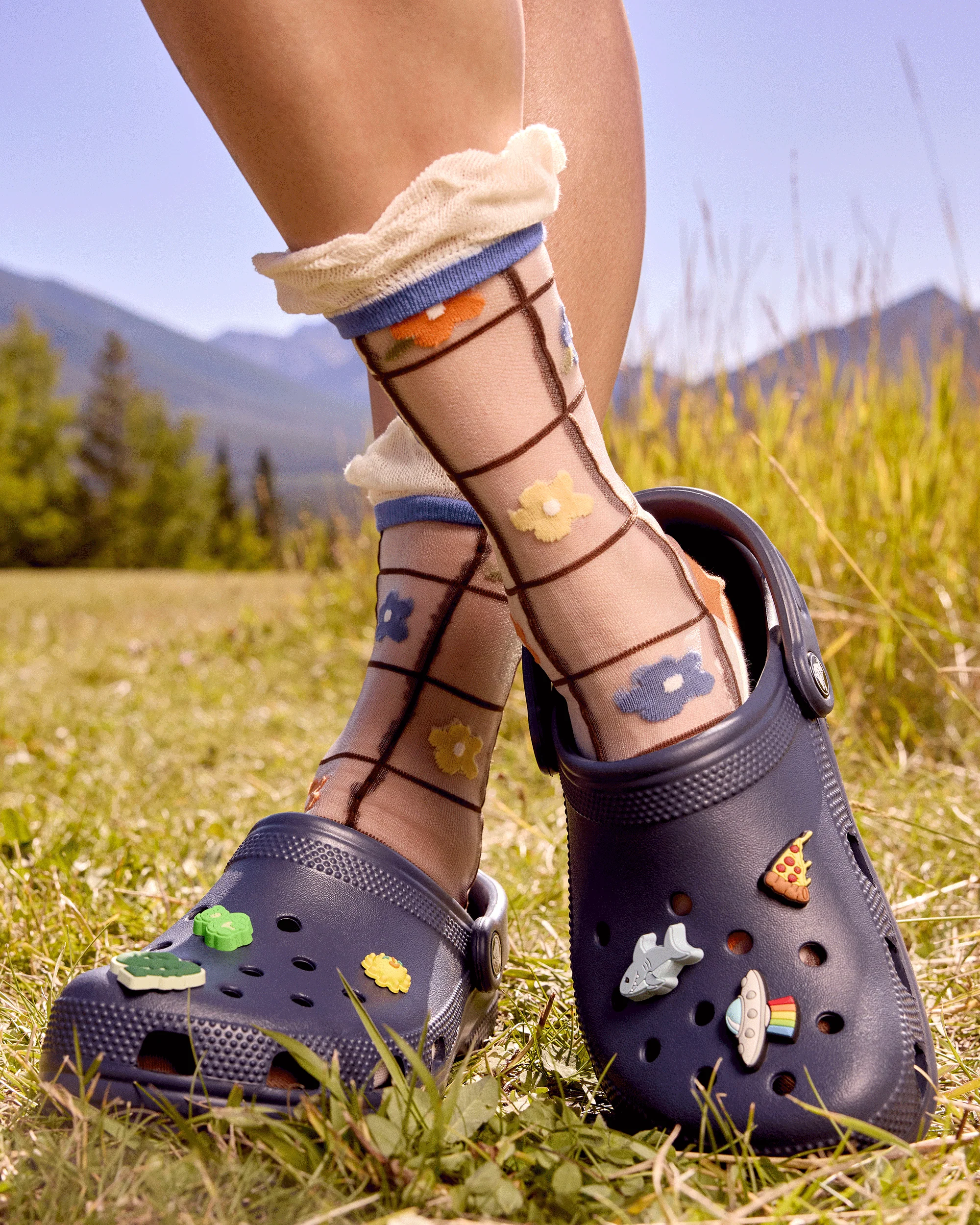
Take a second. Picture the most polarizing piece of footwear of the last 25 years. The foam clog with the round holes and the plastic charms. The shoe everyone hated, then everyone tolerated, then everyone bought.
Crocs grew 30% in China in 2025. Q1 2026 international revenue +7% to $421M. Direct-to-consumer +13%. The brand is now scheduled to be bigger internationally than in North America in 2026. China is one of 3 Tier-1 international growth markets (alongside Japan and India), and Greater China is one of the most-watched bets the brand is making globally.
If you're a Western footwear or lifestyle brand thinking about China entry, the Crocs case study is one you need to study twice. Because this brand built the playbook that Lululemon, Alo, and On are now copying.
What's working for Crocs in China
The numbers first. From the Q4 2025 / FY2025 results call:
China revenue grew 30% in 2025
Crocs China is one of 3 Tier-1 international markets the brand is doubling down on
Q1 2026 international revenue grew 7% to ~$421M, double-digit growth in China, Japan, India
Direct-to-consumer (DTC) revenue +13% to $322M
Crocs international revenues approaching ~50% of total brand revenue
Plan: open 200-250 new mono-brand stores internationally in 2026, mostly in China, India, Japan, and Western Europe
2026 plan: international Crocs brand revenue larger than US Crocs brand revenue for the first time
Now the China-specific tactical wins. From the Q1 2026 earnings call and recent Chinese-language coverage:
Douyin Super Brand Day: Crocs ran its first-ever Super Brand Day on Douyin in Q1 2026, generated stronger-than-expected results, used celebrity livestreaming
Brand ambassador Bailu (白鹿): the popular Chinese actress signed in 2026 as a key ambassador, anchoring the Crocs summer campaign with global brand ambassador Bai Lu wearing the 2026 summer limited edition product
Jibbitz personalization: the plastic charm system that customers clip onto Crocs has become the brand's secret weapon. Each customer effectively customizes their pair, increases repeat-purchase frequency, and creates Xiaohongshu-shareable content automatically. Average sale: 1 pair of Crocs + 8-12 Jibbitz over the customer's first 12 months
DTC focus: Crocs is reducing wholesale dependence and pushing direct e-commerce + DTC, both for margin reasons and brand-control reasons. China DTC is far ahead of North America DTC as a share of channel mix
Limited promotional discounting: management is actively pulling back on discounts to protect brand health and pricing power, even at the cost of near-term revenue. Q2 2025 gross margin reached 61.7%, 2024 full-year 58.8%
Why Crocs is working when Lululemon is stumbling
Compare the past 12 months for the 2 brands:
Lululemon staged a Great Wall yoga festival with a Japanese drum, then a Bund event with no rain plan
Crocs ran a Douyin Super Brand Day, signed Bailu, and grew 30% in China
What's the difference?
Crocs reads the Chinese consumer as a customer, not a localization project. The Chinese Crocs customer wants product personalization (Jibbitz), wants livestream entertainment (Douyin), wants a recognizable Chinese celebrity attached (Bailu), and wants the brand to invest in Chinese channels with a fast cadence. Crocs delivers all 4, monthly.
Lululemon reads the Chinese consumer as a destination customer that needs to be educated into a Western cultural framework (yoga + community + studio + Western-aesthetic activewear). When that framework collides with Chinese cultural specifics (the Great Wall venue), the brand stumbles because the cultural-review process is slower than the activation cadence.
Crocs's product is also more forgiving. The shoe is a piece of foam with holes. Customers don't expect it to be culturally serious. That gives the brand permission to play, to do Bailu, Lego, Pringles, Hot Wheels, Hello Kitty collabs without anyone questioning whether the brand is "premium enough." Lululemon is selling 1,000+ yuan yoga pants. The cultural bar is higher.
The collab strategy is doing the heavy lifting
Look at what Crocs has done in 2025-2026:
Bad Bunny limited Crocs colorway
Lego brick-compatible Jibbitz line
Christian Louboutin x Crocs (yes, that happened)
Pringles can-handle Crocs (the brand turned a Pringles can into a Croc)
Bailu summer 2026 campaign in China
TikTok Shop #1 footwear brand in the US
Each collab creates 2 things: 1 product (often selling out in hours) and 1 piece of share-able content for the next 6 weeks. The Crocs marketing team operates on what management calls the "brand heat" framework. The brand should always be visible somewhere, in some unexpected pairing, with some celebrity or IP that gets the social algorithm to do free work.
For the Chinese market specifically, this is the perfect playbook because Xiaohongshu and Douyin reward exactly this: fast collabs, recognizable IP, customizable product, low-cost-per-share. The Chinese consumer's content-creation behavior is already optimized for the Crocs format.
What Crocs is actually doing in mainland China stores
Beyond the social and e-commerce stack, Crocs has been quietly expanding physical retail:
More than 200 mainland China mono-brand stores (estimated), with the brand opening new doors monthly
Anfu Road / Wukang Road / Xintiandi format experimentation in Shanghai
Tier-1 mall presence (Jing'an Kerry, IFC, Plaza 66 satellite locations)
Tier-2 mall expansion into Hangzhou, Nanjing, Chengdu, Shenzhen
Outlet channel for older product, protecting full-price retail
WeChat mini-program linked to offline store inventory
The physical-store strategy follows the personalization-first model. Customers walk in, pick a base pair of Crocs, choose 5-10 Jibbitz from an in-store wall, and walk out with a unique pair. The customer-experience design is what most Western brands are still failing at: Crocs turned the act of buying a $50 shoe into a 15-minute creative session you want to film.
The 2026 international flip is the real signal
Crocs's 2026 guidance is the moment to pay attention. International revenue will be larger than US revenue for the first time in 2026. That flip didn't happen by accident. It's the result of:
4 consecutive years of double-digit international growth
China growth compounding above 25% for 3 of the past 4 years
DTC channel shift moving from wholesale-heavy to direct-heavy
Jibbitz attach rate raising the average per-customer revenue
200-250 new mono-brand stores added internationally each year for 3 years running
For Western fashion brands looking at China entry timing, this is the case study that proves: an "ugly" or polarizing product with the right personalization layer, the right celebrity ambassador, the right Chinese e-commerce stack, and a permissive brand attitude can outgrow Lululemon, On, Hoka, and Salomon over a multi-year run. Crocs is doing it from a $50 price point. Imagine what's possible from $100, $200, or $500.
What you should do
If you sell footwear or lifestyle into China, write these down:
Build a personalization layer into your core product. Jibbitz adds incremental margin, increases repurchase frequency, and creates user-generated content automatically. If your shoe, bag, or jacket has no customization option, you're leaving the highest-ROI marketing asset on the table.
Pick one Chinese celebrity ambassador whose personality matches your brand, not your category. Bailu's appeal is youthful, accessible, slightly mischievous. That maps to Crocs. Lululemon picked Zhu Yilong (cinematic, serious, premium-arts-vibe) and the mismatch widened the cultural-stumble gap. Casting matters.
Run a Super Brand Day on Douyin within 12 months of China entry. Crocs ran one in Q1 2026 and beat expectations. The format is now the standard high-velocity launch mechanic for international brands in China. Budget it.
Cut your promotional discount cadence. Crocs reduced markdown frequency and protected gross margin to 58.8% full-year 2024, 61.7% Q2 2025. The Chinese consumer has been re-educated about Western brand value over the past 24 months. Discounts erode the brand premium you're trying to build.
Build the Jibbitz-equivalent customer behavior loop. Whatever your product is, find the small accessory, charm, refill, or modular component that costs 5-10% of the base item and converts at a 3-5x attach rate. The lifetime-value math collapses without it.
Make the store visit a 15-minute creative session. Don't just sell the shoe. Sell the customization session. Crocs's Anfu Road, Shanghai Xintiandi, Jing'an stores are content studios first and retail floors second.
The closing read
The shoe everyone hated, then everyone tolerated, then everyone bought, is now growing faster in China than most Western premium brands. Crocs proved that the right e-commerce stack, the right celebrity casting, the right personalization layer, and the right brand attitude can compound a polarizing product into a category leader.
If your brand is still arguing internally about whether China is worth the entry investment, Crocs is the proof point. A $50 foam clog cracked the code. You can too. You just need to read the playbook closely before Lululemon, Alo, or On gets to your category first.

