Florasis Collapsed From ¥5.4 Billion to ¥2.4 Billion: Why "Renting" Influencers Isn't the Same as Building a Brand
What does silence sound like when your brand’s voice actually belongs to someone else?
KOL (Key Opinion Leader) marketing is not brand building. It is borrowing someone else’s audience and calling it "yours." When sales spike, it’s easy to hallucinate that this is the power of your brand. But if you dissect that revenue number - asking "Did the influencer's fans buy this, or did my fans buy this?" - the answer is often terrifying.
The case of Florasis (Hua Xizi) makes this lesson painfully clear.
1. The Multi-Billion Dollar Illusion
According to public reports, Florasis hit an annual sales figure of approximately ¥5.4 billion ($750M USD) in 2021.
Behind that massive number was a deep, symbiotic binding with China’s "Lipstick King" and top livestreamer, Li Jiaqi. Riding the "Guochao" (National Trend) wave and a unique "Oriental Aesthetics" positioning, Florasis grabbed the #1 market share in color cosmetics.
The Speed Trap: They went from zero to billions in revenue in just three years. It looked perfect.
Three years later? According to third-party data, that number has shrunk by more than half.
2. When You Stop Paying the Rent, You Get Evicted
Florasis’s sales never really belonged to Florasis. They were built on the influence of a single individual. This reality was hidden until it surfaced in the most brutal way possible.
The Silence of 2022: When their core sales channel (Li Jiaqi) stopped broadcasting for three months, Florasis’s GMV on major e-commerce platforms crashed by an estimated 60% year-over-year.
The Scandal of 2023: When that same channel faced a massive PR crisis due to controversial comments made during a livestream (the infamous "eyebrow pencil" incident), Florasis’s daily sales fell off a cliff.
The product hadn't changed. The price hadn't jumped. The reality was simply exposed: The audience was never theirs.
The Cost of "Renting": Reports suggest Florasis paid commission rates to KOLs that were far above the industry average. While the brand has denied specific figures, the logic remains: A huge chunk of revenue flowed back out to external channels. They were buying attention, not owning it.
The Result: By 2024, third-party data estimates Florasis’s online GMV dropped to ~¥2.4 billion, a year-over-year decline of over 20%.
3. "Oriental Aesthetics" is a Costume, Not a Skeleton
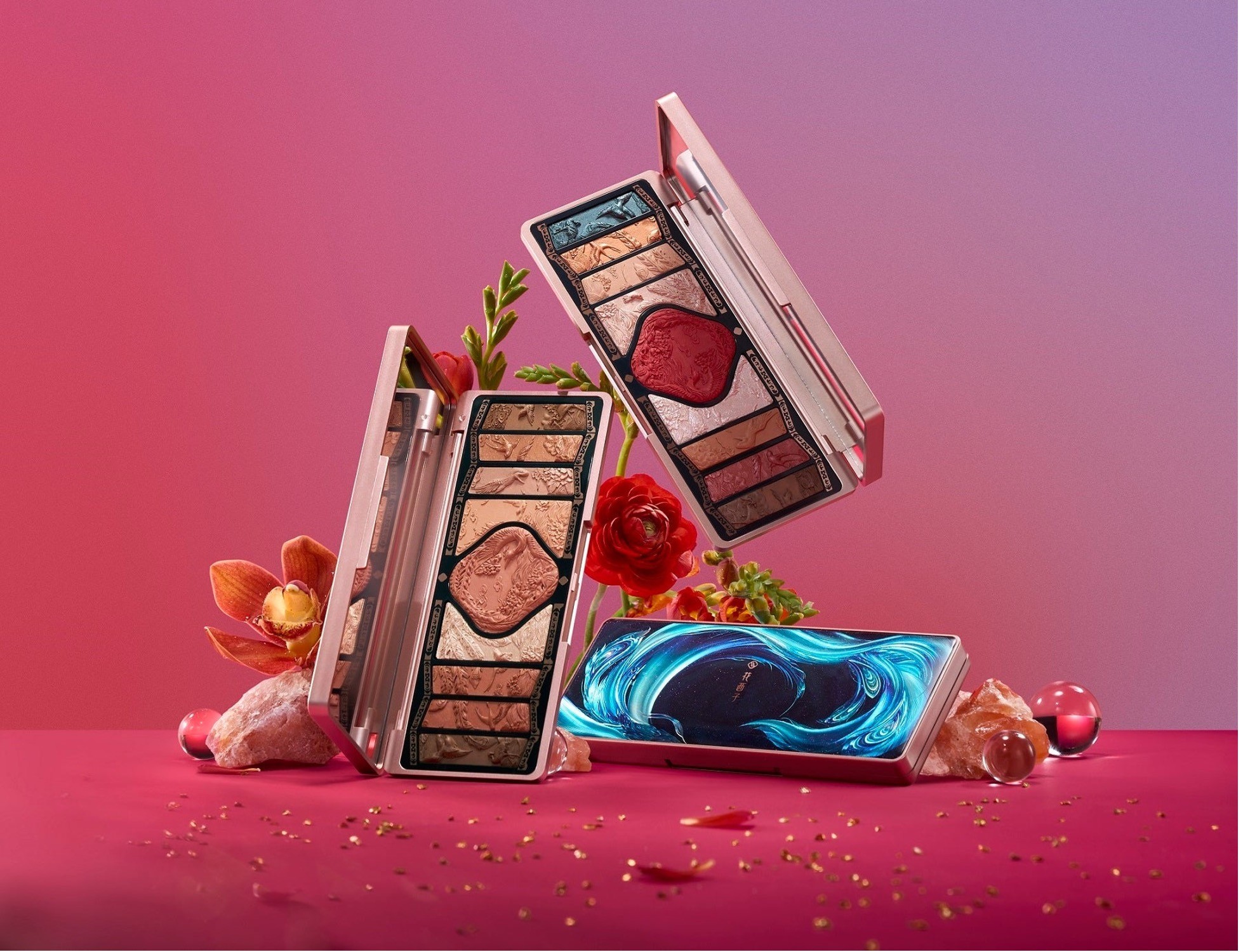
Florasis’s "Oriental Aesthetics" positioning was undeniably beautiful. Carved lipsticks, the Miao Impression series, the West Lake sets… it was visually distinct.
But here is the strategic failure:
Positioning answers: "What do we look like?"
Brand Philosophy answers: "Why do we exist?"
These are two different layers. The gap was exposed when competitors started wearing the same "costume." Other brands hired Intangible Cultural Heritage masters and launched museum collaborations. Suddenly, the language of "Oriental Aesthetics" didn't belong to Florasis anymore.
The Consumer Shift: While competitors caught up, consumer perception of Florasis shifted from "So beautiful" to "Not worth the price." This signals that beneath the positioning, the "skeleton" - true product power and R&D— - was missing.
The Data: According to industry data, the Chinese makeup market shrank by ~8% in 2024. When the market shrinks and you sound exactly like your competitors, you are the first one squeezed out.
2023: Ranked #9 on Tmall’s Double 11 Makeup list.
2025: Vanished from the Top 10 on Douyin’s 618 festival list.
4. 2026 Status Update: The Great Pivot
So, what does a brand do when the domestic well runs dry and the "Guochao" hype fades? It runs for the border.
In late 2025 and early 2026, Florasis executed a hard pivot. Realizing the US market was becoming a minefield of trade tensions and tariffs, Global President Gabby Chen signaled a retreat from aggressive American expansion.
The New Battlefield: Tokyo & Paris Instead of fighting for American Gen Z, Florasis is trying to court the high-brow Asian and European consumer.
The "Prestige" Play: In January 2026, Florasis opened a flagship boutique in Ginza Six, Tokyo's most prestigious luxury shopping complex. This isn't just a store; it's a desperate attempt to buy "premium" credibility.
The Logic: If they can win in Japan (a market obsessed with quality over hype), they hope to prove to Chinese consumers that they are a "real" international luxury brand, not just a Douyin fad.
The "Science" Band-Aid To fix the "missing skeleton" problem, Florasis is scrambling to pivot from "Art" to "Science."
They are aggressively marketing their "Oriental Beauty Research Institute."
The new marketing keywords are "TCM (Traditional Chinese Medicine) + Biotech."
The Verdict: It’s a smart move, but is it too late? Consumers are cynical. You can’t just sprinkle some ginseng into a carved lipstick and call it biotech.
5. The Soul Left the Building
You can copy a style, but you can't copy the conviction behind it. While the brand builds shiny stores in Tokyo, the human "system" back home has crumbled.
The Executive Exodus (2024-2025):
June 2024: A Co-founder deeply involved since the brand's 2017 inception leaves.
September 2024: The Chief Product Officer resigns.
February 2025: The Visual Lead responsible for the iconic Miao and Dai designs resigns.
Social media comments began to reflect this: "That old Oriental charm is gone." It turns out that charm wasn't in a corporate system; it was inside specific people. When the people left, the brand DNA left with them.
The Bottom Line for Brands
KOLs are tools. Powerful tools. But if you build your house on top of a tool, your house collapses when the tool is removed.
Florasis took three years to rocket from zero to ¥5.4 billion. It took roughly three years to fall to ¥2.4 billion.
The Insight: If the speed of your ascent matches the speed of your descent, you didn't build a Brand. You just caught a Wave.
A true brand acts as a dam - it captures the water (customers) brought in by the waves (marketing) and holds them there. Without that structure, the water just flows back out to sea. In 2026, Florasis is frantically trying to build that dam in Tokyo, but the water back home has already receded.

