Hainan Just “Closed Customs”. What Does That Actually Mean?
On December 18, something big quietly happened. Hainan Free Trade Port officially launched island-wide customs closure operations.
If your first reaction was, “Oh, so duty-free shopping just got cheaper,” you’re probably underestimating what this really means. This is not a shopping promotion. This is not a tourism gimmick. This is a once-in-a-generation systemic reset on China’s economic map. Its significance is on par with the creation of Shenzhen’s Special Economic Zone or the development of Pudong.
Let’s break it down.
First Things First. What Does “Customs Closure” Actually Mean?
“Customs closure” does not mean physical isolation. It means that the entire island is now treated as a special customs territory. Goods entering Hainan from overseas enjoy dramatically simplified tariffs and tax policies. Goods moving from Hainan into mainland China are treated as imports.
Policy language calls this “open on the outside, controlled on the inside.” Practically, it turns Hainan into a free port inside China, similar in function to Hong Kong or Singapore, but with Chinese characteristics and controls.
Why Prices Actually Change This Time
Imported goods in mainland China typically face a combination of:
Tariffs of 10–20 percent
Value-added tax of 13 percent
Additional consumption taxes on cosmetics, luxury goods, watches, and cars
Together, these can make up 30 to 50 percent of a retail price.
In Hainan, most of those layers disappear.
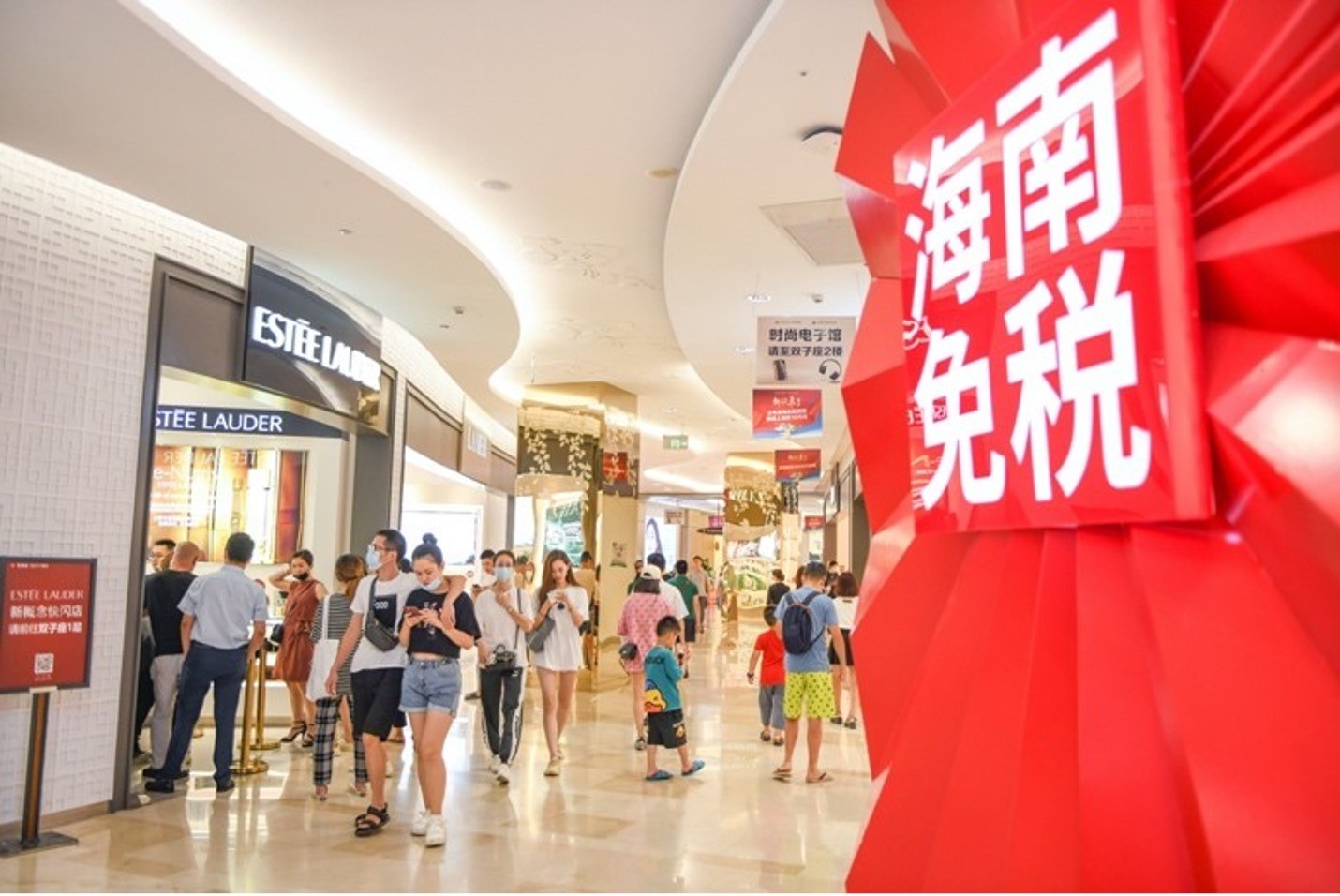
That’s why luxury goods, skincare, watches, and even imported cars can be priced close to European levels. This isn’t a temporary subsidy or a marketing campaign. It’s a structural reset of the tax base.
And unlike past duty-free schemes, the entire island participates.
The Often-Ignored Impact. Healthcare
One of the most meaningful changes has nothing to do with shopping.
Hainan is allowed to import and use cutting-edge drugs and medical devices almost immediately after global approval. In the rest of China, the same products often require three to five years of regulatory review.
That means cancer treatments, advanced cardiac devices, and high-end medical aesthetics equipment can reach patients in Hainan years earlier. And because imports are tax-free, costs are often lower.
For families with elderly parents or specialized medical needs, this quietly repositions Hainan as a domestic alternative to overseas medical travel.
Why Talent and Capital Are Paying Attention
Taxes matter. Hainan makes that very clear.
Corporate income tax drops from the mainland standard 25 percent to 15 percent. Personal income tax for high earners is capped at 15 percent, compared to a 45 percent top marginal rate elsewhere.
For professionals, that’s effectively a significant pay increase without changing roles. For companies, it changes where headquarters, R&D, and high-value operations make sense.
Then there’s manufacturing.
If companies import raw materials duty-free into Hainan, process them locally, and raise the product’s value by at least 30 percent, the finished goods can be sold into mainland China tariff-free.
That’s a built-in advantage for food processing, pharmaceuticals, advanced manufacturing, and clean energy. It lowers costs on both input and output. Few regions globally offer that combination.
What This Means on the Ground in Hainan
For residents, the upside is real. Job opportunities expand as companies move in. Wages rise with corporate profitability. Infrastructure investment accelerates. Healthcare and education resources improve.
But pressure comes with progress.
As seen in other free ports, higher incomes tend to push up rents and service prices. Competition for skilled roles intensifies. Hainan is gradually shifting from a seasonal resort economy to a year-round, asset-based one.
Not a boomtown. A slow re-rating.
Why China Is Doing This Now
This move isn’t about consumer perks.
China is creating a controlled environment to test deeper openness. Capital flows. Data movement. High-standard trade rules. All without exposing the entire economy to sudden shocks.
Hainan also plays a strategic role in China’s “dual circulation” model. It connects global capital and technology with China’s massive domestic market, while also linking China more closely to Southeast Asia.
If it works, elements can be scaled nationwide. If it doesn’t, risk stays contained.
That’s not experimentation for its own sake. That’s risk management at national scale.
The Bottom Line
Hainan’s customs closure is not about buying cheaper perfume. It’s about redesigning how China connects to global trade.
You won’t feel it overnight or see it in one receipt. But over time, you’ll notice prices that finally make sense, career options that shift south, and an island that’s no longer just for holidays.
That’s when it becomes clear. The rules changed quietly. But permanently.
December 18 was one of those dates.

