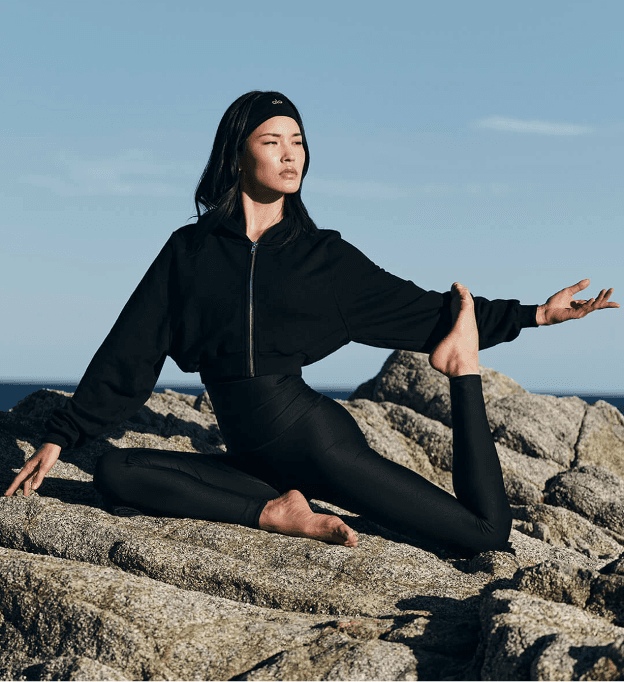
This is the Alo Yoga moment we’ve been waiting for… and it’s officially a "go big or go home" situation.
By dropping two massive flagship stores simultaneously in Shanghai (Jing’an Kerry Centre) and Beijing (Sanlitun Taikoo Li), Alo isn't just selling leggings; they are selling a specific brand of LA sunshine to a market that is increasingly skeptical of "lifestyle" fluff.
If you’re a brand leader eyeing China in 2026, grab a matcha and pull up a chair. This is the ultimate case study in Aggressive Market Entry vs. Localized Reality.
The Hype: Is Alo the New "Final Boss" of Athleisure?
If you’ve scrolled through Kendall Jenner’s feed or walked through Beverly Hills, you know the vibe: Studio-to-Street. But in China, the brand is walking into a battlefield already occupied by the "Lululemon cult" and a thousand high-quality local challengers (like Maia Active).
Alo’s strategy is a Power Move. They aren't "testing the waters" with a pop-up. They are taking over multi-story prime real estate in the two most expensive retail zones in the country. This is a massive bet on Cultural Gravity.
Why This Matters
In North America, Alo’s success was built on three pillars:
Mature Yoga Culture: Everyone already does yoga; they just need a cooler outfit.
Celebrity Distribution: The "paparazzi workout" look.
Wellness Narrative: A long-term buy-in to the "mind-body" lifestyle.
The Cold Hard Truth: In China, these pillars aren't guaranteed. The market is shifting from aspirational buying to functional scrutiny. A pretty legging isn't enough anymore; it has to perform like a piece of tech.
The Xiaohongshu (RED) Vibe Check: Slay vs. Stray
The digital sentiment on China’s most important fashion platform is already forming, and it’s a fascinating mix of obsession and doubt.
The "Slay": The Aesthetic Alpha
On Xiaohongshu, Alo isn't being tagged under #Gym; it’s being tagged under #TennisCore and #CleanGirl. Users love that they can wear it to a brunch in Anfu Road without looking like they just finished a marathon. It is the ultimate "Status Symbol" for the urban elite.
The "Stray": The Technical Trap
Netizens are already comparing Alo to "the ex-boyfriend who looks good but has no substance."
The "Lulu" Benchmark: Users are asking, "Is the fabric as soft as Align?" or "Does it pill?"
The Fit Issue: If Alo doesn't launch an "Asia Fit" line immediately, they risk being seen as a brand that "doesn't get" the local body type—a death sentence in a competitive market.
The Competitive Matrix: Alo vs. The Incumbent
Feature | Lululemon (The Teacher) | Alo Yoga (The IT Girl) |
Vibe | "Super Girl" / High Performance | "Off-Duty Model" / High Fashion |
XHS Sentiment | "Trustworthy, technical, community" | "Aesthetic, expensive, lifestyle" |
The "Moat" | Local community yoga classes | Celebrity-driven social hype |
The 2026 Playbook: 3 Lessons for Global Brands
If you are looking to replicate this "Dual-City" strategy, here is the reality of expansion in today’s China:
1. The "Pro-sumer" Paradox
Chinese consumers are becoming pro-sumers. They want to know the GSM of the fabric and the science behind the compression.
Brand Insight: You cannot "lifestyle" your way out of poor product specs. If your marketing is 10/10 but your fabric is 6/10, the Xiaohongshu backlash will be swift and brutal.
2. Don't Just Build a Store, Build a "Moat"
Alo is starting from zero on local community hubs. In China, social credit is earned on the ground.
The Move: Brands must move beyond the flagship. You need WeChat groups, local fitness ambassadors, and high-frequency content that feels local, not like a translated global campaign.
3. The "Rational Consumption" Reality
We are in an era of "Rational Luxury." People still spend, but they want to know why they are paying a 30% premium over a local brand. If you don't have a clear "Value Reason" (be it technology, status, or exclusivity), you will struggle to move past the initial "opening day" hype.
The Verdict
Alo Yoga’s entry is a high-stakes test of whether "Vibe" can beat "Function" in the world's most competitive retail market. They have the "Face" (the stores), but do they have the "Soul" (the community)?

