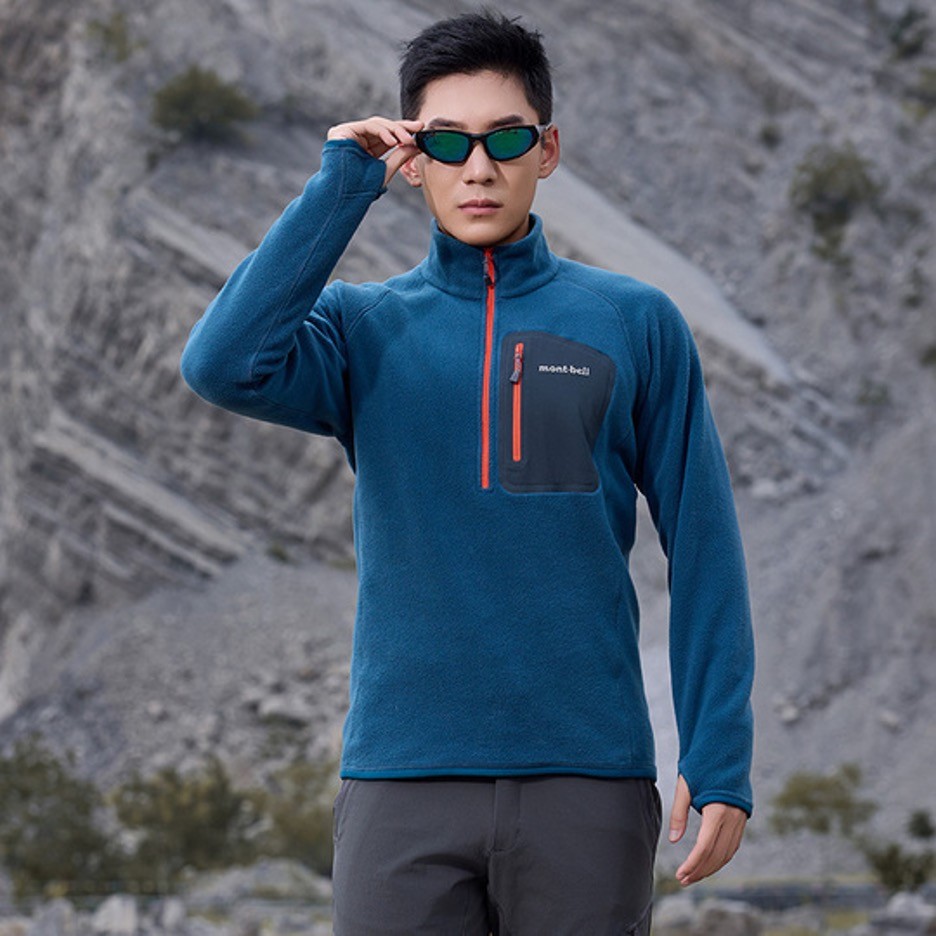
Why This "Uniqlo of Outdoors" Is The Ultimate Flex in 2026
Forget the $800 shell jackets. The coolest flex in 2026 is a 178g windbreaker that costs less than your AirPods.
If you’ve walked through a trendy neighborhood in Tokyo, Shanghai, or New York lately, you might have noticed a shift. The sea of dead-bird logos (Arc'teryx) is parting, and in its place is a diamond logo belonging to a brand that looks like it belongs to a serious hiker from 1985.
It’s Montbell. And it is currently eating the fashion world’s lunch by doing absolutely nothing to impress it.
Here is why this Japanese heritage brand is the "Anti-Hype" king we didn't know we needed.
1. It was founded by a guy who actually climbed the Eiger (and hated his heavy gear)
While many brands are born in boardrooms, Montbell was born on a cliff face. Founder Isamu Tatsuno was a legendary climber who tackled the North Face of the Eiger. In 1975, he got sick of heavy, water-logged wool gear and decided to make equipment based on a simple philosophy: "Light & Fast."
The Vibe: No marketing fluff. Just gear that keeps you alive without weighing you down.
2. They are the "Uniqlo of the Outdoors" (and that’s a compliment)
Montbell occupies a magical "Goldilocks" zone.
Too expensive: Luxury Techwear (Arc'teryx, Mammut) = High status, high pain for your wallet.
Too cheap: Fast Fashion Outdoor = Looks okay, but you'll freeze on a real mountain.
Just Right: Montbell. Top-tier specs (GORE-TEX, 1000 Fill Power Down) at 1/3 of the price of the big guys.
The Stat: A top-tier Montbell down jacket costs around 1,400 RMB ($195). A competitor with similar specs? Easily 4,000 RMB ($550)+.
3. Their aesthetics are "Accidentally Cool"
Montbell doesn't do "collabs" with rappers. They don't chase the "oversized" trend. They make stuff that fits under a climbing harness. But in the world of Gorpcore (hiking gear worn as street fashion), this stubborn authenticity is catnip.
The Look: The "Plasma 1000" down jacket isn't puffy to look cute; it looks like a "skeleton" because it strips away every gram of unnecessary fabric.
The Result: It pairs perfectly with baggy jeans and designer sneakers because it looks so serious about its job.
4. The "Japan Price" Phenomenon
There is a massive "Travel Hack" driving this trend. The price of Montbell in Japan is shockingly low compared to export prices.
The Storm Cruiser Jacket: Costs about 2,659 RMB in China, but only about 1,630 RMB in Japan.
The Result: Montbell has become the ultimate "souvenir" for tourists in Japan. It’s not just a jacket; it’s a trophy of smart spending.
5. It cures "Consumer Anxiety"
In 2026, people are tired of buying clothes that go out of style in three months. Montbell represents "Long-termism." You aren't buying a "Fall/Winter '26" piece. You are buying a tool. The brand relies on "Function is Beauty." When you buy a Montbell raincoat, you know it works, you know you didn't overpay, and you know it will last. In an era of economic uncertainty, "Sensible Excellence" is the ultimate luxury.
Strategic Takeaways for Brands Eyeing China
Based on the Montbell success story, here is what brands need to know about the current Chinese consumer psyche:
1. The "Rational Premium" is Winning
Chinese consumers are moving away from "Veblen Goods" (buying things because they are expensive) toward "Rational Premium."
The Lesson: If you charge a high price, the value must be tangible (e.g., specific fabric technology, weight metrics, durability). "Brand Heritage" alone is no longer enough to justify a 300% markup. You must provide a "Reason to Believe" (RTB) that appeals to the left brain (logic) as much as the right brain (emotion).
2. "Pingti" (Dupe) Culture has Evolved
"Pingti" (平替) used to mean buying cheap knockoffs. Now, it means finding "Superior Alternatives." Montbell isn't seen as a "cheap Arc'teryx"; it's seen as the "smart person's choice."
The Lesson: Don't fear being compared to market leaders. Position your brand as the "insider's choice" that offers 95% of the performance for 50% of the price. Win on the price-performance ratio.
3. Authenticity > Hype
The text highlights that Montbell doesn't do "crossovers" or "forced trends." In a noisy Chinese market flooded with influencer marketing, silence and stubbornness can be a strategy.
The Lesson: Stop trying to be everything to everyone. A brand that sticks to a rigid philosophy (like "Light & Fast") gains a cult following because it feels honest. Chinese Gen Z can smell "manufactured cool" from a mile away.
4. The "Souvenir Economy" drives Domestic Hype
The price gap between Japan and China actually helped build the brand's mystique. It turned buying the product into a "treasure hunt" or a travel ritual.
The Lesson: Cross-border pricing strategies are transparent to Chinese consumers. If your product is cheaper abroad, lean into it as a discovery mechanism, or harmonize prices to build trust. Understand that "Global Discovery" is part of the localized marketing funnel.
5. Technical Specs are the New Fashion Specs
Consumers are educated. They know what "1000 Fill Power" means; they know what "GORE-TEX" is.
The Lesson: Marketing should be educational. Break down the product density, the weight in grams, and the fabric tech. In 2026, competence is the new cool.

