Palace Just Broke The Internet In Hong Kong: Why The 6-Hour Queues Matter For Every Global Brand
The British "Tri-Ferg" just collided with Hong Kong neon, and the street culture seismographs are going off the charts.
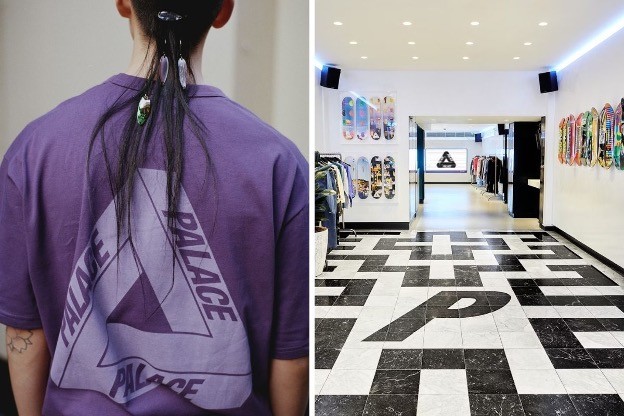
On February 7, the London skate kings Palace Skateboards officially planted their flag in China, opening their first-ever shop at 42 Leighton Road, Causeway Bay.
If you thought retail was dead, think again. On opening day, the queue wrapped around the entire block. Savvy shoppers on Xiaohongshu (China's answer to Instagram) reported wait times hitting the 6-hour mark. In a retail season that started a bit quiet, this injection of "British Skater" adrenaline instantly reignited the streets of Causeway Bay.
But look past the hype, and you'll see a masterclass in modern brand strategy. Here’s the breakdown of what happened, why it matters, and the brutal truth about what comes next.
1. It’s Not A Store, It’s A "Clubhouse"
This isn't just a copy-paste job. As Palace’s 8th global flagship, this location serves as their strategic beachhead into the Greater China market.
Palace ditched the cookie-cutter retail approach for extreme localization.
The Vibe: The exterior features retro brickwork dotted with 90s-style neon, directly inspired by "Tai Kwun," Hong Kong’s iconic center for heritage and arts.
The Interior: Think brown and green tiling and custom ceiling lights shaped like the letter "P" and triangles.
The Founders' Vision: This specific aesthetic wasn't an accident. As co-founder Lev Tanju explained in an exclusive interview, "Hong Kong is visually one of my favorite cities. It's beautiful and so rich in heritage and I like the way that there's so much retro stuff. When you talk about the neons, that's one of my favorite things."
The Message: By weaving the famous Tri-Ferg logo into the actual urban texture of Hong Kong, Palace is signaling that they aren't just here to pop up - they are here to put down roots.
2. The "Hard Currency" of Localized Drops
Palace knows that to win a new market, you have to feed the locals something they can’t get anywhere else. For the opening, they deployed their strongest weapon: Limited Edition Marketing.
The Hero Piece: A collab with the South China Athletic Association (SCAA). By tapping into a legendary local football club, Palace bridged British football culture with Hong Kong sports heritage.
Why This Matters: It wasn't a random pick. Co-founder Gareth Skewis noted, "If you understand football and hopefully we understand Hong Kong culture, that's the club that you work with in Hong Kong."
The Details: Varsity jackets and hoodies featuring Jade Dragons and Yin-Yang symbols. It’s classic Palace: retro, slightly humorous, but culturally respectful.
The Result: A frenzy. Reports confirm the hottest items sold out within the first hour.
3. The Multi-Billion Dollar Gamble
Why Hong Kong? Why now?
Palace is playing the long game in Asia, following successful openings in Seoul and Fukuoka. They are building a dense network in the continent's trend capitals. Skewis emphasized this distinct energy: "It's got a different energy to the other places where we have retail... Hong Kong is some of the most unique cities on the planet."
The Data Backs Them Up: According to Mordor Intelligence, the global streetwear market is projected to hit $210 billion in 2025 and soar to $257.6 billion by 2030.
The Kicker: The Asia-Pacific region accounts for 38% of that pie and is growing the fastest. China is the key battleground.
4. The Reality Check: Supreme, Resellers, and The "Post-Hype" Hangover
Here is where the story gets analytical.
We’ve seen this movie before. Just a year ago, street titan Supreme opened its first store in Shanghai. It caused similar chaos and overnight camping. But a year later, the market has cooled, and the queues are gone.
The Challenge for Palace:
The "Ticket" vs. The "Game": In China, generating a queue is just the entry ticket. Integrating into the culture is the only way to survive.
The Reseller Problem: Hong Kong is a global travel hub and a mature resale market. The opening day line was a mix of die-hard fans and suitcase-dragging resellers. Balancing the genuine "love" against the "flip" is a nightmare for brand equity.
The Insight: Key Takeaways For Brands
If you’re a strategist looking at the Palace opening, here is the "Ice and Fire" analysis:
1. Localization > Replication Palace didn’t just bring London to Hong Kong. They built a "quasi-community" by linking with local symbols (South China AA). This creates an emotional hook that penetrates deeper than a simple logo slap.
2. The "First Store" Trap Supreme in Shanghai proved that hype has a shelf life. Palace’s success won’t be measured by the 6-hour line on Day 1, but by whether they can turn the shop into a genuine skate culture "club" - a place people hang out, not just a tourist trap.
3. The Difference Between "Seeing" and "Having" For Chinese consumers who are used to queuing, waiting 6 hours is often just about witnessing history. The brands that win are the ones that convince these consumers that they are actually part of the culture, not just bystanders buying a souvenir.

