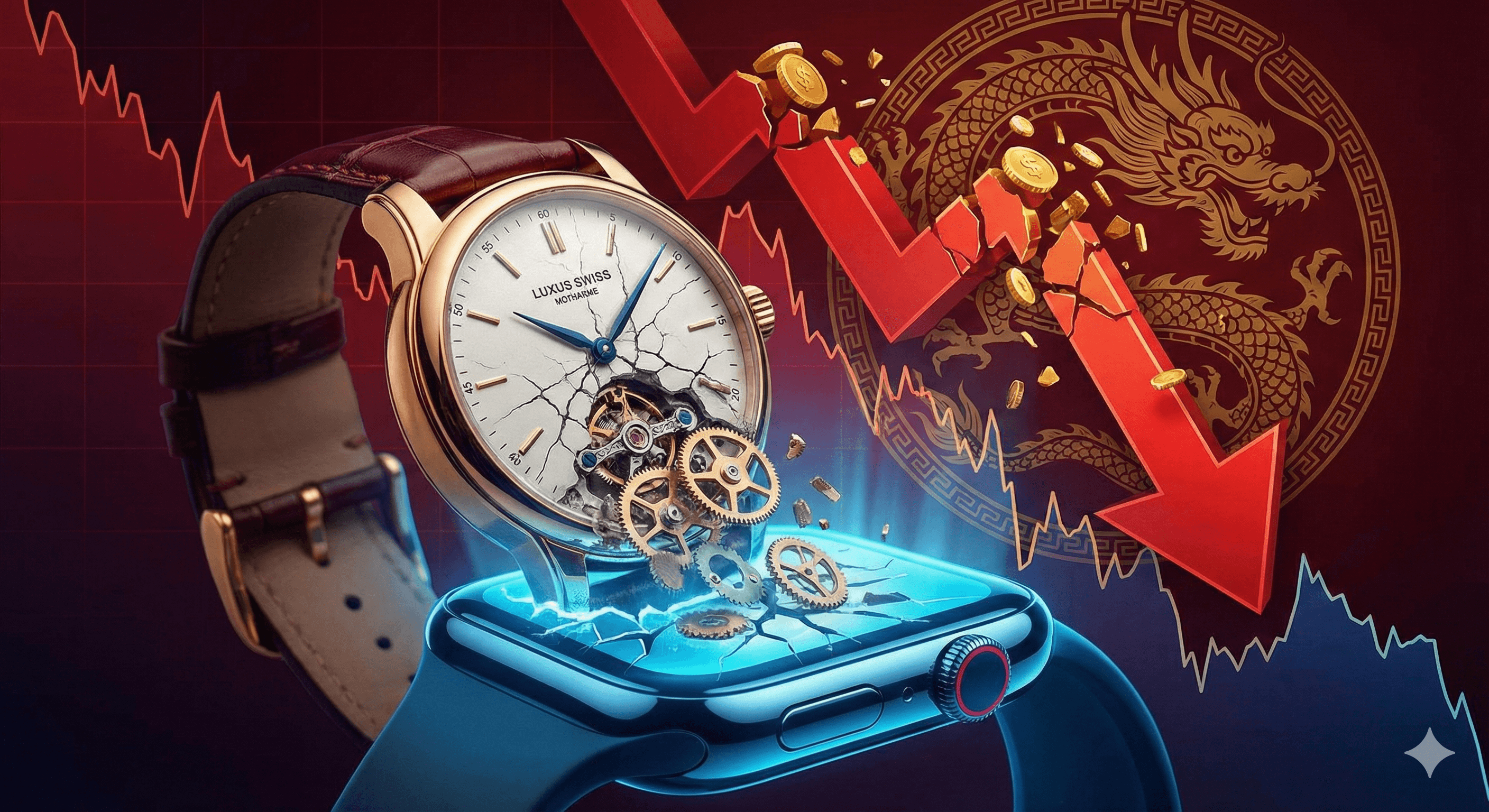
Swatch’s 88.6% Profit Collapse Is A Warning Label For Every "Legacy" Brand In 2026
This isn't just a bad quarter; it’s a "check the batteries" moment for the entire global luxury industry. While some giants are coasting, Swatch Group - the powerhouse behind Omega, Longines, Breguet, and Blancpain - just reported a 2025 that can only be described as a financial jump-scare.
Sales didn’t just dip; they fell for the third year in a row. Profit didn’t just slide; it basically vanished. If you’re a brand builder or marketer, grab an espresso. We’re breaking down why the world’s most famous watchmaker is facing a "time-out," and the brutal lessons you need to learn before you become the next "it used to sell" brand.
The Numbers: Because Vibes Don’t Move Inventory
If you think your 2025 was stressful, look at Swatch’s balance sheet. We aren’t talking about a minor correction; we’re talking about a 97% plunge from their 2023 peak.
Net Profit: Fell to 25 million CHF from a 2023 high of 890 million CHF. That is an 88.6% year-on-year dive.
Sales Slump: Revenue hit 6.28 billion CHF (Down 5.9% YoY).
The "Red Alert": Operating margin shriveled from 4.5% to a tiny 2.1%.
The Brand Signal: It’s not just "sales down." It’s "margin down while sales are down." That’s the toxic combination that turns a slowdown into a strategic emergency.
Why Swatch "Can’t Sell" Like It Used To
1. The China Engine Stalled (And Caught Fire)
China used to be Swatch’s golden goose, peaking at 33% of their business. In 2025, that dropped to 24%.
The Channel Crash: H1 2025 saw wholesale revenue fall over 30%. While they pivoted to direct retail and e-commerce (boosting cash flow by 52.3%), it couldn't outrun the top-line pressure.
The Trust Tax: In August 2025, a controversy involving a "squinty-eyed" model depiction in an ad caused "irreversible" damage to brand loyalty in China.
Takeaway: You can’t spreadsheet your way out of a trust problem. When the market is already cautious, controversy doesn't just "hurt awareness" - it kills conversion.
2. The "Hard Currency" Vibe Shift
Post-pandemic consumers have become rational. High-net-worth shoppers in China are leaning into "hard currency" assets like gold, weakening the investment allure of high-end watches.
Investment Myth: High-end jewelry and watches saw declines of over 8% in 2024 (Hurun Research).
Takeaway: When your value prop is "store of value," you’re competing with macro sentiment. If your resale narrative weakens, demand doesn't just slow… it reroutes.
3. Smartwatches are Lifestyle Infrastructure, Not Gadgets
The sub-10,000 RMB market is being swallowed by domestic value brands, while the 10,000+ RMB band is facing the Huawei "Extraordinary Master" effect.
The Killer Stat: China smartwatch shipments grew 25.3% in Q1 2025.
Takeaway: If your product is optional, you must become emotionally non-optional. Otherwise, the winner is whoever is functionally embedded in daily life.
The "Collab" Trap: Gasoline vs. Engine Oil
To save itself, Swatch leaned on frequent "High-Low" collabs (MoonSwatch, etc.) to spike demand… but this could be a double-edged sword:
Dilution: Constant pairing with "cheap" Swatch plastic dilutes the scarcity and mythmaking of high-end names like Omega and Blancpain.
Identity Lock: It anchors the Swatch brand as a "cheap substitute," preventing it from building independent equity.
Takeaway: Collabs are gasoline. They create heat fast, but they don't fix a broken engine. They teach customers to wait for the next "drop" instead of buying the core line.
The "Middle-Child" Recovery Plan
The uncomfortable "middle" is the most dangerous place to be in modern premium. Here is how Swatch (and your brand) can pivot:
Treat Entry Tiers as a Funnel: Use "entry brands" as a youth gateway. Their job is to acquire, educate, and graduate the customer to higher tiers. Otherwise, they become a margin trap.
Beat Tech at Being Human: Don't try to out-tech Huawei. Focus on "Light Smart" features (long battery life, eco-materials, simple payments) that remove friction without turning your product into a generic screen.
Localization is an Operating Model: Drop the "global brand posture." To win back China, you need China-exclusive designs (zodiacs, calligraphy) and high-end customization that respects local culture.
The Bottom Line: You Don't Lose Demand, You Lose Relevance
Swatch’s 2025 collapse is not just about a bad year. It’s about what happens when three things occur at once:
your category’s “why” changes (timekeeping to lifestyle or status)
your core market shifts (China slows, trust becomes fragile)
your portfolio sits in the squeezed middle (not scarce enough, not useful enough)
If you’re a brand leader, the actionable question is this:
If your customer stops believing your old reason to buy, what new reason have you built that's strong enough to survive a downturn?
Swatch is now being forced to answer that in public. Every premium brand should answer it in private. Before the next earnings report does it for you.

