The “Korean Uniqlo” Just Opened Two Stores in Shanghai. And the Mystery Finally Makes Sense.
For years, one question has quietly haunted Chinese social media. Why is it that you can never buy the exact piece Korean girls are wearing. Screenshots are saved, links are hunted down, and somehow the answer is always the same. Out of stock, unavailable, or not quite right. That long-running fashion mystery finally got a clear answer when Korea’s largest fashion platform, MUSINSA, opened two stores in Shanghai within just two weeks.
This wasn’t a cautious market test. MUSINSA arrived loudly, confidently, and very intentionally.

Not Just “Korean Uniqlo”. The Whole System Arrived Together.
Instead of opening a single store and watching what happened, MUSINSA launched a double play. One is MUSINSA STANDARD, often described as the “Korean Uniqlo.” The other is MUSINSA STORE, a multi-brand concept that feels like someone emptied Korean girls’ private shopping folders and turned them into a physical space.
This move matters because MUSINSA didn’t bring just products. It brought a system it spent years perfecting in Korea, and dropped it into Shanghai all at once.
Why You Could Never Buy “That Exact Piece” Before.
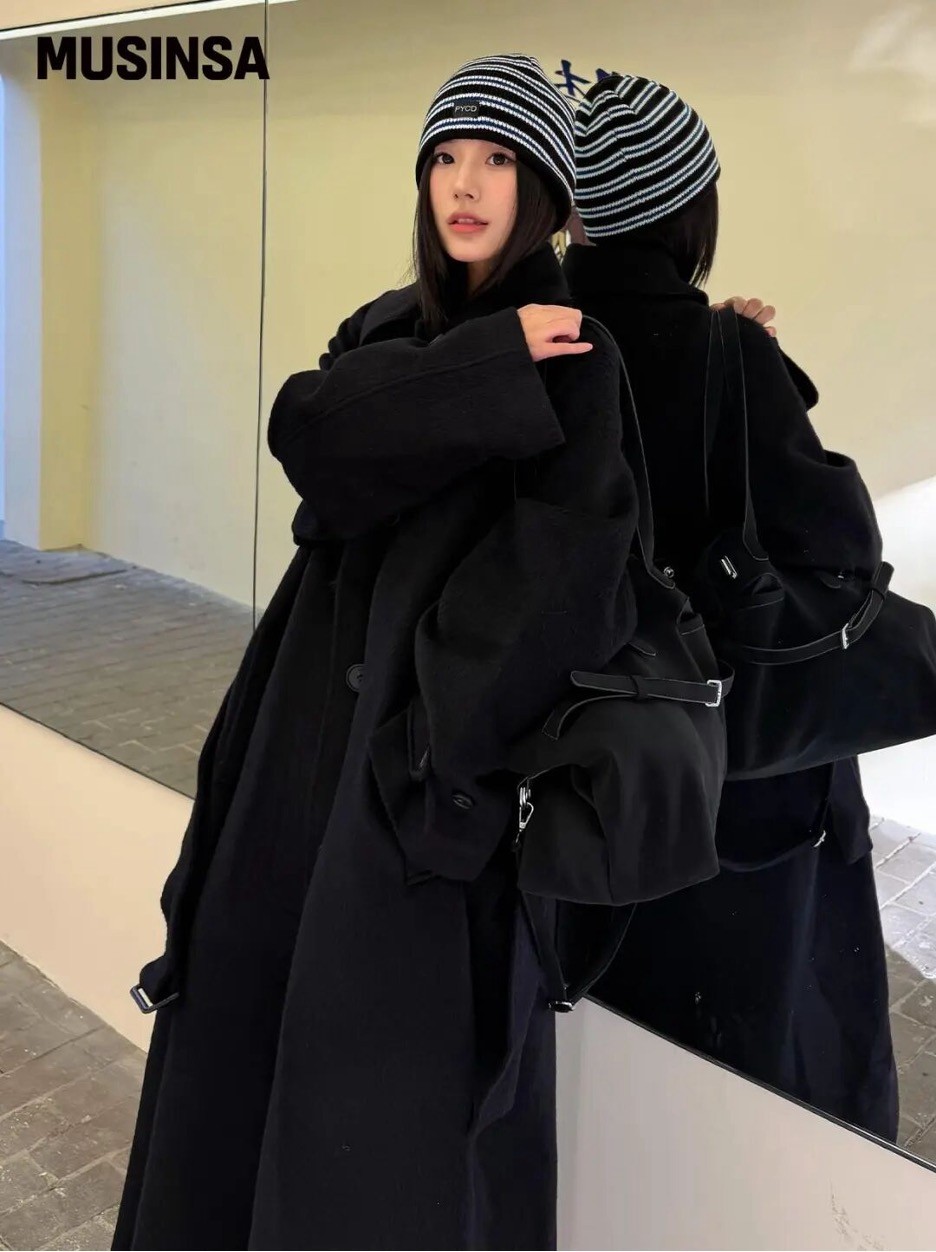
Step into MUSINSA STANDARD and the déjà vu hits almost immediately. The clothes look incredibly familiar. That’s because they are. Two weeks after opening, shoppers noticed that the Shanghai assortment closely mirrors what’s sold in Seoul. These are the same logo-free, endlessly wearable basics that appear again and again in Korean outfit posts.
The secret isn’t minimalism. It’s proportion. MUSINSA STANDARD has spent years quietly fine-tuning fits for Asian bodies, creating silhouettes that feel relaxed without looking sloppy. Shoulder lines land naturally, sleeves fall just right, and pant legs taper in a way that makes the body look longer and more comfortable. Simple pieces, but engineered to work hard across different outfits and situations.
Not Fast Fashion. Fast Feedback.
MUSINSA didn’t start with basics by accident. After becoming Korea’s largest fashion e-commerce platform, it realized something was missing. There were plenty of designer brands, but not enough reliable, easy-to-style foundations. So in 2017, MUSINSA STANDARD was born, built around accessible pricing, solid fabrics, and rapid iteration driven by real sales data.
In Korea, this formula already proved itself. In Shanghai, it arrived fully formed. Winter essentials like lightweight down jackets took center stage, and celebrity styling was used strategically rather than symbolically. ENHYPEN’s Park Sunghoon appeared in multiple looks wearing the new-season down jackets, while global ambassador Han So-hee visited the Shanghai store wearing pieces customers could buy immediately. There’s even a dedicated Han So-hee zone designed for effortless outfit copying, no imagination required.
The Second Store Is Where Things Get Dangerous.
Less than a week later, MUSINSA opened MUSINSA STORE on Anfu Road, and this is where the real magic happens. The space houses more than 60 brands, including nearly 40 Korean designer and niche labels that Chinese shoppers previously only encountered through screenshots or代购.
Names like OSOI, SCULPTOR, ROCKCAKE, WKNDERS, AMOMENTO, and PUSHBUTTON sit side by side, creating a layered view of Korean fashion that moves easily between streetwear, minimalism, and designer aesthetics. This isn’t random curation. It’s the result of over 20 years of platform data, buyer instincts, and sales-driven insight.
Shopping, But Make It Social.
The layout makes it clear that MUSINSA understands how people shop now. Wide walkways, large screens looping idol outfits, and photo-friendly spaces encourage people to stay, share, and return. In Korea, this model has already proven itself, where offline retail doubles as content production and community building.
MUSINSA brought that playbook to Shanghai intact, including dedicated K-pop merchandise zones. One ENHYPEN corner has already been affectionately nicknamed Park Sunghoon’s “pain shop” by fans, turning fandom energy into steady foot traffic.
Localized, But Not Diluted.
MUSINSA didn’t blindly copy-paste Korea into Shanghai. Knowing Chinese shoppers pay special attention to footwear, the store expanded its shoe selection with brands like Puma, New Balance, and Asics, while also introducing Chinese labels that mix naturally with Korean-style outfits.
The result doesn’t feel foreign or forced. It feels plugged in.
So What Actually Changed.
MUSINSA didn’t just open two stores in Shanghai. It transplanted a complete platform-plus-brand model that Korea spent years refining. Shoppers no longer need to fly to Seoul or rely on slow, uncertain代购. The pieces that once felt mysteriously unattainable are now ordinary, repeatable, and right in front of you.
And once you see how intentional and system-driven those outfits really are, the mystery disappears. It was never about scarcity. It was always about access.

