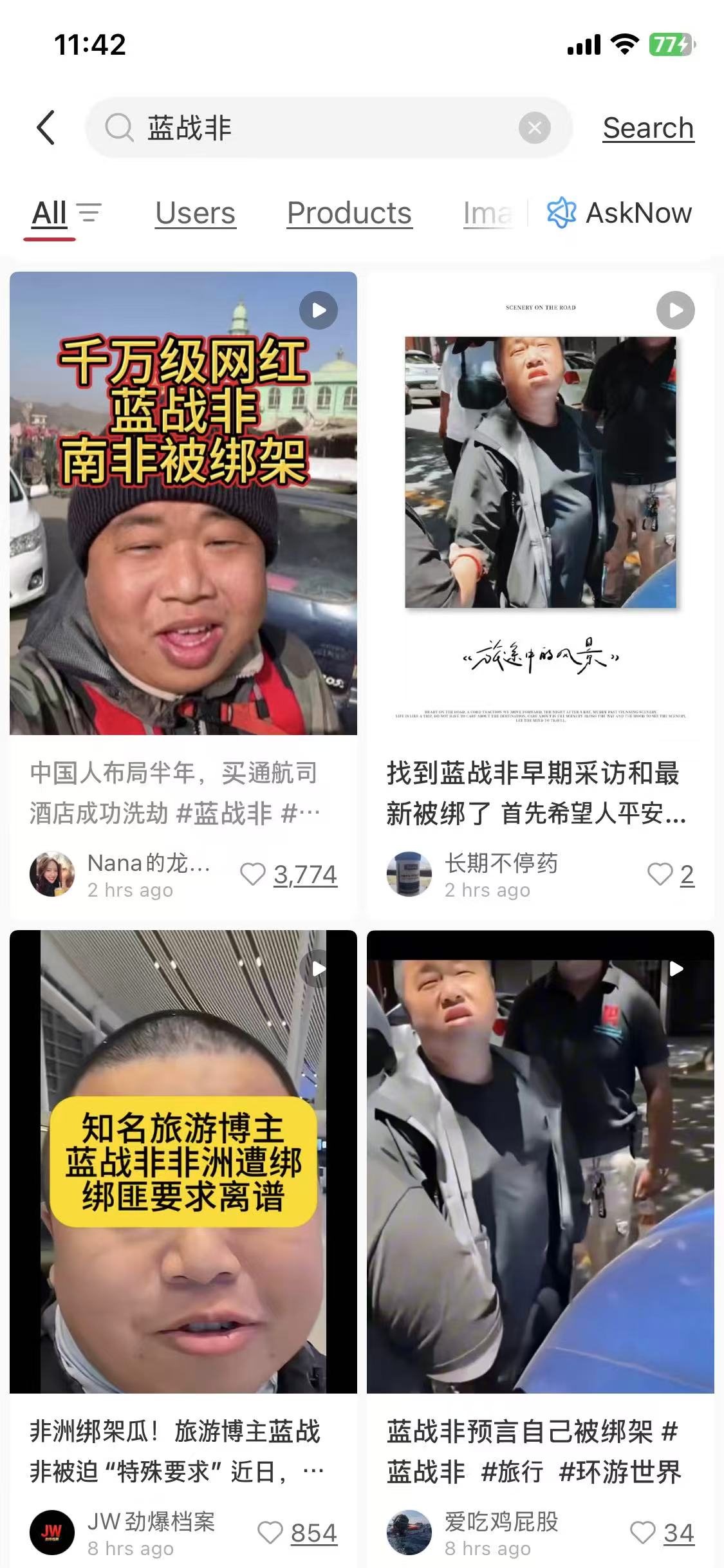
This Chinese Actor Literally Faked His Own Kidnapping On TikTok And Now Global Brands Are Losing Their Minds
Last Wednesday, this relatively famous Chinese actor named Lan Zhanfei goes LIVE on Douyin (that's Chinese TikTok, keep up) looking absolutely destroyed. We're talking tears, disheveled hair, the works. He's whispering that he's been KIDNAPPED. Masked men dragged him off the street. They want crypto. He's tied up in some sketchy warehouse.
The video goes nuclear.
10 million views in 24 hours. #SaveLanZhanfei trends with 187,000 shares. Fans are literally doxxing random people they think are kidnappers based on blurry backgrounds. Xiaohongshu (Chinese Instagram) fills with "prayer chain" posts. People are LOSING IT.
Then the police show up to the "kidnapping site" and find... a rented prop warehouse. No kidnappers. No crime. Just Lan's manager holding what appears to be a SCRIPT.
It was a publicity stunt. For his upcoming thriller movie.
Or was it??? Lan claims he was "hacked" and is now suing people for defamation.
But Wait, It Gets So Much Worse For Brands
L'Oréal had just signed this guy for their 2025 Asia campaign. Their brand mentions dropped 25% OVERNIGHT.
A hashtag literally called #BoycottLanBoycottBrands hit 500,000 interactions. Not just boycott the actor. Boycott any brand that works with him.
His commercial deals? 60% of them vanished into thin air.
But here's the truly unhinged part: His follower count DOUBLED to 12 million. He's more famous than ever. Just... completely unmarketable.
How Does One Actor's Dumb Stunt Matter To Global Brands?
1. Chinese Social Media Moves At The Speed Of Insanity
The Douyin algorithm pushed this "kidnapping" video to 5 MILLION VIEWS before anyone fact-checked it. 70% of people who saw it initially thought it was REAL.
There is no "let's wait and assess the situation" in Chinese social media. There is only "THE ALGORITHM HAS DECIDED THIS IS IMPORTANT" and you're just along for the ride.
Your crisis management playbook from business school? Useless. Might as well be written in crayon.
2. Celebrity Drama Becomes YOUR Drama Instantly
Western brands are used to some separation between celebrity scandals and their own reputation. "We're just a sponsor, not responsible for their personal life," etc.
NO.
In China, if your celebrity partner does something wild, you are ON TRIAL too. The backlash doesn't distinguish between "the celebrity" and "brands that work with the celebrity." You're all going down together on the same hashtag.
Nike and Gucci are apparently now adding "stunt clauses" to their influencer contracts because this is where we're at as a society.
3. The Authenticity Paradox Is BRUTAL
Here's the thing that makes this extra spicy: China is currently in what's called a "consumption downgrade" era. People are more price-conscious, more skeptical, more sensitive to brands trying to manipulate them.
74% of Xiaohongshu users will ABANDON a brand if they catch you in an inauthentic collaboration.
So brands are desperate for authentic influencer partnerships... but the influencers are getting increasingly desperate and pulling stunts like FAKING THEIR OWN KIDNAPPINGS to stay relevant.
It's a doom loop of authenticity-seeking that creates the most inauthentic content imaginable.
4. The Platforms ARE the Problem (And The Opportunity)
Let me break down what you're dealing with:
Douyin: The algorithm privileges emotion over accuracy. "Man claims kidnapping" beats "man is lying about kidnapping" every single time in terms of engagement.
Xiaohongshu: Built on trust and "authentic recommendations." Which means when that trust breaks, it breaks HARD. There is no recovery arc.
Weibo (256 million daily users, China's Twitter): Literally designed to reward outrage. Scandals peak in 48 hours then crash. Your brand can be the main character of a national controversy before your Beijing office even wakes up.
This isn't a bug. This is how the platforms are designed to work. They WANT the chaos because chaos = engagement = money.
So What Are Western Brands Supposed To Do With This Information?
Actually vet your celebrity partners
I don't mean "Google them and check their follower count." I mean cross-reference them across Weibo, Bilibili, and Kuaishou. Look for patterns of controversy. Check if they've done sketchy viral stunts before. Assume they will do them again.
Accept that you need China-specific crisis teams
Your global PR team cannot handle this. They do not understand the speed, the platforms, or the cultural dynamics. You need people who live in this ecosystem watching your brand mentions 24/7.
Build contract language that protects you from viral chaos
Those "stunt clauses" everyone's talking about? Yeah, you need those. You need language that says "if you fake a kidnapping or do anything similarly unhinged, this contract is void and you owe us damages."
Understand that virality is a loaded gun
The same mechanisms that can make your product go mega-viral on Douyin can also destroy your reputation in six hours. You are always one celebrity meltdown away from a national scandal.
There is no "safe" play here. Only calculated risks.
The Uncomfortable Truth
China represents an $8 TRILLION consumer market. You kind of have to be there if you're a global brand.
But Chinese social media operates on completely different physics than Western platforms. It's faster, more volatile, less predictable, and the line between "brilliant viral marketing" and "career-ending scandal" is invisible until you've already crossed it.
40% of Weibo's trending topics are celebrity-driven. Celebrities are getting more desperate for attention. Consumers are getting more skeptical of manipulation. Platforms are rewarding increasingly extreme content.
This Lan Zhanfei thing isn't an anomaly. It's a PREVIEW.
So when you're sitting in that strategy meeting about your China influencer partnerships, maybe ask yourself: "How confident am I that this person won't fake their own kidnapping?"
Because apparently that's a question we need to be asking now.
TL;DR: Chinese actor faked kidnapping for movie promo, fooled millions, tanked brand partnerships, somehow got MORE famous, and revealed that Chinese social media is a beautiful nightmare where your brand reputation can explode before you finish your morning coffee. Western brands are not prepared. At all.
Welcome to doing business in China. Please keep your arms and legs inside the vehicle at all times.

