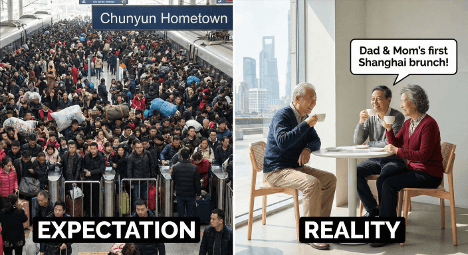
Forget The Train Crowds: We Analyzed Xiaohongshu During Chunyun And Found A Seismic Cultural Shift That Brands Are Completely Missing
If your brand's mental image of "Chunyun" (the Spring Festival travel rush) is still stuck on drone footage of packed train stations and tearful reunions in rural villages, you need to update your software immediately.
While the physical migration is still happening, the digital narrative has completely rewritten the script.
We dove deep into Xiaohongshu during the peak of the holiday season. What we found wasn't just travel tips; it was a real-time rebellion against traditional expectations, played out through algorithms and hashtags.
For brands looking at the Chinese market, this isn't just interesting social commentary. It is actionable intelligence on a massive pivot in how the world's biggest consumer block prioritizes spending, defines family duty, and protects their mental peace.
Here is the analytical breakdown of the new Chunyun reality.
1. What is the "Reverse Chunyun(反向春运)" Trend on Xiaohongshu?
For decades, the narrative was immutable: Young people endure hellish travel to return to tier-3/4 hometowns. This year, RED proved that narrative has fractured.
The hottest trend wasn't how to survive the train ride home; it was logistics guides on how to fly parents into the Tier-1 cities (Shanghai, Beijing, Shenzhen).
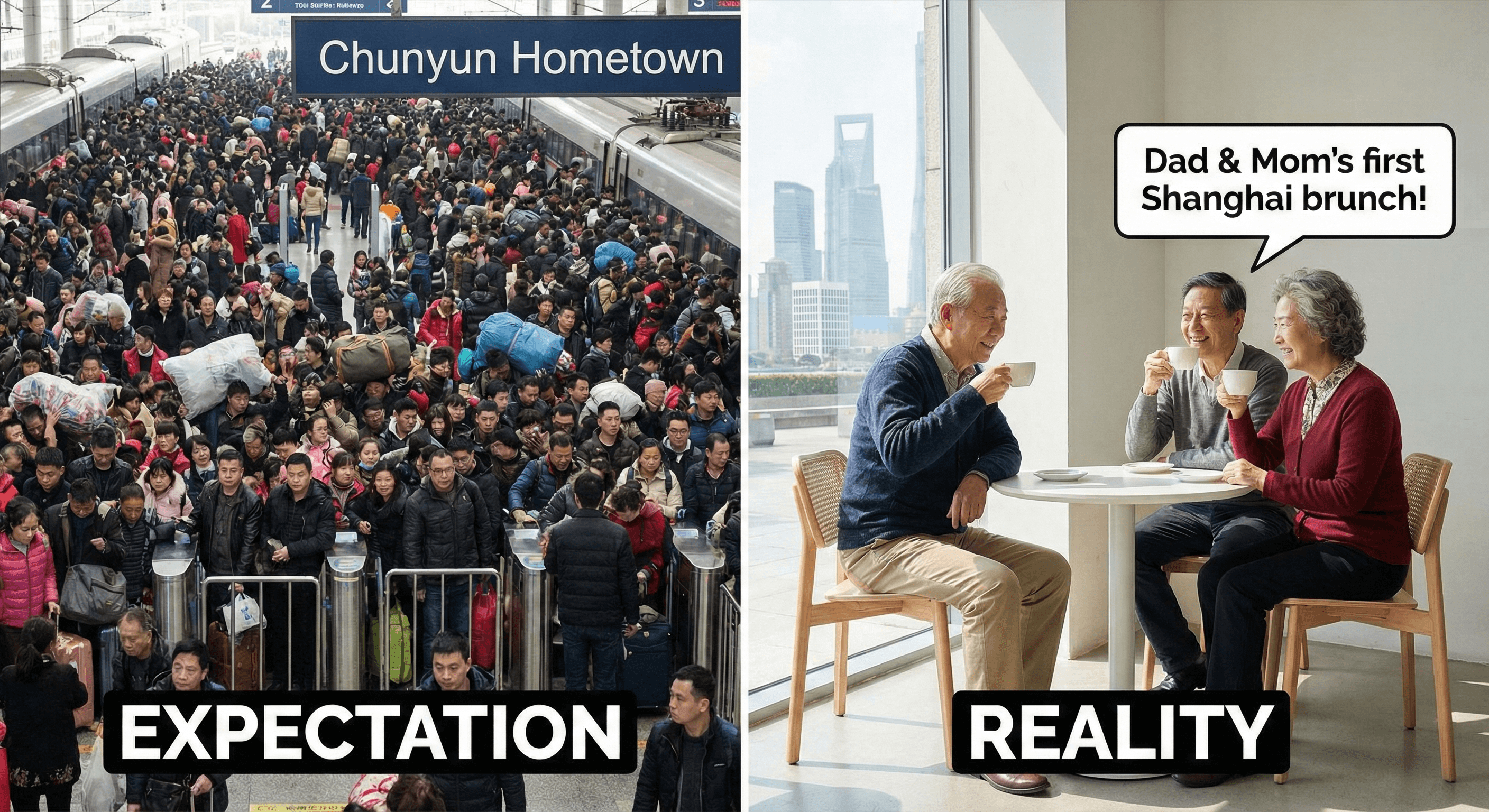
The RED Insight: Users were trading highly detailed "Boomer-Proof Itineraries" for city life. The content focus shifted from "what gifts do I bring home to impress relatives" to "where can I take my parents for a high-end brunch in Shanghai that won't overwhelm them." The vibe is practical urban sophistication meeting generational duty.
The Brand Wake-Up Call: If your holiday marketing budget was entirely focused on pre-holiday gifting, you missed the actual spending event. The "Reverse Chunyun" demographic means massive spending power is staying in major urban centers during the holiday. The opportunity now is in urban experiential retail, multi-generational dining packages, and premium local tourism marketed towards young professionals hosting their parents.
2. The "Anti-Performance" Movement and the Death of the Loud Flex
Traditionally, Chunyun was a performance art piece where you returned home to prove you "made it" in the big city. You wore your most expensive coat and flaunted your success.
RED users are now actively revolting against this pressure. The platform was flooded with posts about "dressing down" for the hometown visit to avoid intrusive questions about salary and savings. The aesthetic shifted sharply toward "Quiet Luxury" and hyper-functional comfort (like the "outdoor premium" trend we are seeing everywhere).
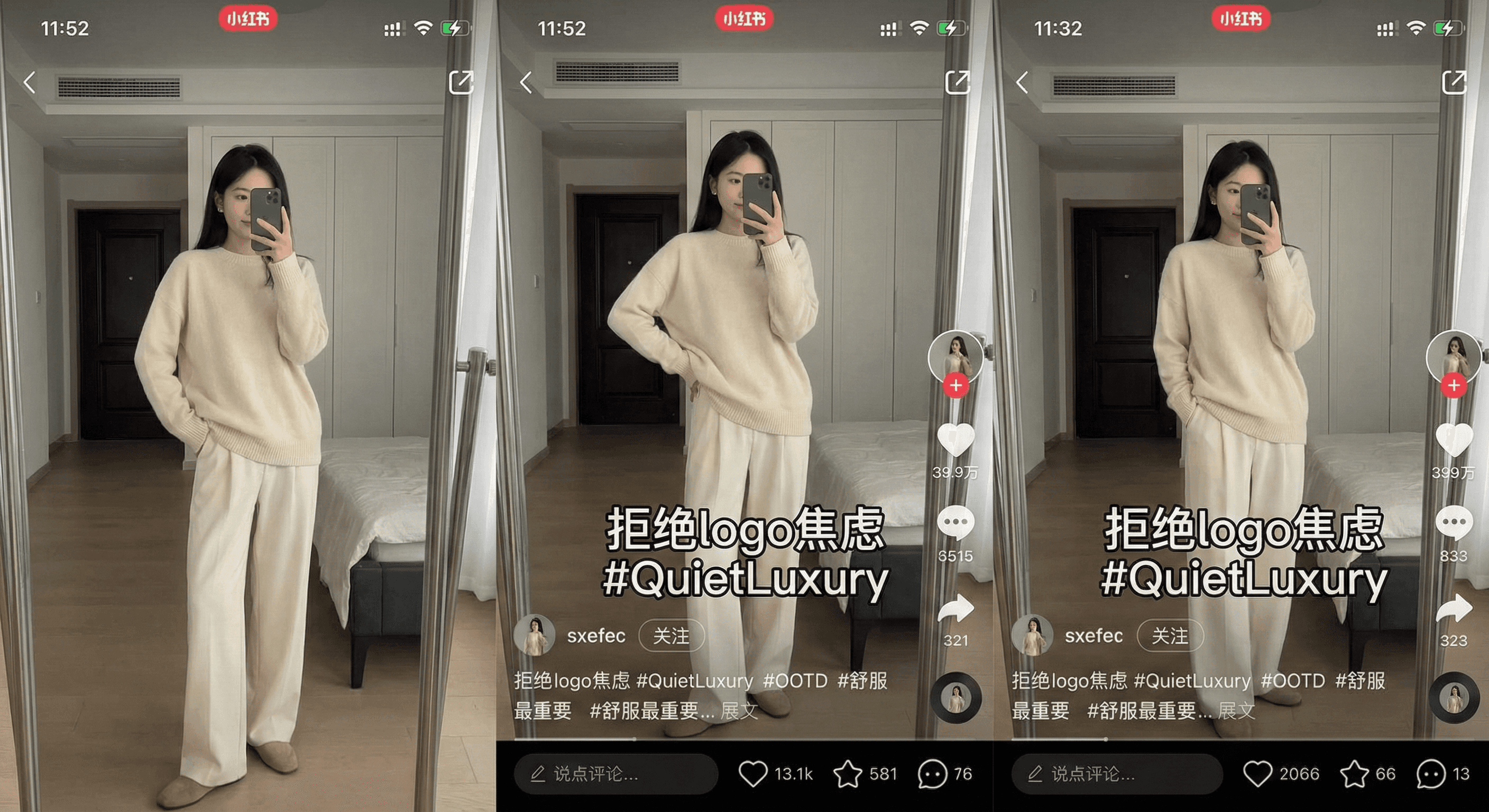
The RED Insight: This is an "anti-involution" stance taken into the family living room. Young consumers are prioritizing their own physical comfort over signaling status to distant relatives. The flex is no longer about how expensive your jacket is; it's about how unbothered you look.
The Brand Wake-Up Call: Logomania during CNY is becoming tacky. Brands need to pivot their messaging from aspiration to authenticity and personal well-being. Marketing language aimed at the holiday traveler should focus on durability, comfort for long journeys, and "investment pieces for you," rather than tools to impress others.
3. The "Emotional Survival Guide" as a Product Category
Let's be real: the most stressful part of Chunyun isn't the travel; it's the interrogation from relatives about marriage, kids, and career.
Xiaohongshu has become a repository for psychological warfare tactics. Users share scripts, boundary-setting techniques, and "emotional support" product recommendations to survive the social pressure cooker of the family reunion.
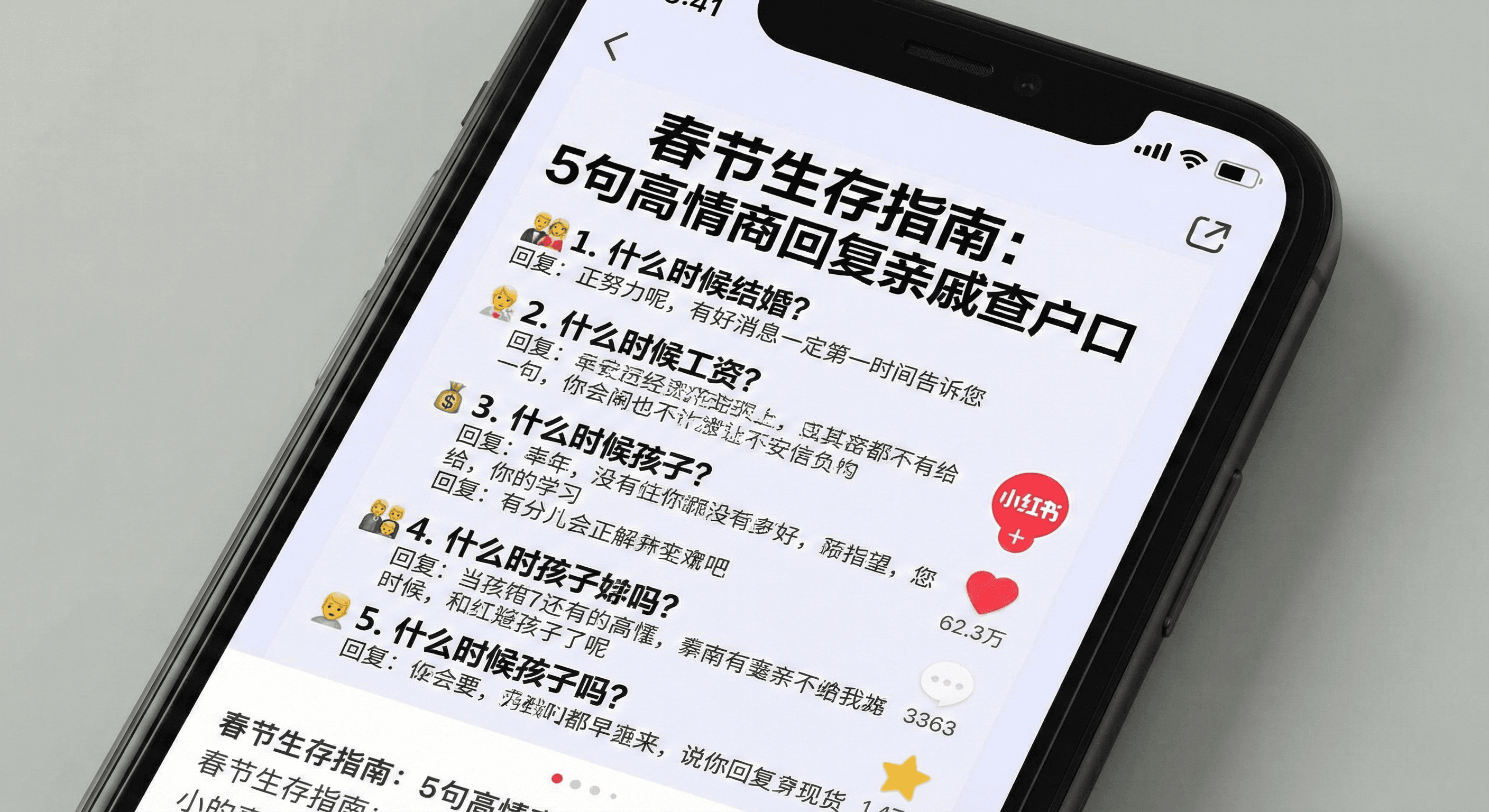
The RED Insight: Mental wellness isn't just a buzzword for this generation; it's a survival requirement. They are actively seeking tools to protect their individuality against collectivist family pressures.
The Brand Wake-Up Call: Brands that position themselves as allies in this struggle win big. Self-care products (skincare, aromatherapy, wellness tech) shouldn't just be marketed as gifts; they should be positioned as "emotional armor" or "recovery tools" for the returning urbanite. A campaign focused on "Recharging your social battery after day 3 with the relatives" resonates infinitely more than generic "Happy New Year" messaging.
4. The "Hometown Makeover" (#爆改) Paradox
This was perhaps the most heartwarming, yet complicated, trend on RED. Young people returning home took their aging, often rural parents and gave them massive, modern stylistic makeovers for photoshoots, tagging it #爆改 (explosive makeover).
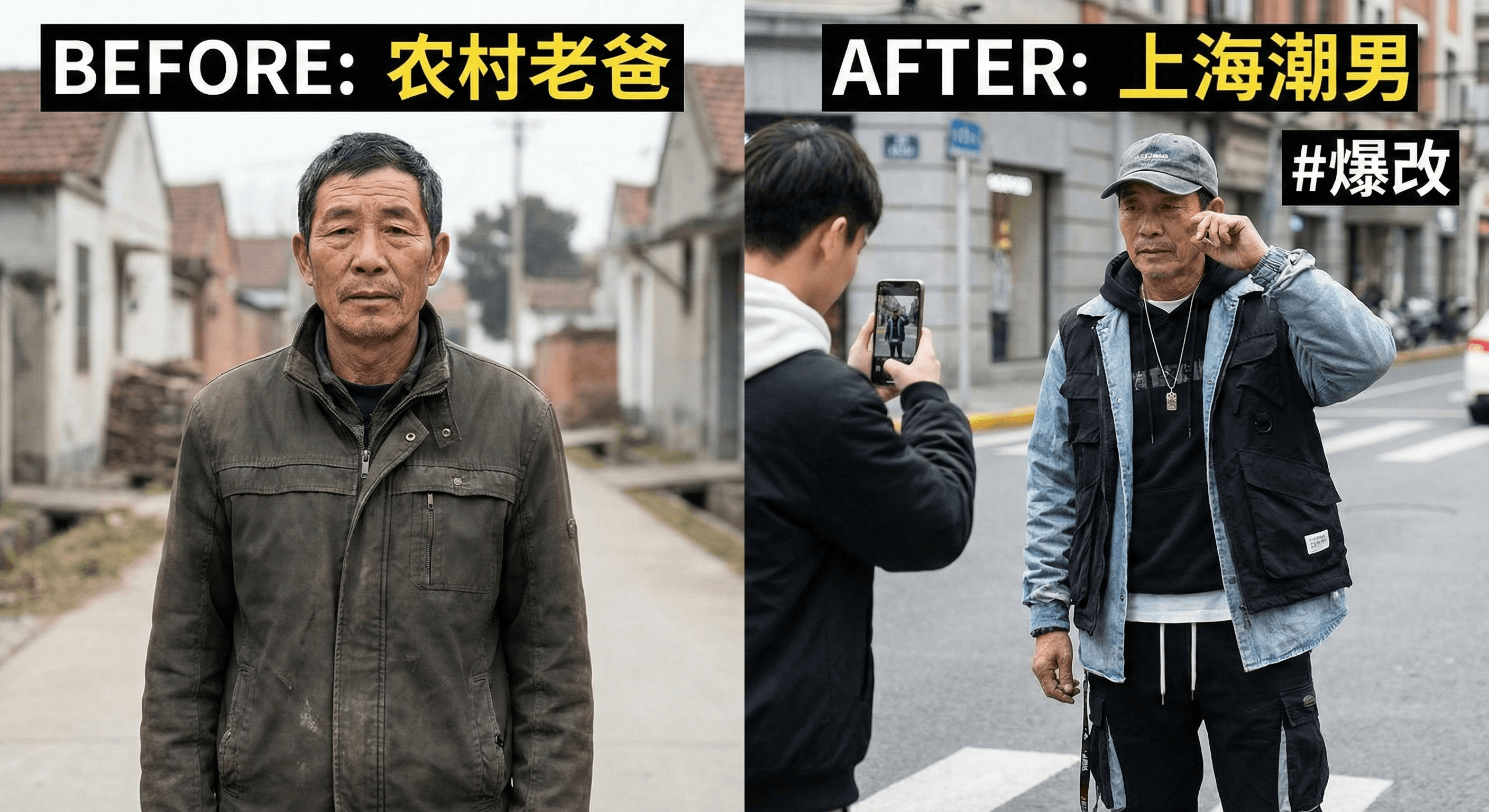
The RED Insight: On the surface, it's cute content. Analytically, it's a fascinating clash of identities. It's the urbanized child trying to bridge the massive cultural gap with their parents through the only language the child now knows: consumerism and aesthetics. It’s affectionate, but it also highlights a deep desire to "modernize" the older generation.
The Brand Wake-Up Call: There is a massive, untapped market for "Glow-Up Gifts." Instead of traditional health supplements for parents, fashion, beauty, and grooming brands should market products that help the older generation participate in modern life. A campaign showing a daughter teaching her mom a modern skincare routine isn't just about selling cream; it's about selling connection across a generational divide.
The Final Takeaway
The Xiaohongshu lens reveals that Chunyun is no longer just a physical journey; it is a negotiation of modern Chinese identity. The young consumer is richer, more individualistic, and far more protective of their peace than the previous generation.
Brands that continue to market to the Chunyun stereotypes of 2010 will find themselves shouting into a void. The brands that win will be the ones that recognize the shift toward urban hosting, prioritizing mental wellness, and navigating complex family dynamics with authenticity.

