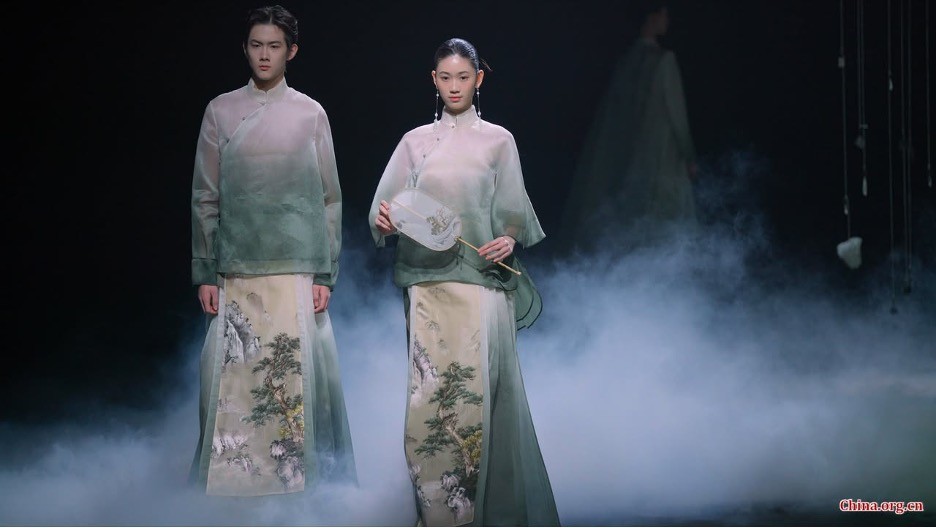
Beijing Fashion Week Just Closed. New Chinese Style Isn't a Trend. It's the Operating System.
Nine days. 160+ professional shows. 120+ first launches. 230+ brands. 400 designers. 10+ countries.
China International Fashion Week (Spring 2026) closed on April 1 in Beijing, and the scale alone is impressive. But the scale isn't the story.
The story is a six-character phrase that appeared in nearly every show report, every trend analysis, every designer interview: xinzhongshi (新中式), "new Chinese style."
Xinzhongshi wasn't a trend at this fashion week. It was the operating system. And if you're a Western brand that still treats Chinese aesthetics as a "capsule collection" opportunity... you're about to get left very far behind.
What Xinzhongshi Actually Means in 2026
Let's kill the cliche version first. Xinzhongshi is NOT "put a dragon on it." It's NOT mandarin collars on Western blazers. It's NOT the lazy Chinese New Year capsule that every luxury brand trots out in January.
Xinzhongshi in 2026 is about craft, material, and philosophy.
CCTV reporters covering Beijing Fashion Week noted that the two dominant themes across all 160+ shows were: "non-heritage innovation" (非遗创新) and "Eastern aesthetic" (东方美学). These aren't buzzwords. They describe a specific design approach where traditional Chinese techniques, intangible cultural heritage crafts like Nanjing cloud brocade, Suzhou embroidery, and traditional dyeing, are applied to contemporary silhouettes with modern construction.
The result doesn't look "Chinese" in the tourist-shop sense. It looks modern, clean, and sophisticated, but with a depth of material quality and cultural reference that pure Western design can't match.
This is guochao 3.0. The first wave was national logos. The second was Chinese motifs on Western shapes. The third, happening now, is Chinese craft as the foundation of design itself. The technique is the trend, not the decoration.
The International Brand Pivot
Here's the sentence from Beijing News' closing report that every Western brand executive needs to read: "International brands are no longer satisfied with 'entering the Chinese market.' They are actively becoming part of China's fashion context."
This was the editorial framing for the entire closing ceremony. Chinese fashion media observed that international brands showing at Beijing FW, including Zadig & Voltaire from France and Laurel from Germany, didn't just present their global collections in a Chinese venue. They adapted their presentations to engage with Chinese cultural narratives. Zadig showed in a Qing Dynasty palace. Other international brands incorporated non-heritage craft collaborations or xinzhongshi design elements.
The shift is fundamental. Five years ago, international brands came to Chinese fashion weeks as visitors. They presented their existing collections and hoped Chinese buyers would be impressed. Now, the successful international brands are arriving as participants. They're modifying their creative approach, choosing culturally significant venues, and casting Chinese celebrities with local cultural resonance.
The brands that still arrive as visitors, with their standard global collection in a standard venue, are being outshone by brands that make the effort to belong.
The Non-Heritage Craft Economy
CCTV's coverage specifically highlighted the explosion of fei yi (非遗, intangible cultural heritage) innovation at this season's Beijing FW. Designers are no longer treating traditional crafts as museum references. They're treating them as commercial assets.
This connects directly to what's happening in Shanghai simultaneously. The Shanghai Fashion Customization Festival features non-heritage artisan markets. EP Yaying's closing show incorporates traditional Chinese craftsmanship. The New Wave Fashion Awards judge entries on "brand structure" alongside aesthetics.
A national infrastructure for commercializing Chinese craft tradition is being built in real time. And it's happening at fashion week speed: not as a government program or an academic project, but as a competitive advantage that designers are fighting over.
For Western brands, this creates an opportunity AND a threat. The opportunity: collaborate with Chinese artisans to add genuine cultural depth to your products. The threat: if Chinese brands master the craft-to-commerce pipeline, they'll own a design dimension that no foreign brand can replicate from the outside.
What 120+ First Launches Tells You
Beijing Fashion Week reported 120+ "first launches" (首发首秀) this season. That's 120+ product debuts, brand debuts, or collection debuts happening in Beijing for the first time.
This number connects to the "First Economy" (首发经济) policy that both Beijing and Shanghai are competing over. Both cities want to be the premiere destination for brand debuts, and they're using their respective fashion weeks as the vehicle.
For Western brands, the competitive dynamic between Beijing and Shanghai fashion weeks creates an interesting choice. Shanghai offers the MODE trade show, international buyers, and a consumer-facing festival model. Beijing offers the China Fashion Design Association's institutional support, government backing for non-heritage innovation, and a more traditional B2B format.
The brands that are winning in China right now aren't choosing one. They're doing both. Showing at Beijing FW for institutional credibility and buyer access, and activating at SFW for consumer engagement and social media content.
What This Means for Western Brands
1. Xinzhongshi is not optional for China anymore. If your brand sells in China without any engagement with Chinese aesthetic traditions, you're presenting as a cultural outsider. That was fine in 2015. It's a disadvantage in 2026. The engagement doesn't have to be deep. But it has to be genuine.
2. Non-heritage collaboration is the fastest path to cultural credibility. Partnering with Chinese artisans, using traditional techniques in your supply chain, or referencing specific regional craft traditions gives your brand a story that Chinese consumers respect. A capsule collection made with Suzhou embroidery says more about your commitment to China than a 50-store rollout.
3. "Entering China" is the wrong frame. "Belonging in China" is the right one. Beijing FW's closing report explicitly called this out. Brands that show up as visitors get visitor treatment. Brands that show up as participants get participant treatment. The investment in cultural understanding, venue selection, creative adaptation, and local collaboration is what separates the two.
4. Both Beijing and Shanghai fashion weeks deserve attention. They serve different functions and different audiences. If your brand is purely consumer-facing, SFW is the priority. If your brand needs institutional credibility and government relationships, Beijing FW matters. If you can, do both.
5. The craft-to-commerce pipeline will define the next decade. Chinese designers who master the translation of traditional craft into commercially viable products will build a moat that no Western brand can cross. The time to engage with this pipeline, through partnerships, talent hiring, or material sourcing, is now, while it's still open.
Xinzhongshi won Beijing Fashion Week. Not as a trend. As the default.
The question for every Western brand isn't whether to engage with Chinese aesthetic traditions. It's whether you engage now, while there's still room at the table, or later, when the seats are taken.

