Jelly Shoes Just Hit 30 Million Xiaohongshu Impressions. The 'Kidult Economy' Just Got Big.
Plastic shoes. Translucent. Glossy. Smell like bubblegum. The kind your mom bought you in 1996. The kind you wore to the beach in 1998. The kind that defined the worst, sweetest, sweatiest part of summer.
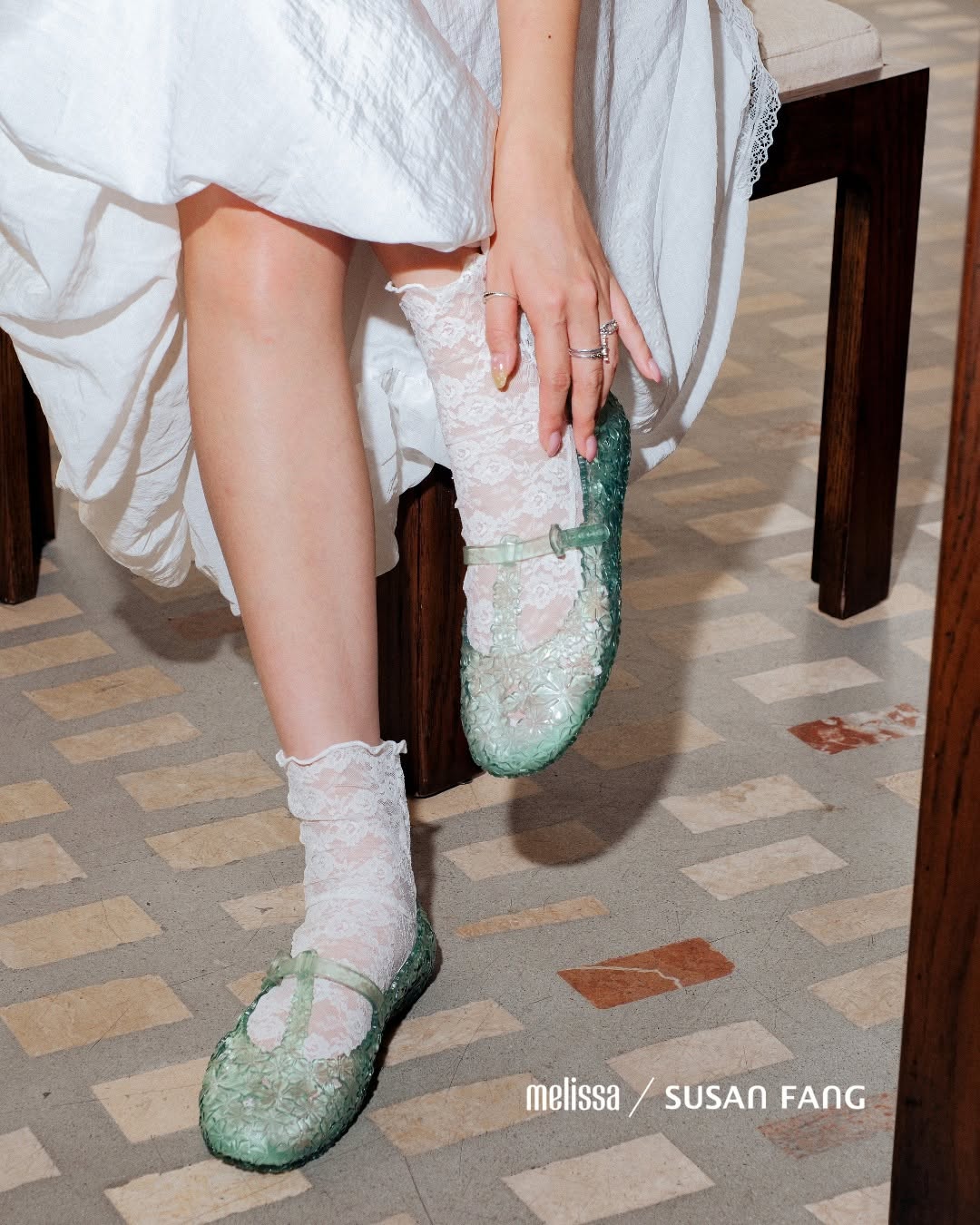
They're back. Not as a joke. As a 30.9 million impression Xiaohongshu hashtag. As a Chloé spring/summer 2026 runway hero. As a Susan Fang x Melissa collaboration. As a Shanghai exhibition called "Jelly Land" that drew thousands. And as a category that Western fashion brands keep dismissing as too silly to matter while local Chinese designers are using the format to redefine "luxury kawaii" for Gen Z.
If your 2026 China brand strategy doesn't have a jelly shoe... you're underestimating the kidult economy.
What's Actually Happening
The jelly shoe trend in China is now a confirmed, measurable, multi-platform retail wave with these data points:
#jellyshoes on Xiaohongshu: 30.9 million+ impressions (and rising weekly)
Chloé Spring/Summer 2026 runway: jelly mules ("Cinderella shoes") and Cosmopolitan pink heeled flip-flops, both viral
Melissa x Susan Fang collaboration: sold out, drove Melissa back into the China fashion conversation
The Row Mara: fishnet jelly flat sold out within days, multiple seasons in a row
Brands now active in the category: Chloé, Melissa, Tory Burch, COS, Free People, Vince, Loeffler Randall, Crocs, plus local Chinese designers Xander Zhou and Yvmin
"Jelly Land" exhibition: Shanghai immersive installation experience, drew thousands of attendees
Celebrity drivers: Blackpink's Lisa, Brooke Shields, Taylor Swift photographed in jelly shoes (Western), Chinese KOLs and stylists driving Xiaohongshu posts (China)
Jing Daily lead-in May 8: "Whether it's the Y2K comeback, kidult economy, or meme fashion, jelly shoes are experiencing a resurgence driving local designers and market growth."
This isn't a one-week microtrend, but a structural Gen Z aesthetic shift toward "kidult" fashion that monetizes 1990s nostalgia for consumers who never lived through the 90s.
Why Plastic Shoes Are Now Luxury
The standard Western brand instinct is to read "jelly shoes" and think "kid product." That's wrong. In China 2026, the jelly shoe operates as a luxury signal. Here's why.
1. The "anemoia" driver. A new word for an old feeling. Anemoia is "nostalgia for a time you never lived through." Chinese Gen Z and young Millennials are romanticizing the 90s aesthetic via Bratz, Polly Pocket, Tamagotchi, and original Mary-Kate-and-Ashley Y2K silhouettes. Jelly shoes sit at the visual epicenter of that aesthetic and convert it into wearable product. The shoe is the gateway purchase for a broader "kidult" wardrobe.
2. The "kawaii" rejection of quiet luxury. 2024-2025's quiet luxury moment (beige, gray, cashmere, no logos, no fun) is being directly rejected by 2026 China. Bright colors, glossy materials, cartoon visuals, and toy-like accessories are the new luxury aesthetic. Per InsightTrendsWorld, "luxury houses and local designers are flooding platforms like Xiaohongshu with translucent, toy-like footwear." Chloé's pink Cinderella mule is luxury kawaii defined.
3. The "internet-ready" optic. Jelly shoes photograph hyperreal on Xiaohongshu and Douyin. The translucent material catches light. Vivid colors pop on smartphone cameras. The shoes look digitally rendered, which makes them feel "AI-aesthetic" without being AI-generated. Per design analysts, "the footwear resembles toys and appears digitally rendered on camera, making it highly compatible with social media ecosystems like Xiaohongshu and Douyin."
4. The "huo ren gan" alignment. Last week we covered 活人感 (huo ren gan), the anti-perfectionism brand consensus. Jelly shoes are the perfect huo ren gan accessory. They're slightly absurd. They don't take themselves seriously. They invite playfulness. They counter-program the polished, deity-statue aesthetic that Chinese consumers are now actively rejecting.
So a 2,500 RMB Chloé Cinderella jelly mule isn't a "fun" purchase. It's a signal-rich, internet-ready, anti-perfectionism, anemoia-driven kidult-economy luxury statement. Five years of aesthetic shift, compressed into one plastic shoe.
The Local Chinese Brands Already Eating This
Western brand owners who think "this is a global trend that will reach China later" are reading it backward. Local Chinese designers and emerging brands are already leading the category in their home market:
Xander Zhou: surreal jelly-aesthetic accessories built specifically for camera-pop
Yvmin: digital-first jewelry with jelly material exploration
Susan Fang: ethereal aesthetic that aligns with Melissa's jelly playbook, hence the collab
Pop Mart adjacent brands: extending the kidult IP economy into wearable categories
Independent Xiaohongshu-native designers: 50+ small Chinese designers selling jelly variations at 200-1500 RMB price points, capturing volume Western brands miss
Per the InsightTrendsWorld analysis... "fashion brands can transform meme culture and childlike whimsy into high-demand luxury items despite cautious consumer spending." That's the playbook every Western footwear and accessory brand should be running in China in 2026.
Why This Should Worry Performance and Lifestyle Brands
Even if you don't sell shoes, this story has a direct read for your category.
The jelly shoe phenomenon is a proof point that Chinese Gen Z and Millennial consumers in 2026 want fashion product that performs on camera, ties to nostalgia, signals anti-perfectionism, and lets them participate in a meme-able community. That's not a footwear-only requirement. That's the new product brief for accessories, apparel, eyewear, bags, jewelry, hats, and outerwear.
Apply the jelly shoe logic to your category. Ask:
Does my product photograph hyperreal on Xiaohongshu? (Does the material catch light? Do the colors pop?)
Does it tie to a nostalgia reference Chinese consumers love? (Y2K, 90s, vintage gaming, anime?)
Does it counter-program quiet luxury polish? (Does it have personality? Is it slightly playful?)
Can a Chinese consumer share it in a meme-able way? (Does it have ironic potential?)
Does it work as a kidult-economy purchase? (Adults reaching back into childhood signals?)
If your answer is "no" to 3+ of these questions, your 2026 China product line is missing the dominant aesthetic moment in the category.
What YOU Should Take Away
If you're a Western fashion, accessory, footwear, or lifestyle brand operating in or eyeing China, here's the immediate checklist:
Add a jelly variation to your spring/summer 2027 line. Whatever your category, a clear, translucent, glossy version of your hero SKU at a 30-50% premium can capture the kidult economy interest in your brand. Test it on Xiaohongshu first.
Run a "kidult audit" on your existing product line. Identify which SKUs photograph hyperreal, tie to nostalgia, allow playful styling, and counter-program quiet luxury. Push those SKUs into Xiaohongshu first.
Collaborate with a Chinese designer who already lives in this aesthetic. Susan Fang, Yvmin, Xander Zhou, Susan Fang again. A 1-product collab with a Chinese kidult-aesthetic designer is faster than rebuilding your design team.
Watch Pop Mart, MINISO, and Bloodborne carefully. These brands have built kidult-economy retail moats and are increasingly being approached for fashion-adjacent collaborations.
Don't dismiss the trend because it sounds silly. "Plastic shoes" sounded silly in 2023. Then they hit $400+ retail prices, sold out Chloé Spring 2026 inventory, and now own 30.9 million Xiaohongshu impressions. The brands that took it seriously in 2024 caught a category lift. The ones that laughed are now reading earnings reports of brands they used to dismiss.
Make a Shanghai or Chengdu pop-up activation around jelly-aesthetic product. Tie it to the "Jelly Land" momentum. Shanghai consumers are already primed. The earned media is already there.
The Chinese consumer in 2026 wants fashion that doesn't pretend to be too cool for the room. The Western brand still selling "elevated minimalism" in this market is selling 2022's aesthetic to 2026's customer. Plastic. Glossy. Slightly absurd. Internet-ready. Anti-perfectionism. Anemoia. All in one shoe. If your 2026 China product line can't say yes to any of those words, your spring/summer 2027 product line should.

