Livestream Shopping Is Still Making Money. It’s Just Getting… Awkward.
China’s livestream e-commerce giants aren’t crashing. But the era of explosive, chaotic growth is over, and the vibes have definitely shifted. Traffic is pricier. Competition is cutthroat. New livestream formats keep popping up and stealing slices of market share. And every so often, a product-quality or after-sales scandal detonates on social media and chips away at whatever consumer trust remains.
The golden age of “turn on the camera, print money” has hit a ceiling. So the big influencer companies are scrambling for their next act. And interestingly, they’re all eyeing the same direction: Offline.
Yes. Actual, physical stores.
Oriental Selection Is Quietly Building an Offline Empire
Yu Minhong, the founder of New Oriental and the architect behind its wildly successful livestream arm Oriental Selection, has been teasing offline ambitions for a year. Now those plans are materializing.
Last August, during a shareholder call, Yu floated the idea of merging New Oriental’s 800 physical teaching centers with Oriental Selection’s consumer-facing ecosystem. Think: service stores, member clubs, flagship shops - an online-offline hybrid that leverages foot traffic from millions of parents.
Fast-forward to now.
Oriental Selection is hiring flagship store managers in Beijing for 15k–30k RMB/month, with requirements that read like a convenience-retail Avengers lineup:
5+ years in retail
Experience managing hybrid “dining + retail” concepts
Preferably from major chains like Bianlifeng, 7-Eleven, or Lawson
Team leadership experience of 15+ people
The first flagship store (about 400 square meters) will sit in the beating heart of Zhongguancun. Expect fresh groceries, snacks, household goods, light meals, and coffee.
Meanwhile, Oriental Selection (Beijing) Technology Co., Ltd. quietly updated its business license to include restaurant operations, delivery services, and catering management. A spokesperson gave a cryptic confirmation: the company will “continue exploring diverse possibilities,” and official announcements will follow.
The overlap is obvious. Whether they’re selling noodles or notebooks, Oriental Selection is unmistakably inching into the dining-and-retail hybrid zone.
And frankly? It makes sense.
The Company Needs a Reset. Offline Might Be the Lifeline.
The last year has been… dramatic.
Two top hosts Dong Yuhui and Dundun left. CEO Sun Dongxu resigned. The online fanbase spiraled into arguments.
And the numbers show real bruising:
GMV dropped from 14.3 billion RMB to 8.7 billion RMB year-over-year.
Douyin orders cratered from 180 million to 91.6 million.
Even Yu Minhong faced a PR headache after posting a heartfelt staff letter during an Antarctica vacation prompting snarky comments about “the boss sending chicken-soup inspo while employees work like oxen.”
So yes, Oriental Selection needs a strategic pivot. Offline retail could be exactly that.
They’ve already tested smart retail cabinets at HQ, stocked with their own products. It was a tiny experiment, but a proof of concept. Now, with real stores in the pipeline, the pieces fit together:
New Oriental teaching centers bring guaranteed foot traffic.
The livestream supply chain is already built - fresh produce, snacks, daily essentials, private-label goods.
Offline spaces enable real-world, tangible brand experiences to rebuild trust and convert casual buyers into loyal customers.
If Oriental Selection cracks the online-offline code, the brand gets stronger, revenue streams diversify, and risk goes down.
Of course, offline retail is a different beast. Site selection, staffing, supply chain logistics, store management… they all hit differently than livestream studios. Long-term planning is essential.
Influencer Companies Everywhere Want Physical Stores Now
Oriental Selection isn’t an outlier. The influencer economy has collectively decided that offline stores = the next moat.
The logic is simple:
Online traffic is fleeting. Offline presence is sticky.
Do both, and you build a feedback loop where:
online → drives offline → drives online,
forming a more durable commercial ecosystem.
Three Sheep CEO Du Gang put it bluntly:
“Livestreaming won’t last for decades. Brands can.”
He’s right.
The trust people place in livestream hosts is ephemeral. But a physical store with real products, real service, real vibes creates a lasting emotional anchor.
Three Sheep’s Move:
They launched their private brand Xiao Yang Zhenxuan and have been aggressively developing self-owned products. In October, the brand’s Mengcheng store was prepped for opening (cue photos with Xiao Yang himself). A controversy delayed the launch, but the store is now operating.
Li Jiaqi’s Team Is Opening Cafés
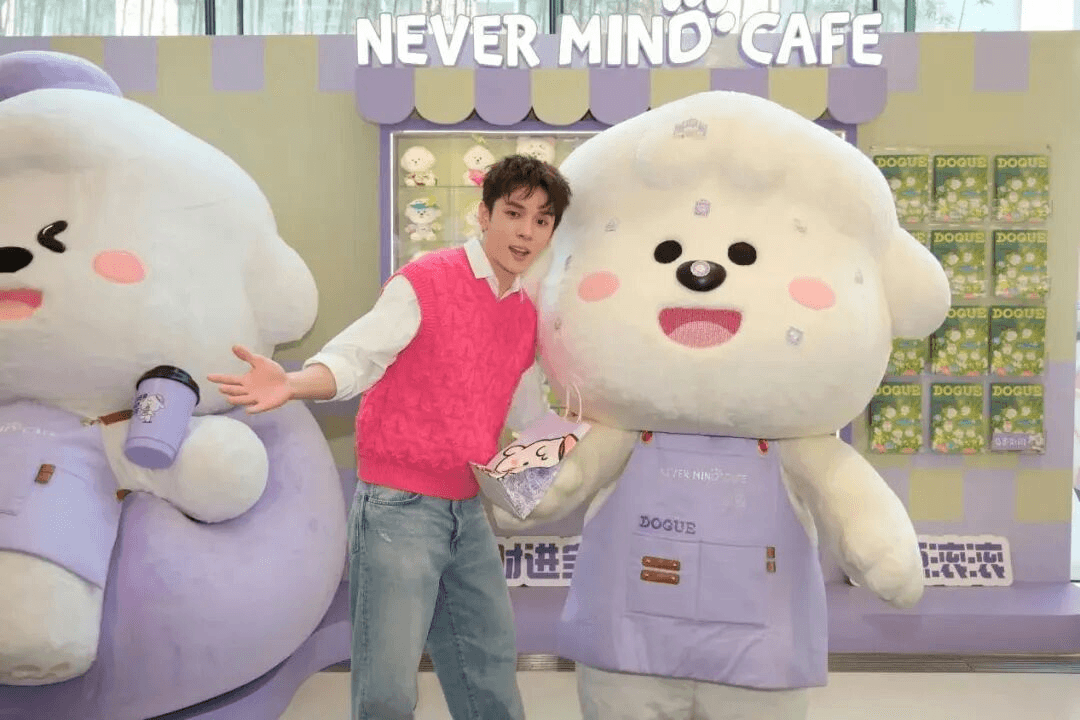
Meione, the company behind beauty livestreamer Li Jiaqi, expanded its hit IP “Never Family” into branded coffee shops.
The Never Mind Café debuted in Shanghai selling both drinks and merch, and has since expanded to campuses like Nanjing Communication University and Duke Kunshan University.
Luo Yonghao’s Team Went into Apparel Retail
“Make Friends,” his livestreaming brand, incubated the budget-friendly label Reload in 2021.
Results?
GMV exceeded 1 billion RMB by mid-2024
Over 20 million consumers
Reload’s “Spark Plan” aims to open 3,000+ stores nationwide. Its Beijing store is about 60 square meters, focuses on men’s clothing priced between 100–400 RMB, and runs on a flexible partnership model.
These companies all did one thing first: win online.
Then they funneled their traffic into offline experiences that deepen trust and turn casual shoppers into repeat customers.
Because ultimately:
A store isn’t just a sales channel. It’s a brand universe you can walk into.
The Offline Future Looks Promising… but Cautious
Despite the hype, most influencer companies are still in early stages. Ambition is high, but rollout is slow. And honestly, that’s sensible.
Building physical retail requires:
strategic planning
professional operations
tolerance for rent, labor costs, and offline complexity
and the wisdom not to let offline failures damage the online brand
The real challenge?
Finding harmony between two fundamentally different ecosystems: livestream urgency vs. real-world retail patience.
But one truth remains constant across every platform and every storefront:
Long-term success requires great products, reliable service, and memorable experiences.
Only then can a brand survive both online hype cycles and offline reality.