A Cartoon Golf Ball Just Opened a Flagship Store in Shanghai. And It Might Be the Smartest Brand Play in China Right Now.
Golf in China used to mean one thing: middle-aged executives, polo shirts tucked into khakis, and a sport that screamed "I have a membership you can't afford." That era is ending faster than most people realize.
Malbon Golf, a brand founded by a married couple in California who started by posting cartoon doodles on Instagram, just opened its first China flagship store in Shanghai's Jing'an Kerry Centre. From announcing its China HQ to cutting the ribbon on a physical store... six months. That's not fashion-brand speed. That's tech-startup speed.
And Malbon isn't alone. There's a full-blown land grab happening in China's golf fashion market right now, and the brands winning it look nothing like the ones you'd expect.
What Malbon Actually Is (And Isn't)
Malbon didn't start with product. It started with content.
In 2017, founders Erica and Stephen Malbon began posting irreverent, cartoon-style golf content on social media. No swing tutorials. No equipment reviews. Just a cartoon golf ball character called "Buckets" and a vibe that said: golf doesn't have to feel like your dad's country club.
It worked. The brand built a following before it ever sold a shirt. By the time product dropped - bright colors, streetwear silhouettes, golf-functional fabrics - the audience was already there.
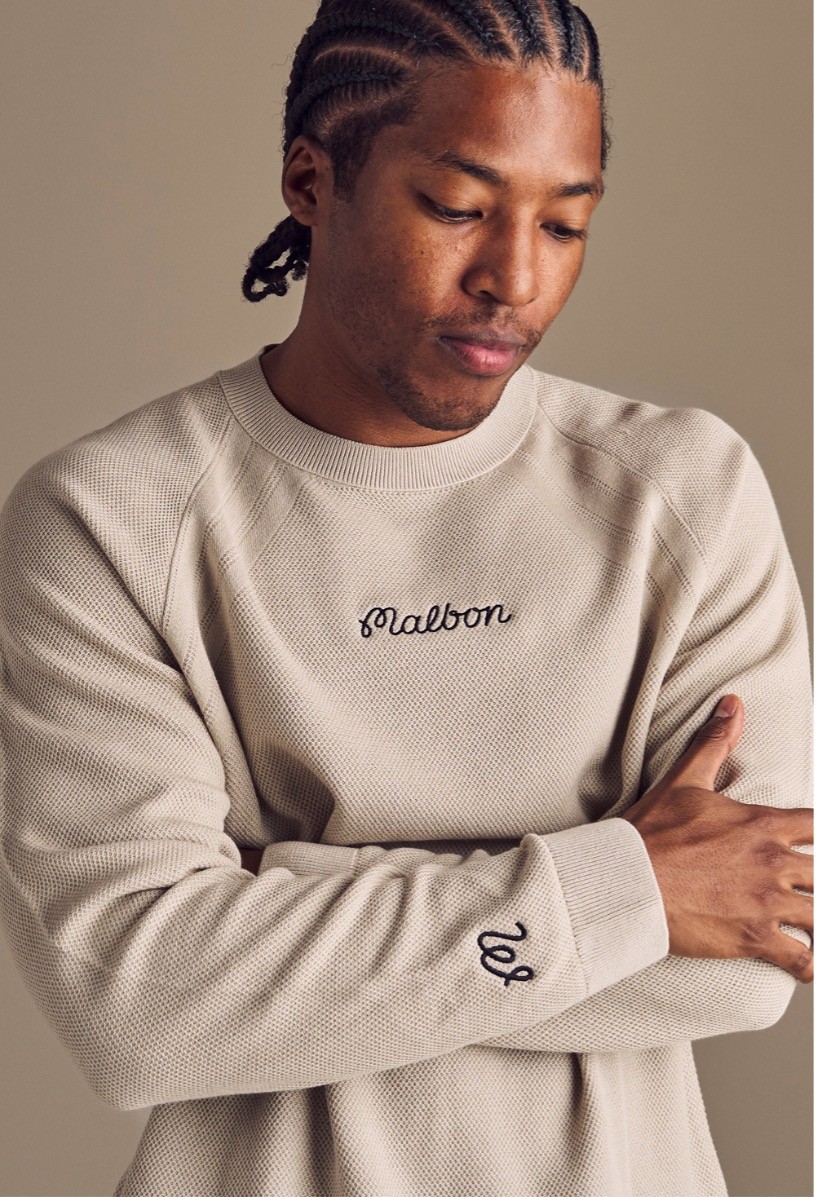
Today Malbon sells everything from polo shirts and golf pants to hoodies and tees that work on the course and off it. The brand tagline is "Making the green the common ground" (果岭有界,风格无界). The whole pitch is: you don't need to be a golfer to wear this. But if you are a golfer, you'll finally look like you belong in 2026 instead of 1996.
Their collab list reads like a brand strategist's fever dream: Nike, Coca-Cola, Jimmy Choo, TAG Heuer, F1, Beats by Dre, and Chinese streetwear label CLOT. That last one matters. It signals Malbon isn't just "entering" China. It's trying to be culturally native from day one.
The China Playbook: Fast, Layered, Community-First
Malbon's China rollout follows a sequence that's worth studying:
Step 1 - HQ first (September 2025). Malbon opened its China headquarters in Shenzhen's Prince Bay, a joint venture with Filipino brand management firm TKG Lifestyle. Shenzhen was chosen for supply chain access, speed, and proximity to the Greater Bay Area, one of China's most active golf communities.
Step 2 - Pop-up test (January 2026). A temporary shop at Jing'an Kerry Centre in Shanghai. Limited product, full brand experience. The pop-up served as a market thermometer and content engine at the same time.
Step 3 - Flagship launch (March 2026). The same Jing'an Kerry Centre location became a permanent two-story store. The space combines retail, a coffee bar, and an interactive putting area. This isn't a store. It's a clubhouse with a cash register.
Step 4 - Localized product. Malbon dropped a Shanghai-exclusive "Xiaolongbao" (soup dumpling) capsule collection, fusing the Buckets mascot with one of the city's most iconic food symbols. Playful, city-specific, instantly shareable on Xiaohongshu.
Next: Beijing, Shenzhen, Hangzhou, and Chengdu are all on the expansion list. Each market will be activated through stores, product, and Malbon's membership community, the Buckets Club.
From HQ to pop-up to flagship to local product drops in under a year. That's a brand that did its homework before it showed up.
The "Golfcore" Wave Is Real. But Is It Big Enough?
Here's where it gets interesting for brand owners.
China has roughly 720,000 active golfers. That's a small base. But the growth isn't coming from golfers. It's coming from people who want to dress like golfers.
"Golfcore" (高尔夫风穿搭) is trending across Xiaohongshu and Douyin. The aesthetic - clean lines, polo collars, pleated skirts, structured caps - overlaps heavily with the "quiet luxury" and "old money" trends that have been dominating Chinese fashion for two years. Golf style has become a lifestyle signifier that doesn't require you to ever touch a club.
And brands are flooding in to capture it:
Amazingcre (Korea): Entered through a strategic partnership in 2023, opened its first standalone department store in Shanghai's Jiuguang in May 2025
PIV'VEE (Korea): Women-focused golf fashion, first China store in Shenzhen's Ping An Center, expanding to Hangzhou MixC
Calyn Golf (US): Set up China HQ in Shanghai, building social media presence across platforms
Munsingwear (US legacy): Partnered with Chinese menswear group LILANZ, refreshed store design, landed in Chengdu SKP, Wuhan MixC, Nanjing Deji Plaza
MARK&LONA (LA-based): First mainland China store at Beijing China World Mall in May 2025, now four stores open
The big sports brands aren't sitting still either. FILA GOLF is pushing both "elite" positioning and lifestyle content. DESCENTE GOLF is locking up pro player endorsements and premium retail. Lululemon has made golf one of its five core sport categories - product line expanding fast.
What's Actually Different About This Wave
Every brand entering China's golf fashion space right now is running the same thesis: golf is shifting from an elite sport to an accessible lifestyle. The target has flipped from wealthy men in their 50s to young professionals and women in their 20s and 30s.
That's the correct read. But here's the problem... everyone read the same memo.
"Classic elements + fresh creativity" is becoming the universal formula. When every brand in the category is doing streetwear-meets-golf-meets-lifestyle, the differentiation window closes fast. Malbon's cartoon mascot, collab network, and community play give it a head start. But head starts in Chinese fashion last about 18 months before someone copies the playbook.
The real test isn't whether Golfcore drives foot traffic in 2026. It's whether these brands can convert trend-curious browsers into repeat customers once the hashtag cools off.
Lessons for Brands Watching China
Content before product still works in China. Malbon built a global audience with social content before it ever sold a polo shirt. In a market where Xiaohongshu and Douyin attention is the scarcest resource, showing up with a story before showing up with inventory is a legitimate strategy.
Speed to physical retail matters more than you think. Six months from HQ announcement to flagship opening. Chinese consumers still want to touch product, especially in the ¥800-2,000 price range where golf fashion sits. Brands that stay online-only will lose to brands that show up in malls.
Localize the fun, not just the sizing. The Xiaolongbao capsule is a small move that signals something big: Malbon isn't treating China as a distribution channel. It's treating each city as a creative brief. That's the difference between "entering China" and "being in China."
Community is the moat, not the aesthetic. Golfcore trends will fade. The brands that survive the cooldown will be the ones with an active, loyal community that keeps showing up after the algorithm moves on. Malbon's Buckets Club is an early bet on this. Whether it scales in China remains the open question.
China's golf fashion market is tiny today. 720,000 core players, maybe a few million lifestyle consumers on the edge. But the brands moving now aren't betting on today's numbers. They're betting that golf becomes China's next pickleball, the next outdoor hiking, the next cycling... a lifestyle category that explodes from niche to mainstream in 24 months.
If that bet is right, Malbon just planted its flag at exactly the right time. If it's wrong, a cartoon golf ball in Jing'an Kerry Centre is going to feel very lonely very fast.

