Shanghai Q1 2026: 82 New First Stores Landed in 90 Days. Foreign Brands Racing In. The Retail Map Is Being Rewritten.
Q1 2026. Shanghai.
82 first stores opened in 90 days. 18 national firsts including 3 global firsts. 60 city firsts. 4 regional firsts. 73.2% of total first-stores are city-firsts, which confirms Shanghai is still the default Chinese entry city for foreign brands.
And the tenant list tells the story better than any macro commentary could.
The Brand Roll Call
Here's what landed in Shanghai in Q1 2026 alone.
International high-end fashion, Shanghai opened China firsts:
Lemaire: Wukang Road (武康路) flagship, the brand's first standalone store in mainland China (before the brand's April 26 Qing queue hairstyle scandal caught fire)
Moooi (Netherlands): China first store
Studio Nicholson (UK): China first store
nanamica (Japan): China first store at Jing'an Kerry Center
Chinese homegrown heritage resurrection:
Warrior 1927 (回力1927): Shanghai Huaihai Middle Road concept flagship, China first. The 97-year-old Chinese shoe brand relaunching into premium heritage positioning
FILA BIELLA 2.0: Shanghai city first, building on the ONE FILA strategy that launched FILA TOPIA in Xi'an January 16
High-end beauty, experiential non-standard stores:
EVE LOM (UK): Global first "mood healing concept store." Not a regular retail store, an emotional wellness-themed brand space
Serge Lutens: China first image store
ghd (UK): China first boutique
Jewelry, watches, luxury accessories:
DAMIANI (Italy): Shanghai city first
PASQUALE BRUNI (Italy): Nanjing Road flagship upgrade
BREITLING: new concept store at Plaza 66
Look at this list together and you see three structural patterns.
Pattern 1: Non-Standard Stores Are the New Default
The old flagship playbook looked like: take a premium mall slot, build a conventional retail space with product walls and cash registers, open, and wait for traffic.
The 2026 Shanghai Q1 playbook looks different.
EVE LOM opened a "mood healing concept store." The retail environment is designed as a spa-like immersive space with scent diffusion, guided breathing zones, and product-trial treatment rooms. The goal is 90-minute dwell time, not 10-minute purchase.
Serge Lutens opened an "image store" built as a gallery. Products are presented as sculptural objects. The lighting, materials, and installation invite slow browsing.
Moooi opened a destination showroom. Studio Nicholson built a boutique that reads like an architect's office.
Warrior 1927 opened a concept store for a Chinese shoe brand's premium relaunch. The space is organized around heritage storytelling, not SKUs.
FILA BIELLA 2.0 is explicitly a non-retail-first store format. The focus is cultural and experiential, with retail as a byproduct.
If you are a Western brand thinking about a Shanghai first store, the benchmark is "immersive experience that generates Rednote content," not "efficient retail that processes transactions."
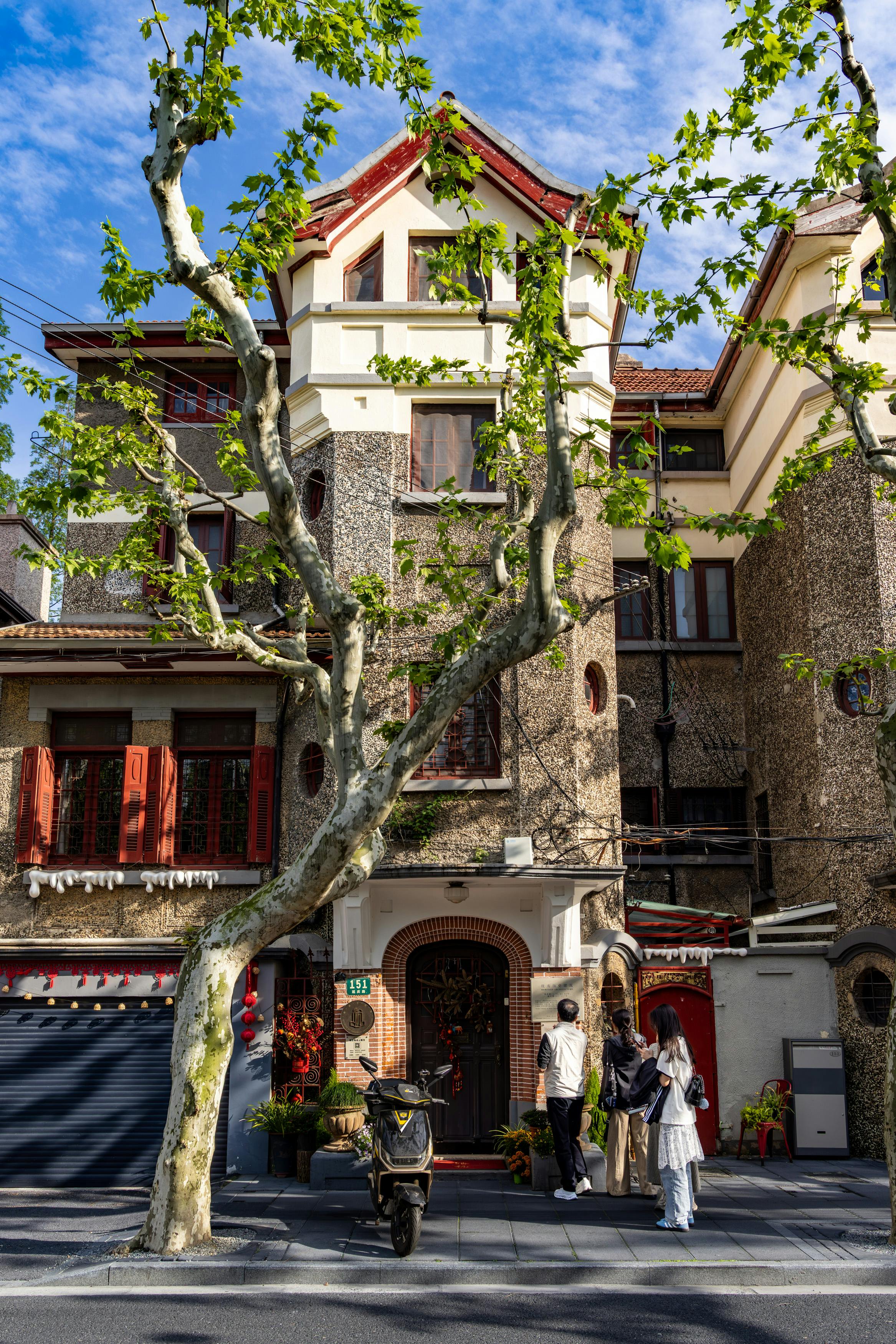
Pattern 2: Wukang Road, Plaza 66, and Jing'an Are Still Winning
Looking at where the first stores landed in Q1 2026:
Wukang Road (武康路): Lemaire, independent designer pop-ups, boutique fashion
Jing'an Kerry Centre (静安嘉里中心): nanamica, premium international retail
Plaza 66 (恒隆广场): BREITLING, DAMIANI, premium luxury accessories
Huaihai Middle Road (淮海中路): Warrior 1927, premium heritage positioning (covered in our previous post on Huaihai Road's 87-first-store year)
Sanlitun-equivalent retail districts: Reel Mall and other alternative Taikoo Li-style properties
The premium and emerging Shanghai retail corridors are not all fighting each other for the same tenants. Wukang Road is winning editorial fashion and boutique designers. Plaza 66 and Jing'an Kerry are winning premium international luxury and watches. Huaihai Middle Road is winning heritage and trendy. Lujiazui is quiet.
For a Western brand deciding on a Shanghai first store, the map matters. The corridor reads as specifically as a zip code in Manhattan. Hudson Yards is different from SoHo is different from Williamsburg. Same in Shanghai.
Pattern 3: China Homegrown Heritage Is Getting Premium Treatment
Warrior 1927 and FILA BIELLA 2.0 are the two most interesting stores in this Q1 2026 batch.
Warrior (回力, Huíli) is a Chinese shoe brand founded in 1927. It was the dominant Chinese sports brand for decades, then fell out of relevance during the 1990s-2010s as Western brands dominated. Over the last 5 years, Warrior has been rebuilding its brand with younger Chinese consumers through streetwear collaborations, basketball shoe reissues, and a Chinese heritage positioning.
The Warrior 1927 concept flagship on Shanghai Huaihai Middle Road is the brand's statement that it is not just a nostalgic reissue brand. It is a premium Chinese heritage brand. The store format, pricing, and product positioning are all positioned against international mid-premium brands.
This is the same play Li-Ning did successfully in the late 2010s, Anta is doing with FILA internationally, and Laopu Gold is doing with traditional Chinese gold. Chinese heritage + premium retail format + modern brand storytelling = category competition that Western brands didn't see coming.
FILA BIELLA 2.0 is different because FILA is Italian heritage (even though now owned by Anta). But the Shanghai store takes the ONE FILA premium strategy into Shanghai, adding to the Xi'an FILA TOPIA launch from January. Anta is systematically building its multi-brand premium retail presence in Chinese Tier 1 cities.
Both cases confirm: Chinese brands and Chinese-owned Western brands are building premium Shanghai retail faster than many purely Western brands.
What Didn't Land
Just as telling as what opened, the brands missing from the Q1 2026 Shanghai first-store list:
No Victoria's Secret (already pulled back from Shanghai flagship)
No Tommy Hilfiger new flagship
No DELVAUX or MOYNAT first-store (both in retreat)
No Nike, Adidas, or Puma major new format (existing formats continue)
No Hugo Boss, GUESS (both restructuring)
No major US fast fashion entry
The absence of these brands from a 82-first-store quarter is a signal. Shanghai is where the brands who are winning come to plant flags. The brands that are not planting flags in Q1 2026 are either confident enough not to need to, or not confident enough to try.
What YOU Should Take Away
If you operate or plan to operate a Western brand in China, here's your immediate checklist:
Pick your Shanghai corridor intentionally. Wukang Road, Plaza 66, Jing'an Kerry, Huaihai Middle Road, Xintiandi, Sanlitun-equivalents all serve different consumer segments. Don't just lease a mall slot. Match the corridor to your brand identity. The map matters.
Non-standard first-store is the competitive format. A conventional flagship is a depreciating asset in 2026. An immersive experience store that generates Rednote content is an appreciating asset. If your first-store concept looks like a 2019 flagship, redesign it.
Budget for 30-50% higher build-out than you think. EVE LOM's mood healing concept store, Lemaire's Wukang boutique, Warrior 1927's heritage concept flagship all cost substantially more per square meter than conventional retail. But they also generate 3-5x the content and 2-3x the dwell time. The math works, if you budget right.
Watch Chinese homegrown heritage positioning. Warrior 1927 is the Q1 2026 case study. FILA BIELLA 2.0 is another. Laopu Gold at Nanjing Deji Plaza is another. Chinese brands are building premium retail that competes directly with Western brands in your category. If you do not know what Chinese competitor is opening on your street corner in 2026, you are planning in 2024.
Beauty, fragrance, and jewelry are the hot first-store categories. EVE LOM, Serge Lutens, ghd, DAMIANI, PASQUALE BRUNI all landed in Q1 2026. If your brand is in these categories and does not have a Shanghai first-store plan, you are losing the window.
82 first stores in 90 days is a high-signal number. Shanghai's retail ecosystem is reshuffling faster than any other Chinese city's. The brands that plant flags in Q1 2026 define the retail map for the next 5 years. The brands that wait are competing for the slots nobody else wanted.

