This Factory Accidentally Sewed A Horse's Mouth Upside Down And It Is The Most Relatable Thing You’ll See All Year
Move over, lucky charms. We don't want good fortune anymore; we just want a stuffed animal that understands our existential dread.
If you thought 2026 (the Year of the Red Horse) was going to be about power, energy, and galloping towards success, think again. The hottest accessory in China right now isn't a luxury bag or the latest smartphone.
It is a clinically depressed stuffed horse.
And the best part? It was a total mistake. Here is the wild story of how a manufacturing fail became the "healing" icon of the year.
1. The "Oops" Heard 'Round the Internet
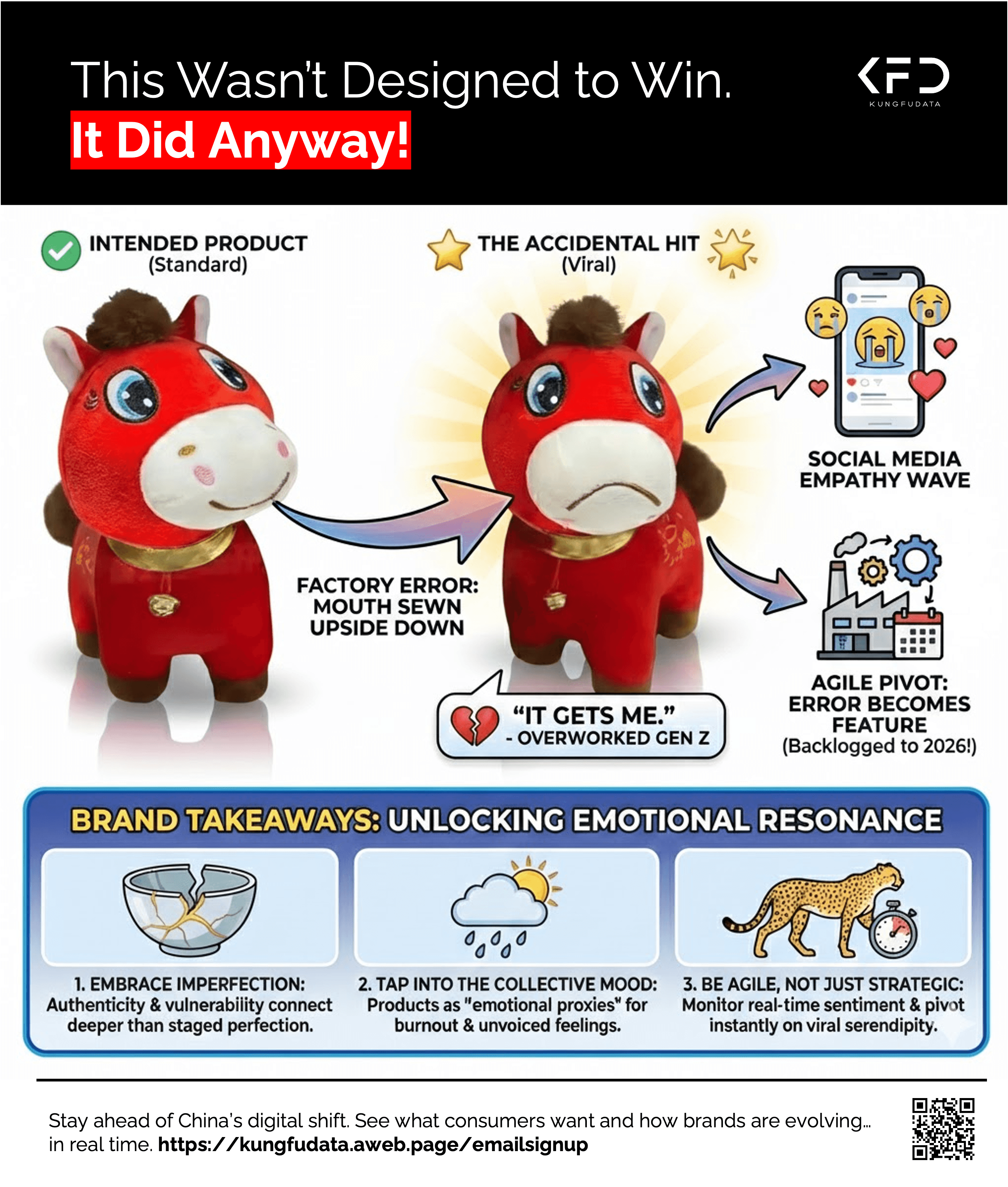
It started with a simple purchase. A customer bought a festive red horse doll to celebrate the New Year. But when they opened the package, the horse wasn't smiling. Thanks to a sewing error on the assembly line, its mouth was curved strictly downward.
It looked devastated. It looked how we all feel at 7:00 AM on a Monday.
2. The Internet Said: "Same, Bro. Same."
The customer posted the "defect" on social media, intending to get a refund. But the comment section went rogue. Instead of complaining, people started screaming (in all caps): "I NEED HIM."
"This horse is crying so I don't have to."
"Finally, a decoration that matches my actual mental state."
"He looks like he just saw his KPI targets for 2026."
The "Crying Horse" immediately shot to #1 on search trends. It tapped into the deep vein of Sang Culture (a subculture embracing a lack of ambition) and the collective exhaustion of the workforce.
3. The Factory Pulled the Ultimate Power Move
Usually, when a factory messes up a batch of products, they trash them. Not this time.
After receiving thousands of calls asking, "Do you have any more of the sad ones?" the factory owners realized they had struck gold. They stopped the "smiling" production lines. They ordered the seamstresses to keep sewing the frowns.
The Result? Ten production lines are running 24/7, and the "Crying Horse" is totally sold out until March 2026.
4. It’s Not Just a Toy, It’s a "Meme-otional" Support System
The horse has become a canvas for modern burnout. People are posing the doll at their office desks, staring blankly at spreadsheets. It has become a mascot for:
Refusing to fake happiness.
Silent solidarity with other tired colleagues.
Finding humor in the struggle.
The Verdict: Perfection is out. Vulnerability is in. In 2026, we don't want plastic smiles; we want a soft, red horse that looks exactly as tired as we are.
Takeaways for Brands Eyeing China
If you are a brand looking to penetrate the Chinese market, the "Crying Horse" incident offers a masterclass in modern consumer psychology.
1. Embrace "Flawsome" Marketing (Flawed + Awesome)
Chinese Gen Z and Millennials are suffering from "positivity fatigue." They are tired of airbrushed perfection and "Good Vibes Only" messaging.
The Lesson: Don't be afraid of self-deprecation or acknowledging negative emotions. Products that validate feelings of exhaustion or anxiety (healing economy) can build a deeper, more authentic connection than those promising impossible happiness.
2. Agility Trumps Strategy
The factory didn't hold a board meeting to discuss the brand implications of a frowning horse. They saw the social media wave and surfed it immediately.
The Lesson: Monitor social sentiment in real-time. If consumers use your product in an unintended way (or love a defect), do not correct them—lean into it. Speed is the ultimate currency in China's e-commerce ecosystem.
3. Products as "Emotional Proxies"
The horse wasn't bought as a toy; it was bought as an emotional avatar. It communicates what the owner cannot say out loud (e.g., "I am stressed").
The Lesson: Design products or campaigns that serve as a voice for the consumer. Ask yourself: Does this product help my customer express a part of their identity or current emotional state?
4. The Power of "Ugly-Cute" (Chou Meng)
There is a rising aesthetic in China known as Chou Meng (ugly-cute). It defies traditional beauty standards and feels more approachable.
The Lesson: Move away from sleek, cold minimalism. Quirky, weird, and tactile designs often generate more organic social shares because they have "character."