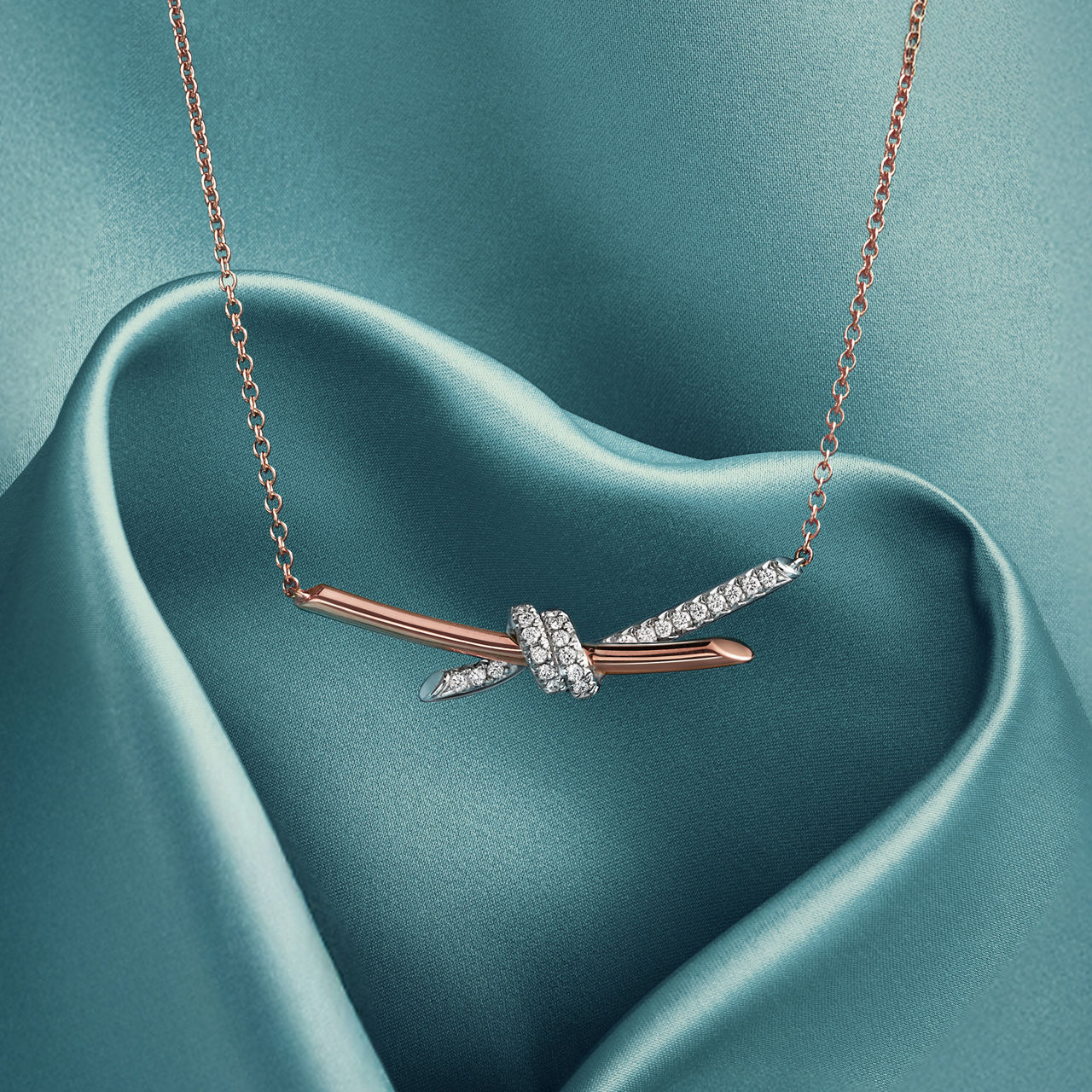
Tiffany Just Quietly Added 24-Month Installments in China. That's Not a Payment Update - That's a White Flag.
For a century, Tiffany sold you forever. Now it's selling you a monthly payment plan.
The brand that built its empire on "A Diamond Is Forever" energy just rolled out 24-month interest-free installments in the Chinese market. No big announcement. No marketing campaign. Just a quiet update to the checkout page that tells you everything about where the luxury industry actually is in 2026.
This is the same payment tool you'd expect to see at a mid-tier skincare brand or a Double 11 Taobao promo. And now it's sitting inside the checkout flow of a brand whose entire identity is built on "you only buy this once in your life."
Something shifted.
What Actually Happened
Tiffany introduced "up to 24 months, 0% interest" installment financing on its China e-commerce channels. Quietly. No press release worth talking about. Chinese social media picked it up first and the conversation exploded in two directions:
Camp 1: "This is smart. They're finally catering to younger buyers."
Camp 2: "This is a pressure signal. Luxury is cracking."
Both camps are right. But only one of them matters for brand strategy.
The Backdrop: Global Luxury Is Slowing, China Is Not Recovering
The timing of this move is not random. It's a reaction.
LVMH has flagged "below-expectation" Chinese consumer recovery multiple quarters in a row. Kering is in damage control. Cartier and Bulgari are watching high-ticket decision cycles stretch from weeks to months. High-net-worth buyers are still spending, but slower. The middle class and young professionals, who were supposed to backfill that demand, are not behaving the way they did in 2019.
They're price-sensitive now. They care about cash flow. They screenshot Taobao prices and compare them to the boutique tag. They watch their peers walk out of Tiffany stores with smaller boxes or empty hands.
So what does a brand with a "forever" narrative do when "forever" stops opening wallets?
It monetizes time instead.
The Split-Screen Moment in Chinese Luxury
Here's the part most Western brand owners are missing.
While Tiffany is quietly making diamonds easier to pay for, Chinese shoppers are lining up outside Laopu Gold (老铺黄金) for heritage-craft gold jewelry. The queues are real. The markups over spot gold are real. Social media is full of resale flips at prices above retail.
Two luxury stories, happening at the same time, in the same city:
One customer is financing a Tiffany engagement ring over 24 months.
Another is paying cash for a Laopu gold piece that's already 30% over spot.
Different consumers? No. Sometimes the same consumer. They're not buying two categories. They're buying two different ideas of what luxury means in 2026.
Diamonds = emotional commitment, Western narrative, depreciating asset
Gold = cultural identity, financial hedge, appreciating asset
When young Chinese consumers look at a ¥50,000 diamond ring and a ¥50,000 gold bangle, they are not asking the same question Western luxury execs think they're asking. They're not asking "which is prettier?" They're asking... "which one still has value in 5 years?"
Gold is winning that question. Diamonds need installments to even be in the conversation.
Why 24-Month Financing Is Not a Small Move
Installments aren't new. That's not the news. The news is who's using them.
For years, 0% interest financing was associated with fast fashion, consumer electronics, and entry-tier beauty. When a top-tier jeweler adopts the same tool, it tells you three things:
The price is now a friction point the brand is willing to acknowledge
The customer profile the brand is chasing has changed
The emotional story alone is no longer closing the sale
Tiffany is not lowering its prices. That would dilute brand equity. But psychologically, ¥1,500 a month for 24 months reads very differently than ¥36,000 upfront. It's the same transaction with a different feeling.
That feeling is the whole thing.
The Trap Hiding Inside This Strategy
Here's where it gets risky for Tiffany (and every luxury brand watching this unfold).
The core selling proposition of a high-jewelry brand is that the purchase is heavy. It's supposed to feel weighty. It's a milestone. It's a signal. When you make that purchase feel lighter, you solve for volume... but you weaken the emotional architecture that justified the price in the first place.
Luxury is, functionally, a tax on meaning. If the meaning softens, the tax stops making sense.
A diamond financed over 24 months is a diamond that just became more like a phone. Still beautiful. Still expensive. But no longer mythic.
That's the trade Tiffany is making. Short-term unit sales. Long-term brand dilution risk. They're betting the dilution is smaller than the revenue gap they're trying to close. In a slowing market, that math might be right. In a recovering market, it might haunt them.
What This Signals About Chinese Luxury in 2026
Chinese luxury consumers are not turning away from status. They're redefining it.
Status used to be: "I can afford this upfront."
Status is becoming: "I bought something that holds value, or I bought something so meaningful I'm willing to finance it."
The middle ground, expensive but not financially smart, emotional but not culturally rooted, is collapsing. Tiffany is trying to hold that middle ground with better payment terms. Laopu is winning the other edge with scarcity and cultural anchoring. LVMH's softer quarter tells you which direction the wind is blowing.
The old playbook was: premium price + aspirational story = purchase. The new playbook in China: cultural story + retained value + accessible payment path = purchase. Miss any one of those three, and your growth story stalls.
Lessons for Brand Owners Watching This
Check your payment options in China before your CMO does. If your premium brand is still cash-or-credit-only in a market where competitors are offering 12-24 month terms, you're leaving conversion on the table. Especially for buyers under 35.
If your narrative is emotional, your product better also retain value. Pure emotion used to be enough. It isn't anymore. Chinese buyers want the love story AND the asset story. Gold brands have both. Most Western jewelry brands only have one.
Know which side of the split you're on. You're either selling cultural depth (Laopu, Guo Chao 国潮 aesthetics, heritage craft) or you're selling emotional aspiration (Tiffany, Cartier, Van Cleef). The brands stuck in the middle are the ones losing share.
Don't mistake convenience for desirability. Making it easier to pay is not the same as making it easier to want. Tiffany solved the first. The second is still the real problem.
The luxury industry spent two decades telling consumers that the price was the proof. In China, in 2026, consumers are asking for a new kind of proof. Tiffany just answered with a payment plan. That answer might buy them a few good quarters... but it's not the answer the market is actually asking for.

