The China Hedge: Why UK Brands Are Securing The Bag In Beijing (Without Breaking Up With Washington)
The vibes in international trade just shifted. Big time.
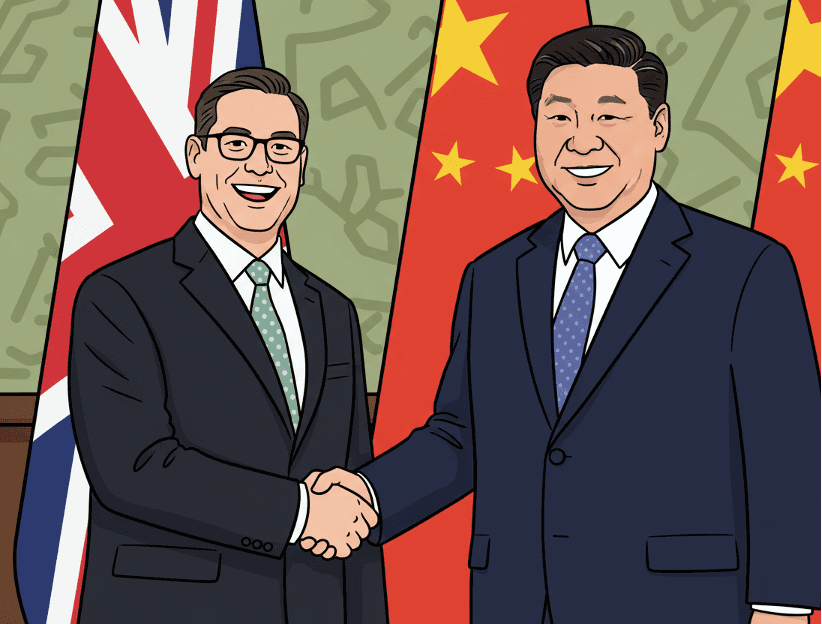
While the headlines were busy tracking the latest US-UK drama over Greenland, Prime Minister Keir Starmer was on a plane to Beijing this week with a 60-person delegation of the UK's biggest CEOs (think HSBC, Jaguar Land Rover, and AstraZeneca). This isn't just a courtesy call; it’s a high-stakes "reset" of a relationship that’s been in the freezer for eight years.
If you’re a UK brand looking for growth, the rules of the game just changed. Here is why the "Beijing Reset" matters - and how to navigate the new world order without getting ghosted by your American distributors.
1. The "Frictionless" Era: 30 Days of Visa-Free Freedom
Remember the absolute headache of getting a business visa for China? The fingerprints, the invitation letters, the weeks of waiting? Gone. Starting now, UK citizens get 30 days of visa-free entry. For a brand founder or export manager, this is a game-changer. You can now hop on a flight to Shanghai to check on your supply chain or meet a new distributor as easily as you’d fly to New York. In the world of business, speed is a competitive advantage. China just made it a whole lot faster.
2. The Scotch Whisky Win (And the Luxury Signal)
Tariffs on Scotch whisky were just slashed from 10% to 5%. While that sounds like a win for the Macallan lovers, it’s actually a "canary in the coal mine" for all UK luxury and FMCG brands. It signals that China is willing to lower barriers for "Heritage UK" products. If you’re selling British craftsmanship, beauty, or premium wellness, the door just swung open a few more inches.
3. Hedging the "Trump Tariff" Volatility
Let's talk about the elephant in the room: The US market is currently a "protectionist" minefield. With the US threatening massive tariffs on UK goods over the Greenland dispute, China is positioning itself as the stable trading partner. For a fashion brand, consistency is everything. While Washington talks about "decoupling," Beijing is slashing tariffs on luxury goods and keeping e-commerce rules predictable. UK brands aren't leaving the US, but they are realizing that China is the much-needed "Plan B."
4. The "Trade in Services" Secret Weapon
Starmer secured a framework for a Trade in Services Agreement. For fashion, this is huge. It’s not just about shipping clothes; it’s about the intellectual property. It means British fashion consultancies, digital marketers, and architects (who design those stunning flagship stores) can now operate in China with "clear rules." Your brand’s IP just got a whole lot more protected and portable.
5. AstraZeneca’s £10.4 Billion Confidence Boost
When one of the UK’s biggest companies commits to a £10.4 billion investment in China through 2030, it’s a signal to every other brand: The water is fine, come on in. Big investment from pharma and finance means infrastructure stability. It means better logistics, clearer IP laws, and a more reliable banking corridor for your cross-border e-commerce (CBEC) payments.
6. "Joint Security" = Supply Chain Peace
Part of the deal included "intelligence sharing" to stabilize trade routes and stop illegal shipping. This reduces the "Geopolitical Surcharge." More stable shipping routes mean lower insurance premiums for your freight and fewer "lost in transit" nightmares. Your AW26 collection might actually arrive on time for once.
The Verdict: Is the "Ice Age" really over?
Ultimately, the 2026 "Beijing Reset" is less of a final destination and more of an opening gambit in a much larger, more volatile game. For UK brands, the summit has unlocked a door that’s been bolted shut for nearly a decade, but walking through it requires a new kind of geopolitical agility.
Whether this thaw marks a permanent shift in the global trade climate or just a brief break in the clouds remains the multi-billion-pound question. As the shadow of the "Greenland Dispute" continues to linger over the Atlantic and the allure of the Chinese middle class grows, the most successful brands won't be those that simply pick a side. They’ll be the ones that learn to thrive in the tension, knowing that in the high-stakes world of 2026, the only real certainty is that the next chapter has yet to be written.
The biggest takeaway? You don't have to choose. But you do have to be careful. President Trump has already called this UK-China thaw "very dangerous."

