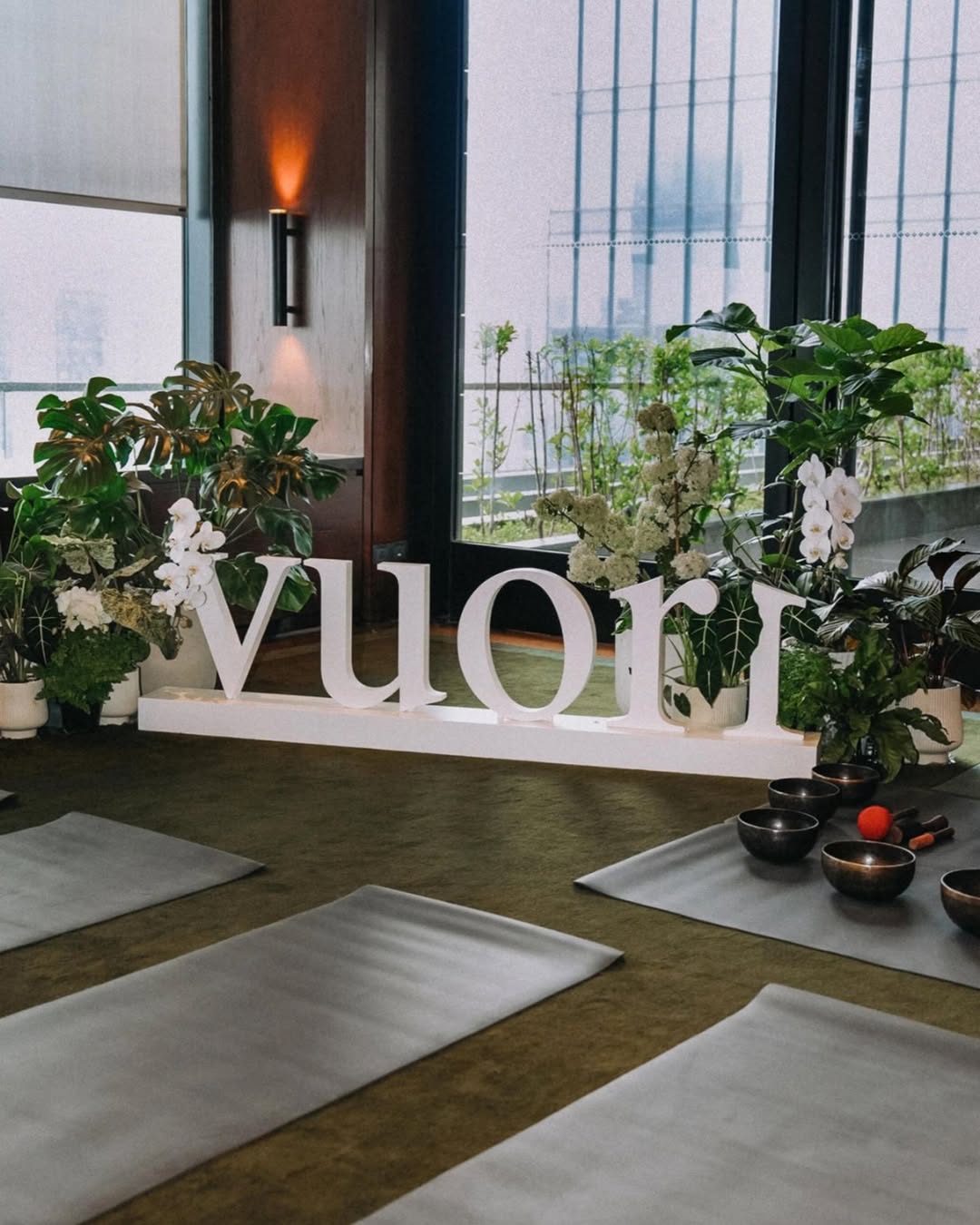
Vuori Just Did 5 Shanghai Pop-ups at Once. The China Yoga War Just Got Real.
Vuori's China debut hit 5 simultaneous Shanghai locations across coffee, workout, recovery, and downtime moments anchored by the DreamKnit line. Maia Active reset its brand April 16 with 'Move Again, Fear Nothing.' Alo Yoga is building scarcity-led traction. The China athleisure war just opened a new front from 4 directions at once.
Pop-ups are boring. Vuori knew it. So when the California athleisure brand launched its China debut in May 2026, it skipped the standard playbook.
Instead of 1 big pop-up in 1 big mall... Vuori opened 5 simultaneous locations across Shanghai. Each one mapped to a different consumer moment. Coffee. Workout. Recovery. Downtime. One full day, one full city, one full DreamKnit product line activation. The activations were built native to Xiaohongshu, not adapted for it.
Translation... Vuori didn't launch a store. Vuori launched a lifestyle. And it just put Lululemon's China crown into real, contested territory for the first time in a decade.
What Vuori Actually Did
Format: 5 simultaneous Shanghai locations on launch day
Anchor product: DreamKnit lineup (Vuori's signature softness-driven sportswear)
Locations mapped to moments: coffee shops (morning intent), boutique gyms (workout intent), wellness studios (recovery intent), lifestyle cafes (downtime intent)
Format: distributed urban experience, day-long, mapped across "consumer touchpoints" rather than a single retail destination
Content strategy: every location designed to be Xiaohongshu-native (vertical photo angles, Mandarin captions baked in, KOL coordination scheduled across the day)
Strategy goal: build emotional/community resonance before opening a permanent store
This is the opposite of the standard Western brand China entry. The standard playbook is... announce a flagship, partner with a real estate broker, sign a lease in Sanlitun or Xintiandi, run a 7-day pop-up before the doors open, fly in execs for the ribbon cutting. Vuori said no thanks. The brand decided that "where you encounter the brand" matters more in 2026 China than "where you can buy the brand."
Why Distributed Retail Wins Now
China's biggest cities in 2026 have a problem... single-location pop-ups don't break through anymore. There are too many of them. Sanlitun Taikoo Li gets 5+ brand pop-ups per week. Xintiandi gets 4-6. Jing'an Kerry Centre gets 3-4. Consumers walk past most of them without noticing.
The distributed approach changes the math. Per the Vuori launch:
5 locations means 5x Xiaohongshu post density
Day-long activation = full influencer scheduling possible
Multiple "moments" creates ambient brand awareness across daily routine
Each location can target a different micro-community (yoga, recovery, café culture)
The activation reads as "community design" rather than "brand transaction"
This pattern is now visible across multiple international brand entries into China. Hoka Speedgoat just did a Hangzhou trail running pop-up cluster. NNormal opened its first global store in Chengdu on Earth Day with multi-venue Earth-themed events. Goldwin hosted a women-focused "By Me" event at Shanghai's Jing'an Kerry Centre with simultaneous studio activations.
The shared playbook is moving from centralized flagship-first launches to distributed multi-touchpoint activations that look more like cultural events than retail openings.
What Maia Active Just Did (And Why It Matters)
While Vuori was building 5 Shanghai pop-ups, Anta-owned Maia Active was doing something quieter but equally interesting. On April 16, 2026, Maia Active launched its new brand message "Move Again, Fear Nothing" (敢动) with an emotional brand reset.
The reset positions Maia Active as the women's mental health and physical activation play in China. The brand had been losing ground to Lululemon (the global big sister), Alo Yoga (the cool kid), and the wave of Western entrants. Maia Active's response was to stop competing on yoga technical product and start competing on emotional permission... "you don't need to be perfect at this, just start." That message resonates specifically with the Chinese consumer dealing with 反精致 (anti-perfectionism) cultural shifts.
Then there's Alo Yoga, which has been quietly building its mainland China presence since its 2025 entry, hiring former Arc'teryx VP of Marketing Aurora Liu to lead China. Per LinkedIn industry watchers, "Alo's aesthetic aligns with what young consumers want today: sleeker silhouettes, elevated basics, a neutrality that can be styled up or down, a balance of wellness culture and street style."
Alo's strategy in China centers KOL-led scarcity, with limited drops driving FOMO instead of broad inventory accessibility.
So the China yoga and athleisure war in 2026 has 4 distinct fronts:
Lululemon: market leader, 170+ China stores, expansion-focused, betting on movement culture
Vuori: distributed lifestyle activation, premium soft fabric story, Xiaohongshu-native
Maia Active: emotional anti-perfectionism reset, Anta-backed, mainland-rooted
Alo Yoga: KOL-scarcity strategy, Western aesthetic, premium price point
Sweaty Betty is also building physical and community presence in China per Jing Daily's coverage, with deepening retail footprint and an active women-led community angle that complements Maia Active's reset.
Why This Means More Than Athleisure
This is where Western brand owners need to read carefully. The Vuori-Maia Active-Alo Yoga moment is not just about yoga pants. It's about a structural shift in how China brand activation works.
The 2018 playbook... 1 flagship, broad awareness campaign, KOL plus paid social.
The 2026 playbook... distributed touchpoints, emotional reset, scarcity-driven KOL coordination, native-platform content design, multi-day cultural moments rather than single retail openings.
If your brand still operates the 2018 China activation playbook in 2026, your launch will land flat. Your store opening will look like a real estate event. Your KOL spend will look transactional. Your Xiaohongshu posts will read as ads. Vuori's approach worked because every element was designed to feel like a Shanghai weekend, not a brand activation.
What YOU Should Take Away
If you're a Western fashion, lifestyle, or athleisure brand entering or operating in China, here's the immediate checklist:
Replace single-flagship launch thinking with distributed-touchpoint thinking. Pop-ups across 3-5 locations mapped to consumer moments (morning, workout, work, recovery, social) outperform 1 flagship plus 1 pop-up by 3-5x in Xiaohongshu engagement.
Build Xiaohongshu-native, not Xiaohongshu-adapted, brand assets. Vertical photo composition, Mandarin captions written by Chinese copywriters not translated by agencies, native trend integration (jelly shoes, dopamine dressing, huo ren gan if applicable). If your assets get "translated from English creative," your assets fail.
Stop assuming Lululemon is the only China yoga story. Track Vuori, Maia Active, Alo Yoga, Sweaty Betty, Particle Fever, MollyVogue, Halara. The category is fragmenting in 2026 and the winners are not predetermined.
If you're entering, study Vuori's 5-location playbook before signing a single lease. A 5-location distributed pop-up costs roughly equal to a 1-flagship 12-month-prep build, generates 5-10x more Xiaohongshu content, and lets you test multiple positionings before committing.
Treat emotional brand positioning as a category-defining move. Maia Active's "Move Again, Fear Nothing" is not a tagline. It's a category reset designed specifically for the Chinese 25-35 woman dealing with cultural pressure. Western brands that arrive with global brand messages that don't speak to specifically Chinese cultural emotions will get out-positioned by local resets like this.
Run your brand activation budget as a community design budget, not a media budget. Vuori's 5 Shanghai locations are not advertising. They are community design. Western brands that treat China activation as media spend continue losing to brands that treat it as cultural events.
The China yoga and athleisure market in 2026 has more brands competing harder, smarter, and more creatively than at any point in the last 15 years. Lululemon still leads. But the gap is closing from 4 directions at once. Western brand owners watching this category from a distance might think "it's still Lululemon's market." Western brand owners working inside the category know the truth... the next 12 months will redraw the map. Pick your front. Or lose it.

