Xtep Won Every Major Marathon in China. Every Single One. Then Made Record Profit.
Here's a stat that should make every Western running brand uncomfortable: at the 2024 Shanghai Marathon, Xtep running shoes had a 22.4% wear rate among all participants.
That was the first time a Chinese brand beat every international brand, including Nike, Adidas, Asics, and Saucony, at China's most prestigious Platinum Label marathon.
And it wasn't a one-off. Xtep swept all six major Chinese marathons, Shanghai, Beijing, Xiamen, Guangzhou, Wuxi, and Chengdu, achieving the highest wear rate at every single one. No running brand in Chinese history has done that.
Then, on March 26, Xtep dropped its 2025 annual results: 14.15 billion RMB in revenue (+4.2%). Record net profit of 1.37 billion RMB (+10.8%). And a strategy that says everything about where China's sportswear market is heading.
The Numbers Behind the Sweep
Revenue: 14,151 million RMB, up 4.2%. Not explosive growth at the top line. But the story is in the composition.
Core Xtep brand: 12.52 billion RMB (+1.5%). This is the mass-market engine: affordable running shoes, apparel, and accessories sold through 6,382+ stores. The growth is modest because the brand is enormous and the market is competitive. But the professional running products within this segment are growing much faster than the average.
Professional Sports (Saucony + Merrell): 1.64 billion RMB (+30.8%). This is the growth engine. Saucony now operates 175 stores in mainland China, up from 145 a year ago. Operating profit for this segment hit 114.5 million RMB, up 46.4%. Saucony crossed 1 billion RMB in annual revenue in 2024 and kept accelerating in 2025.
Overseas: Revenue nearly doubled. Cross-border e-commerce delivered 220%+ growth, fueled by Southeast Asian platforms like Shopee, TikTok Shop, and Lazada. Xtep opened its first overseas Running Club in Singapore and a flagship store through a Bonia partnership in Malaysia.
The cleanup: K-Swiss and Palladium are gone. Xtep divested both brands in late 2024, taking a 67 million RMB loss, to focus entirely on running. That decision to dump two globally recognized brands in favor of a single-category bet on running tells you exactly how confident Xtep is about the China running market.
Why Marathon Wear Rate Matters
"Wear rate" sounds like a niche stat. It's not. It's the single most important credibility metric in the Chinese running shoe market.
When Chinese runners see data showing that 22.4% of Shanghai Marathon finishers wore Xtep, and that Xtep beat Nike, Adidas, and every international brand, it sends a signal that's worth more than any advertising campaign: "The people who actually run marathons choose this shoe."
Xtep's strategy is called "professional-to-mass influence" (专业带动大众). Win the marathon. Get the data. Show it to the 300 million Chinese recreational runners who aspire to run a marathon someday. They'll buy the shoe that their heroes wear.
And the data is getting more extreme. At the Guangzhou and Chengdu marathons, the combined wear rate of Xtep and Saucony (which Xtep operates in China) among all runners reached 40.3% and 47.6% respectively. Nearly half of all runners at Chengdu wore a Xtep-family shoe.
The 160X series, Xtep's championship racing shoe, is now in its 7th generation. At the Tokyo Marathon in March 2026, Chinese runner Feng Peiyou broke the Chinese national record wearing the 160X 7.0 PRO, breaking the 2:05 barrier for the first time.
The Saucony Play
Saucony in China is a different brand than Saucony in America.
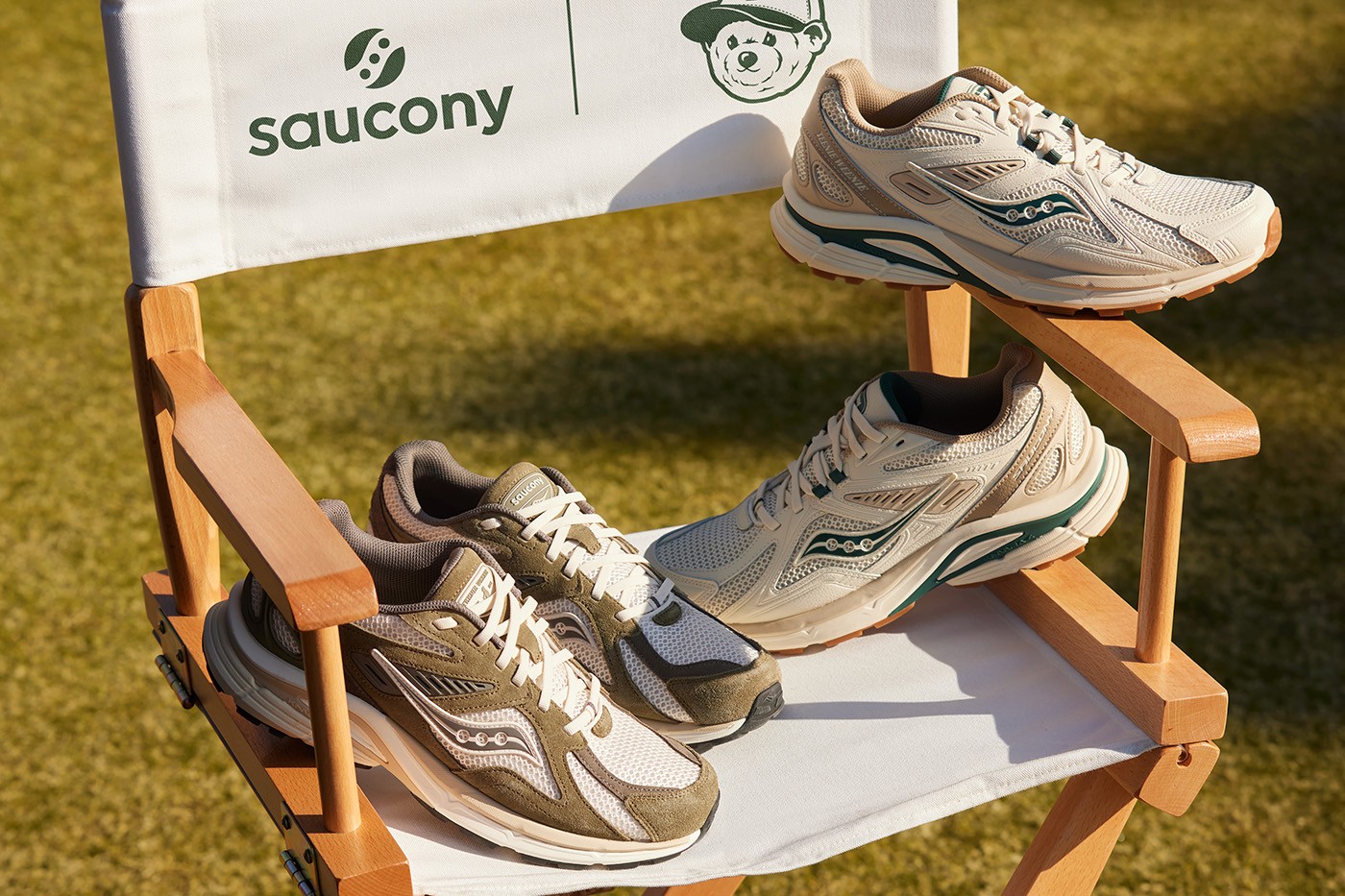
In the US, Saucony is a legacy running brand competing against Nike, Asics, Brooks, and Hoka. It's respected but not dominant. In China, under Xtep's management, Saucony has been repositioned as a premium "dual elite" brand targeting both serious runners and fashion-conscious consumers.
The strategy: Saucony covers the high end. Xtep covers the mass market. Together, they create a full-spectrum running ecosystem, from the 200 RMB entry-level shoe to the 2,000+ RMB premium racer.
Saucony's 175 stores are in premium retail locations. Its apparel and lifestyle collections are expanding. Operating profit grew 46.4%. The brand that was struggling in the US is thriving in China because Xtep gave it the distribution, positioning, and cultural context it needed.
For Western brands watching from outside: Saucony's China success is a model of what happens when a global brand gets plugged into a local operator's infrastructure. The brand didn't succeed by "entering China." It succeeded because a Chinese company made it succeed.
The 220% Overseas Signal
Xtep's overseas e-commerce growing 220% is a number that deserves attention.
Chinese sportswear brands expanding into Southeast Asia isn't new. But 220% growth on cross-border platforms tells you the velocity is accelerating. Xtep is using running as the entry point, exactly the same strategy it used in China, but applying it to Singapore, Malaysia, Vietnam, and beyond.
If you're a Western running brand operating in Southeast Asia, Xtep is coming. With cheaper products, proven marathon credibility, and a digital-first distribution model that's already working at scale.
What This Means for Western Brands
1. China's marathon boom created a domestic running brand monopoly. Xtep, Li-Ning (running now 31% of sales), and Anta together control the majority of China's running shoe market. The window for Western running brands to grab share is closing fast.
2. The "professional-to-mass" model is the winning playbook. Win the marathon, show the data, convert recreational runners. If your brand can't win (or at least compete) in Chinese marathon wear rates, your credibility with Chinese runners is limited.
3. Saucony proves that Western brands can win in China through local partnerships. But the key word is "through." Saucony didn't enter China independently. Xtep operates it. The brand got access to Xtep's 6,000+ store network, its marathon ecosystem, and its consumer data. That's the model.
4. Dumping brands to focus on running was the right call. K-Swiss and Palladium are gone. Xtep took the loss and doubled down on its strongest category. If your China portfolio includes underperforming brands, Xtep's example shows that subtraction can be more powerful than addition.
5. The Southeast Asia play is coming. Xtep's 220% overseas e-commerce growth means the competition that Western brands face in China is about to follow them to ASEAN. The running credibility that Xtep built in China is portable, and it's moving fast.
Xtep swept every major marathon in China. Made record profit. Dumped the brands that didn't fit. Grew overseas 220%.
And it's still only the third-largest Chinese sportswear company. Behind Li-Ning. Behind Anta.
The competition isn't coming. It already arrived.

